Research Blog
Acetic Acid Solution for Peptides: A Researcher's Guide
Published
Discover how the acetic acid solution for peptides enhances solubility. Learn essential tips for effective reconstitution and sample integrity.
Acetic Acid Solution for Peptides: A Researcher’s Guide
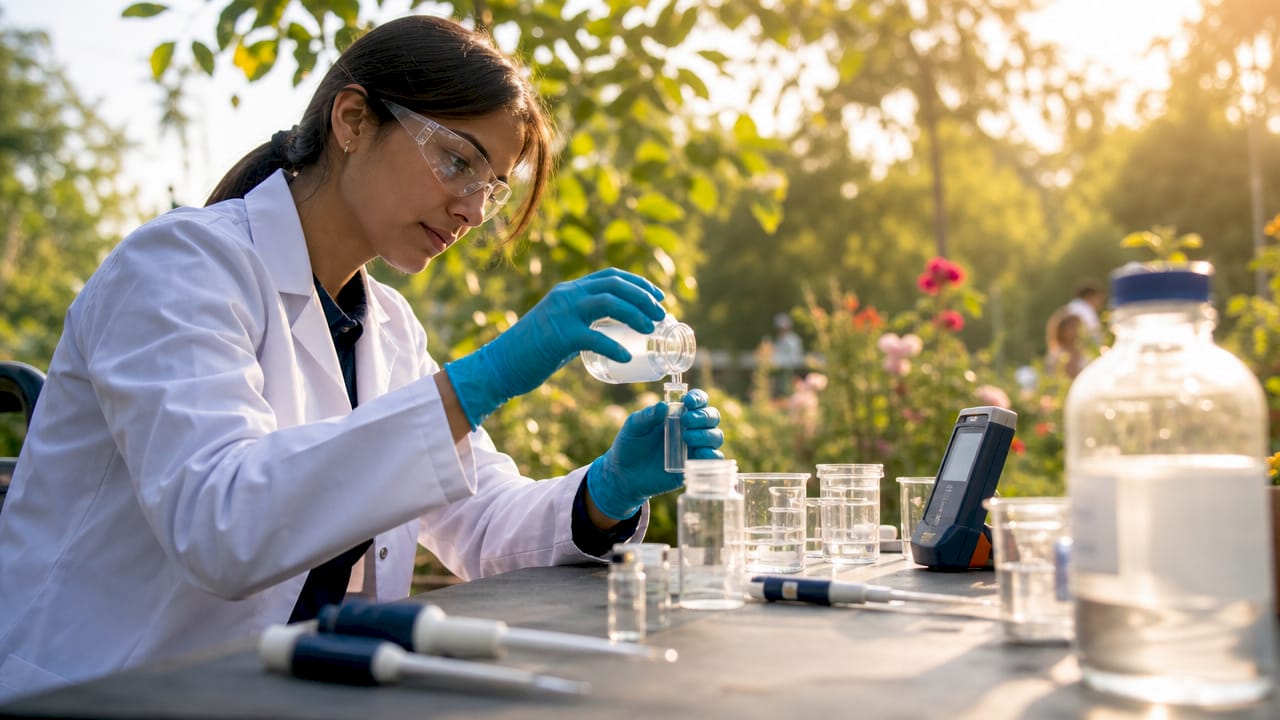
Acetic acid solution for peptides is defined as a dilute acidic solvent, standardized at 0.6% concentration (approximately 0.1 M, pH 2.7–3.0), used to dissolve peptides that remain poorly soluble at neutral pH. This specialized reconstitution medium is not a universal solvent. It targets a specific subset of peptides, including growth hormone secretagogues, certain melanocortin compounds, and select antimicrobial peptides, where neutral solvents cause aggregation or precipitation. Understanding when and how to use it correctly is the difference between a functional peptide stock and a degraded, unusable sample. The manufacturer’s Certificate of Analysis (COA) is always the primary authority on solvent selection.
How does acetic acid solution improve peptide solubility?
Peptide solubility in acetic acid is governed by charge state, and charge state is governed by pH. Every peptide carries an isoelectric point (pI), the pH at which its net charge is zero. When the solution pH equals the pI, the peptide carries no net charge and aggregates due to lack of electrostatic repulsion between molecules. Lowering pH below the pI shifts the equilibrium toward protonation, generating a net positive charge that keeps peptide molecules repelling each other and staying in solution.
The amino acid residues most sensitive to this shift are histidine (pKa approximately 6.0) and glutamate. At the pH of a 0.6% acetic acid solution, histidine residues become fully protonated. Histidine protonation prevents aggregation by increasing the positive charge density along the peptide chain, which creates electrostatic repulsion between neighboring molecules. This is why peptides rich in histidine respond particularly well to acidic reconstitution.
The practical result is straightforward. A peptide that forms a cloudy gel in bacteriostatic water at neutral pH will often dissolve completely and remain stable in a 0.6% acetic acid solution. The acidic environment does not chemically alter the peptide backbone. It simply shifts the protonation state of ionizable side chains to maintain solubility.
- Net charge at acidic pH: Protonation of basic residues (histidine, lysine, arginine) increases positive charge, preventing intermolecular aggregation.
- Isoelectric point avoidance: Keeping solution pH well below the peptide’s pI maintains a stable charge state throughout storage.
- Aggregation prevention: Charged peptides repel each other in solution; uncharged peptides at their pI clump and precipitate.
- Stability window: Mildly acidic conditions slow some hydrolysis pathways that are more active at alkaline pH.
Pro Tip: If your peptide forms a visible gel or suspension in bacteriostatic water, check the pI value on the COA before switching solvents. A pI above 7 strongly suggests the peptide will benefit from an acidic reconstitution medium.
Which peptides require acetic acid solution for reconstitution?
The manufacturer’s COA or product data sheet is the definitive guide. Most peptides do not require acetic acid at all. Bacteriostatic water (BAC water) is the default reconstitution solvent for the majority of research peptides, and switching to an acidic solvent without documentation support can destabilize a peptide that was perfectly stable at neutral pH.
That said, certain peptide categories consistently require acidic reconstitution. Growth hormone secretagogues such as GHRP-2 and GHRP-6 are well-documented examples. Melanocortin receptor agonists, including several alpha-MSH analogs, also commonly require acidic conditions. Some antimicrobial peptides with high positive charge density at physiological pH are another category. Researchers working with peptide biochemistry across these categories should treat acidic reconstitution as the expected protocol, not an exception.
Visible signs that a peptide needs an acidic solvent include:
- Cloudiness or turbidity after adding neutral solvent, indicating insoluble aggregates forming in solution.
- Gel formation where the reconstituted sample becomes viscous or semi-solid rather than a clear liquid.
- Visible particulates or clumping that do not disperse with gentle agitation over several minutes.
- Incomplete dissolution where the lyophilized powder partially dissolves but leaves a visible residue.
Peptides that dissolve readily in BAC water, producing a clear solution within a few minutes, do not benefit from switching to acetic acid. Unnecessary acidification can harm peptide stability and affect downstream experimental outcomes.
How does acetic acid solution compare to other peptide solvents?
The best solvents for peptides depend on the peptide’s charge, hydrophobicity, and the downstream application. Acetic acid solution and bacteriostatic water are the two most commonly used aqueous reconstitution solvents in research settings, but they serve different purposes and carry different properties.
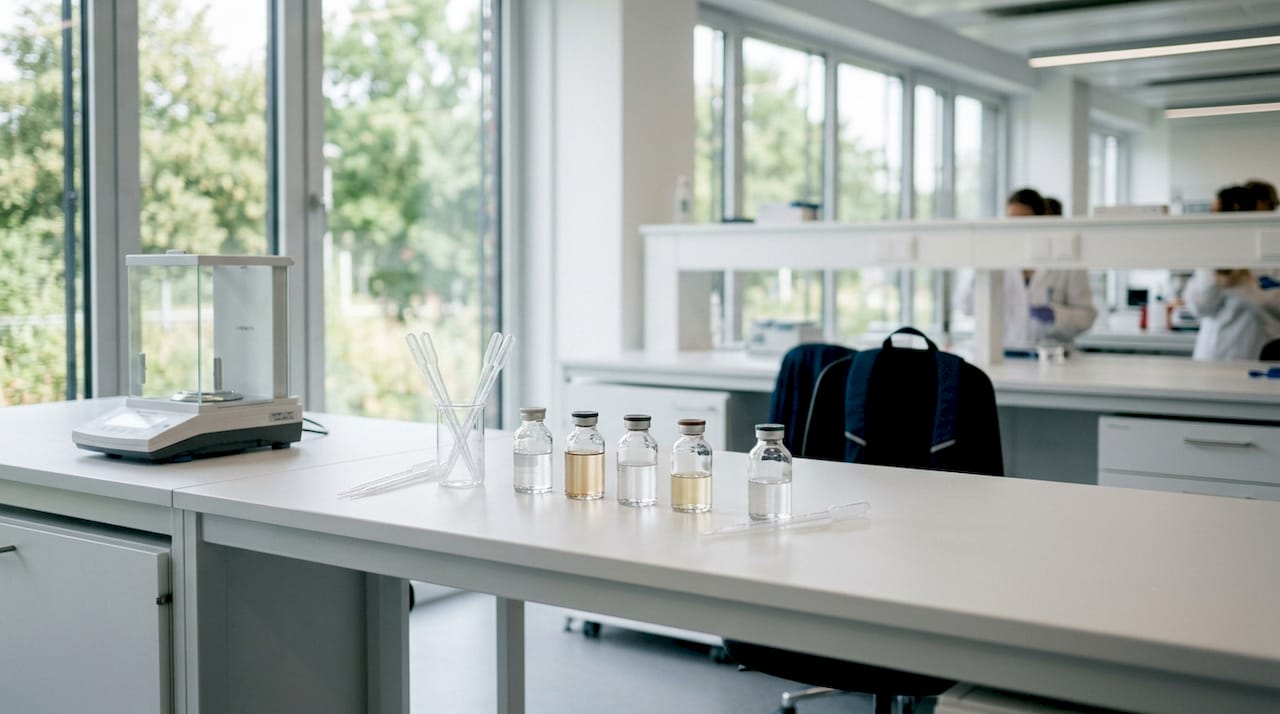
Acetic acid solution has a pH of approximately 3.0, compared to BAC water’s pH of approximately 5.7. BAC water contains 0.9% benzyl alcohol as a preservative, which inhibits microbial growth and extends the usable life of a reconstituted vial. Acetic acid solution contains no preservative. This means reconstituted peptides in acetic acid solution have a shorter shelf life after opening and require more careful storage practices.
| Solvent | pH | Preservative | Best use case | Injection comfort |
|---|---|---|---|---|
| Bacteriostatic water | ~5.7 | 0.9% benzyl alcohol | Most water-soluble peptides | Mild |
| 0.6% acetic acid solution | ~3.0 | None | Peptides with poor neutral-pH solubility | Mild sting, transient |
| DMSO (co-solvent) | Neutral | None | Highly hydrophobic peptides | Not for direct injection |
| Dilute ammonia solution | ~9–10 | None | Acidic peptides with negative charge | Not standard for injection |
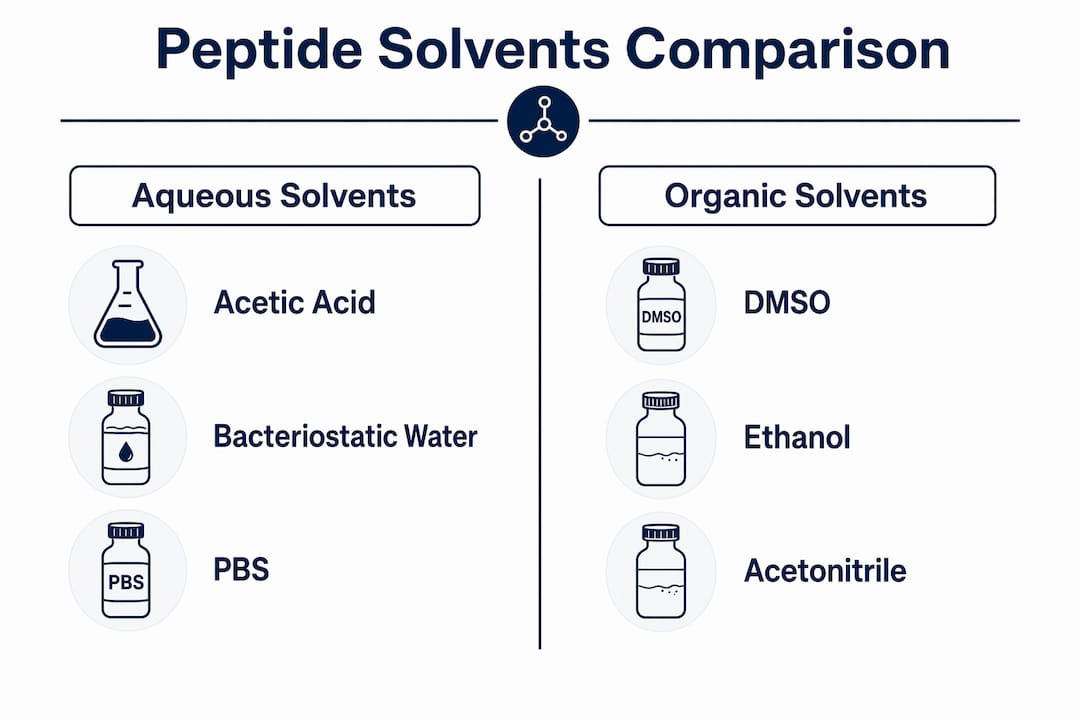
Organic solvents like DMSO are reserved for peptides that resist aqueous solubility entirely due to high hydrophobicity. DMSO is used in minimal volumes as a co-solvent, not as a primary reconstitution medium, because it can interfere with biological assays and is not suitable for direct injection. Dilute ammonia solutions serve the opposite role: they raise pH to deprotonate acidic residues in negatively charged peptides, improving solubility for that specific class.
Pro Tip: When a peptide resists both neutral and acidic aqueous solvents, try dissolving it in a small volume of DMSO first, then diluting with BAC water or acetic acid solution to the target concentration. Keep the final DMSO fraction below 10% to minimize assay interference.
Best practices for preparing and using acetic acid solution with peptides
Proper reconstitution with an acetic acid solution requires sterile technique throughout. The following protocol reflects standard laboratory practice for dissolving lyophilized peptides in acidic solvents.
- Prepare the solvent. Use sterile 0.6% acetic acid solution prepared with water for injection (WFI) or equivalent pharmaceutical-grade water. Do not use tap water or non-sterile sources.
- Equilibrate the vial. Allow the lyophilized peptide vial to reach room temperature before opening. Cold vials can cause condensation that introduces moisture before reconstitution is controlled.
- Add solvent along the vial wall. Draw the target volume of acetic acid solution into a sterile syringe. Insert the needle and direct the liquid slowly down the inner wall of the vial. Avoid injecting directly onto the lyophilized cake, as forceful impact can shear peptide structure.
- Allow passive dissolution. Set the vial aside for 5–10 minutes. Gentle rolling is recommended to mix the contents. Do not shake the vial. Vigorous agitation introduces air bubbles and can mechanically degrade the peptide.
- Inspect the solution. A properly reconstituted peptide in acetic acid solution should appear as a clear, colorless to slightly yellow liquid. Persistent cloudiness after 10 minutes indicates incomplete dissolution or the wrong solvent choice.
- Store correctly. Refrigerate reconstituted vials at 2–8°C and use within the timeframe specified in the product documentation. Because acetic acid solution contains no preservative, microbial contamination risk increases with each entry into the vial. Use a new sterile needle for each draw.
Injection site effects are worth noting. The acidity of 0.6% acetic acid causes mild, transient stinging at the injection site. This effect fades within a few minutes and is considered normal at this concentration. It does not indicate a problem with the peptide or the preparation. Researchers conducting in vivo studies should document this effect in their protocols.
Pro Tip: Always follow the solvent recommendation on the supplier’s COA. If the documentation specifies bacteriostatic water, do not substitute acetic acid solution. Unnecessary acidification can destabilize peptides that are stable at neutral pH, compromising your experimental data.
Key takeaways
Acetic acid solution is a specialized, concentration-specific solvent for peptides that aggregate at neutral pH, and its use must be guided by the manufacturer’s COA.
| Point | Details |
|---|---|
| Standard concentration | Use 0.6% acetic acid (~0.1 M, pH ~3.0) as the established reconstitution standard for acid-requiring peptides. |
| Mechanism of action | Protonation of histidine and other basic residues at low pH generates charge repulsion that prevents aggregation. |
| COA is primary guidance | Always consult the manufacturer’s Certificate of Analysis before selecting a reconstitution solvent. |
| Reconstitution technique | Add solvent along the vial wall, allow 5–10 minutes for dissolution, and roll gently. Never shake. |
| Injection site effects | Mild, transient stinging from 0.6% acetic acid is normal and resolves within minutes. |
What I’ve learned from watching researchers choose the wrong solvent
Researchers often treat solvent selection as a minor procedural detail. It is not. The single most common reconstitution error I’ve observed is defaulting to acetic acid solution for every peptide because it “works better” in the researcher’s experience with one or two compounds. That logic fails badly with peptides that are stable and soluble at neutral pH. Adding acid unnecessarily can destabilize peptide structure and corrupt experimental outcomes in ways that are not immediately visible in the vial.
The COA is not a formality. It is the result of the manufacturer’s solubility testing on that specific compound and batch. Researchers who skip it are essentially guessing, and guessing with a compound that may have cost significant time and budget to acquire. I’ve seen experiments invalidated not by bad science but by a solvent choice that contradicted the product documentation.
My practical recommendation is this: treat acetic acid solution as a tool for a specific job, not a general-purpose upgrade. Use it when the COA specifies it, or when visible signs of poor solubility appear in neutral solvent after consulting expert guidance on peptide solubility. Every other time, bacteriostatic water is the correct starting point. The discipline to follow documentation is what separates reproducible research from frustrating variability.
— Sebatroller
Research-grade peptides with full solvent documentation from Optimized-aminos
Selecting the right solvent starts with having the right documentation. Optimized-aminos supplies high-purity research peptides verified at 99%+ purity by HPLC, with every batch accompanied by a Certificate of Analysis that specifies the recommended reconstitution solvent. Researchers do not need to guess whether a compound requires acetic acid solution or bacteriostatic water.
Optimized-aminos also stocks research-grade bacteriostatic water for compounds that dissolve at neutral pH, and the full research peptide catalog covers compounds across neuroscience, metabolism, and tissue repair applications. Every order ships within 1–2 business days with complete batch documentation, so your reconstitution protocol is supported from the moment the compound arrives.
FAQ
What concentration of acetic acid is used for peptides?
The standard reconstitution concentration is 0.6% acetic acid, equivalent to approximately 0.1 M at a pH of 2.7–3.0. This concentration is mild enough to avoid peptide hydrolysis while providing sufficient acidity to maintain solubility.
Do all peptides need acetic acid solution?
No. Most peptides dissolve in bacteriostatic water without requiring acidic conditions. Acetic acid solution is reserved for peptides that aggregate or remain insoluble at neutral pH, as specified by the manufacturer’s COA.
Why does acetic acid solution sting at the injection site?
The lower pH of 0.6% acetic acid solution (approximately 3.0) causes mild, transient irritation at the injection site. This effect is normal, fades within a few minutes, and is not a sign of peptide degradation or preparation error.
Can I use DMSO instead of acetic acid for insoluble peptides?
DMSO is appropriate as a co-solvent for highly hydrophobic peptides that resist aqueous dissolution entirely, but it is not a substitute for acetic acid solution in standard reconstitution. Use DMSO in minimal volumes and dilute with an aqueous solvent before use, keeping the final DMSO fraction below 10%.
How long does a peptide reconstituted in acetic acid solution remain stable?
Stability depends on the specific peptide and storage conditions. Because acetic acid solution contains no preservative, reconstituted vials should be stored at 2–8°C and used within the timeframe stated in the product’s COA. Each vial entry with a non-sterile needle shortens usable life significantly.
Recommended
- What Are Research Peptides? A Guide to Peptide Biochemistry
- Optimized Aminos | Premium Lab-Tested Research Peptides
- Affiliate Program | Optimized Aminos
- Buy NAD+ | Research Grade 99%+ | Optimized Aminos
For laboratory and research use only. Not for human or animal consumption.
Related research compounds
Compounds referenced in this article, available as research-grade lyophilized peptides with third-party tested COA.