Research Blog
DSIP and Sleep Research: What the Peptide Literature Describes
Published
DSIP (delta sleep-inducing peptide) is a short naturally occurring neuropeptide named for the delta-wave sleep research in which it was identified. What the preclinical literature has actually examined, and how to handle it. Research use only.
For laboratory research use only. This article summarizes how a research peptide appears in the published preclinical and academic literature. It describes laboratory and study-model research only and contains no dosing, human-use, veterinary, or clinical guidance.
What DSIP is
DSIP — delta sleep-inducing peptide — is a short, naturally occurring neuropeptide first isolated decades ago from research on sleep-associated brain activity. Its name comes from the early observation, in animal models, of an association with delta-wave activity. It remains one of the more studied peptides in sleep-and-circadian research literature, and this article outlines what that research has actually examined.
Where the name comes from
DSIP was identified during mid-20th-century research into substances associated with sleep states in animal models. The "delta" in its name refers to delta-wave EEG activity that the early studies focused on. Importantly, the name reflects the research context in which it was discovered, not a described effect in humans — the peptide is studied as a research tool, and the literature treats its mechanisms as still being characterized.
What the research literature examines
Preclinical work on DSIP spans several pathways beyond the sleep-associated context that gave it its name. In model systems, researchers have examined it in relation to circadian-rhythm signaling, stress-response pathways, and neuromodulatory activity. Because it is an endogenous peptide, much of the literature focuses on characterizing where and how it acts rather than on any single application. As with any research peptide, findings in cell and animal models do not translate to claims about effects in humans — that would be outside the scope of research-use material.
A structurally simple, well-characterized peptide
DSIP is a short amino-acid chain, which makes it straightforward to synthesize and characterize. That structural simplicity is part of why it has remained a reference peptide in this research area: it is reproducible batch to batch, and its identity and molecular weight are easy to confirm on a Certificate of Analysis.
Handling at the bench
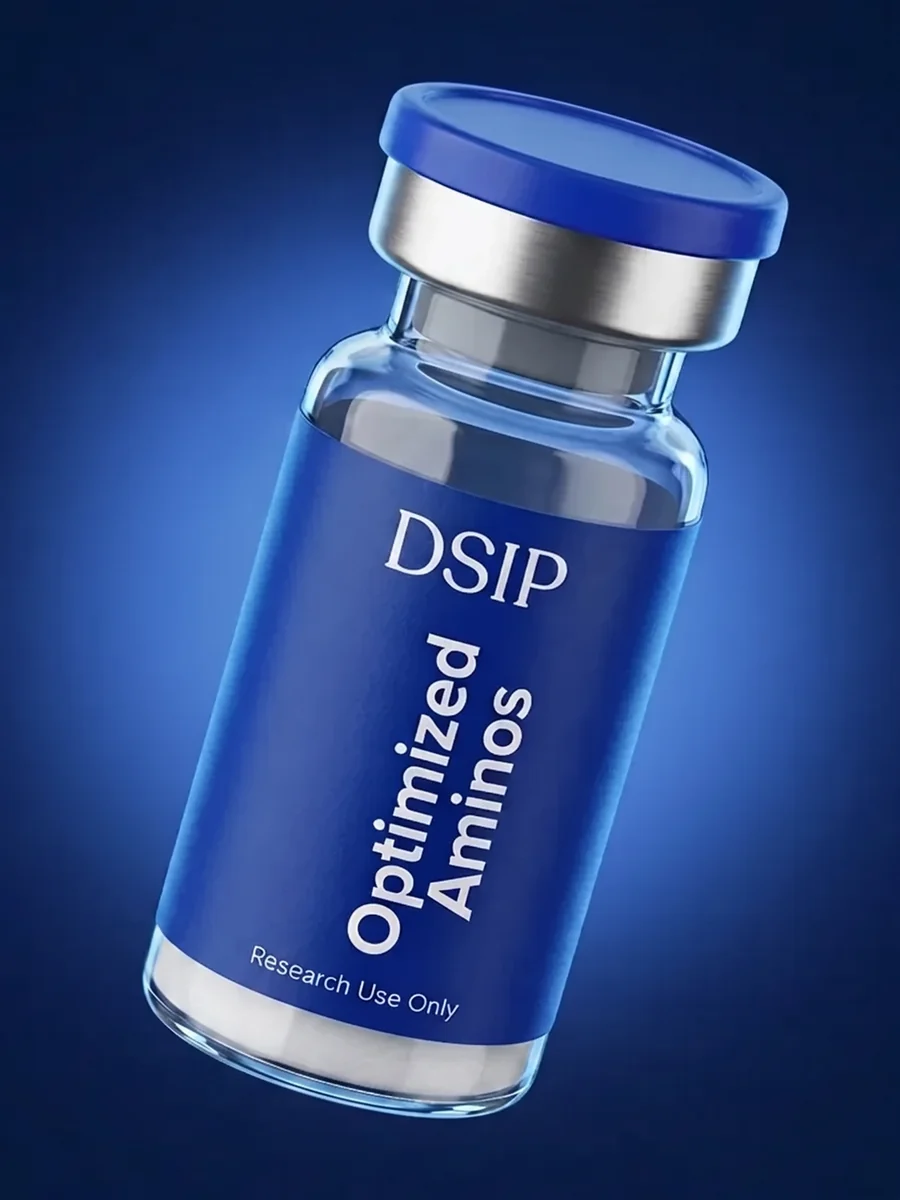
DSIP is supplied as a lyophilized powder and handled like other research peptides: reconstitute gently with bacteriostatic water, swirl rather than shake, refrigerate the reconstituted solution, and keep the dry vial cold and dark. Our reconstitution guide and storage guide apply directly.
Sourcing: verify identity
Judge any DSIP material on documentation, not on the label:
- Identity by mass spectrometry — confirming the exact molecule and its molecular weight.
- Purity by HPLC — a sharp main peak with an integration table. (See how to read an HPLC chromatogram.)
- Independent third-party testing — HPLC purity and mass-spec identity confirmed by an outside lab.
The DSIP sold here is third-party tested by Janoshik Analytical; its report does not include a mass-spectrometry identity test.
The bottom line
DSIP is a short, naturally occurring peptide named for the delta-wave sleep research in which it was first identified, and it remains a reference tool in sleep-and-circadian research literature. The research characterizes its pathways in model systems; it does not establish effects in humans. For any protocol, source it as a third-party tested, documented material and handle it like any other lyophilized peptide.
Further reading
- DSIP 10mg — third-party tested research material.
- How to store research peptides — keep the material stable.
- How to read an HPLC chromatogram — verify identity and purity.
All information on this page is provided for laboratory research and educational use only. Optimized Aminos products are not intended for human or veterinary use, and nothing here should be read as describing effects in humans or as dosing or administration guidance.
For laboratory and research use only. Not for human consumption.
Related research compounds
Compounds referenced in this article, available as research-grade lyophilized peptides with third-party tested COA.