Research Blog
How to Reconstitute Research Peptides with Bacteriostatic Water: Step-by-Step Lab Guide
Published
Step-by-step peptide reconstitution: the concentration math, choosing bacteriostatic water or acetic acid, swirling not shaking, storage and troubleshooting.
For laboratory research use only. This article describes how researchers prepare lyophilized peptides into solution for in-vitro laboratory work. It contains no dosing, human-use, veterinary, or clinical guidance of any kind.
To reconstitute a research peptide, bring the vial to room temperature, wipe both stoppers with alcohol, add a measured volume of bacteriostatic water slowly down the inside wall of the vial, then swirl gently until the solution is clear. Never shake it. Label the vial with the concentration and date, and keep it at 2–8 °C. The rest of this guide explains each step, the one calculation that matters, which solvent to use when water will not work, and what to do when the solution comes out cloudy.
What "reconstitution" actually means
Research peptides ship as a lyophilized (freeze-dried) powder: a small, often near-invisible film or pellet at the bottom of a sealed glass vial. In that dry state the peptide is stable and easy to transport, but it can't be measured, pipetted, or used in an assay. Reconstitution is the step of dissolving that powder into a known volume of sterile liquid, so you have a solution of known concentration to work with at the bench.
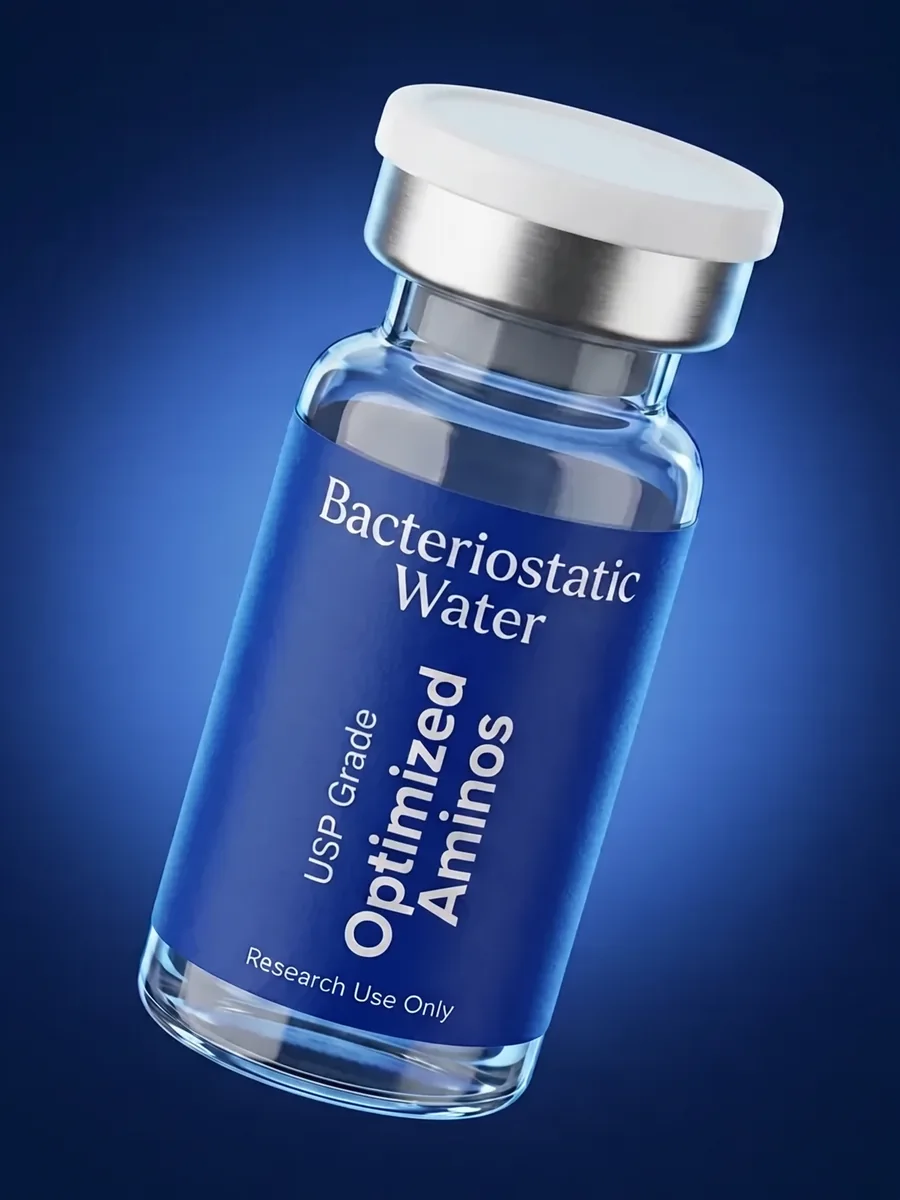
The standard liquid for most peptide work is bacteriostatic water: sterile water containing 0.9% benzyl alcohol. The benzyl alcohol suppresses microbial growth, which matters because a reconstituted solution is often kept in a fridge for days or weeks while a project runs. Plain sterile water works for same-day use; bacteriostatic water is the standard for anything that needs to sit.
What you need before you start
- The sealed peptide vial, at room temperature (let a cold vial warm for 20–30 minutes first)
- A vial of bacteriostatic water, or the solvent the compound's documentation names
- A sterile syringe or calibrated micropipette for transferring liquid
- 70% isopropyl alcohol prep pads for both rubber stoppers
- Nitrile gloves and a clean, draft-free bench surface
- A label or lab notebook to record concentration and date
The concentration math: the one thing to get right
The most important number in reconstitution is concentration: how much peptide sits in each millilitre of finished solution.
Concentration (mg/mL) = peptide mass in the vial (mg) ÷ volume of liquid added (mL)
- A 10 mg BPC-157 vial + 2 mL of bacteriostatic water = 5 mg/mL.
- The same 10 mg vial + 1 mL = 10 mg/mL, a more concentrated stock in a smaller volume.
Neither answer is more correct. The volume you choose sets the concentration, and researchers pick one that makes their downstream measurements convenient. Record the number: once the powder is in solution, the only way to know the concentration is the arithmetic you did going in. Our bacteriostatic water ratio guide has a table for every vial size on this site, and the peptide reconstitution calculator does the division for you.
Choosing the solvent
A peptide's solubility depends on its charge and how many hydrophobic residues it carries, so one solvent does not suit every compound.
- Bacteriostatic water suits most water-soluble peptides and is the default.
- Dilute acetic acid is used for basic or hydrophobic peptides that stay cloudy in plain water. IGF-1 LR3 and MOTS-c are two examples that do not fully dissolve in bacteriostatic water; an acetic acid reconstitution solution is the usual choice for them.
- A small percentage of DMSO is used in some protocols for very hydrophobic sequences, added before the aqueous vehicle.
When in doubt, start with the smallest volume of the mildest solvent and escalate only if the powder will not clear. The compound's documentation takes precedence over any general rule. Our reconstitution and storage reference covers solvent selection in more depth.
Step by step
1. Bring both vials to room temperature
Cold glass encourages condensation and makes the solvent mix more slowly. Let a refrigerated peptide vial sit for 20–30 minutes before you begin.
2. Sanitize both stoppers
Wipe the rubber top of the peptide vial and the solvent vial each with a fresh alcohol pad and let them air-dry for a few seconds. You are keeping a closed system clean; do not remove the metal crimp seal.
3. Draw your measured volume
Draw your chosen volume of solvent, 2 mL in the BPC-157 example above. Read it against the barrel graduations at eye level: a tenth of a millilitre off shifts the final concentration.
4. Add the liquid slowly, down the glass wall
Pass through the peptide vial's stopper and angle the tip so the liquid runs down the inside wall of the glass rather than striking the powder directly. Release it in a slow, controlled push.
5. Let it dissolve: swirl, never shake
This is the step most often done wrong. Set the vial down and let the powder dissolve, or swirl it gently in slow circles. Vigorous shaking creates foam and shear forces that can damage the peptide's structure. Within a minute or two you should have a clear, colourless solution with no visible particles.
6. Inspect, label and refrigerate
Hold the vial against a light and a dark background to check for haze or particles. Write the compound, concentration and reconstitution date on the vial or in your log, then store it at 2–8 °C.
Storage: dry versus reconstituted
- Lyophilized powder is the most stable form. Keep unopened vials cold, dark and dry; many peptides tolerate freezer storage for long-term holding.
- Reconstituted solution is far less stable. Keep it at 2–8 °C and use it within the window its documentation gives, commonly around 30 days for a bacteriostatic solution. Repeated warming and cooling shortens its life, so take out only what a session needs.
- Freezing a solution: if a protocol calls for it, split the solution into single-use aliquots first, so each portion is thawed once rather than cycled repeatedly.
Our guide to storing research peptides covers temperatures, light and freeze-thaw in detail.
Troubleshooting
- Cloudy solution: the peptide has usually not fully dissolved. Let it sit longer at room temperature and swirl again. If it stays cloudy, the solvent is likely wrong for that sequence; check the documentation for a recommended vehicle.
- Powder left undissolved: allow more time, swirl gently, and re-check the volume you added.
- Foam or bubbles: the liquid went in too fast or the vial was shaken. Let it settle; add more slowly next time.
- Colour change or particles appearing later: a sign of degradation or contamination. Do not use that solution in an experiment.
Common mistakes to avoid
- Shaking instead of swirling, the most common cause of a degraded solution.
- Guessing the volume. Eyeballing the liquid means you never truly know your concentration.
- Aiming at the pellet instead of the glass wall.
- Using plain sterile water for a solution you plan to store; without a preservative it should be used promptly.
- Forgetting to label. An unlabelled vial of clear liquid is an unknown, and unknowns get discarded.
Where the certificate fits in
The concentration math assumes the vial holds what its label says. A third-party Certificate of Analysis can check that: the Janoshik Analytical reports published in the Optimized Aminos COA archive state the measured amount of peptide in the tested vial alongside its HPLC purity. Not every product has a certificate; the lab waters and some peptides currently have none. Our guide on reading a peptide COA and spotting a fake one explains what those reports contain and how to verify one with the lab.
Frequently Asked Questions
Can I use plain sterile water instead of bacteriostatic water?
Yes, for a solution used the same day. Plain sterile water has no preservative, so a solution kept for days or weeks is more exposed to microbial growth. Bacteriostatic water's 0.9% benzyl alcohol is what makes a multi-use vial practical.
How long does a reconstituted peptide last in the fridge?
It depends on the compound, so the documentation for that product governs. As a general reference, a bacteriostatic solution kept at 2–8 °C, protected from light and not repeatedly warmed, is commonly used within about 30 days.
Why is my reconstituted peptide cloudy?
Usually because it has not fully dissolved, either because it needs more time or because the sequence is hydrophobic and needs a different solvent such as dilute acetic acid. Cloudiness that appears later, in a solution that was clear, is more often a sign of degradation.
Further reading
- How much bacteriostatic water to add: the ratio table by vial size.
- Peptide reconstitution calculator: vial mass and volume in, concentration out.
- How to store research peptides: refrigeration, freezing and shelf life.
For laboratory and research use only. Not for human or animal consumption.
Related research compounds
Compounds referenced in this article, available as research-grade lyophilized peptides with third-party tested COA.
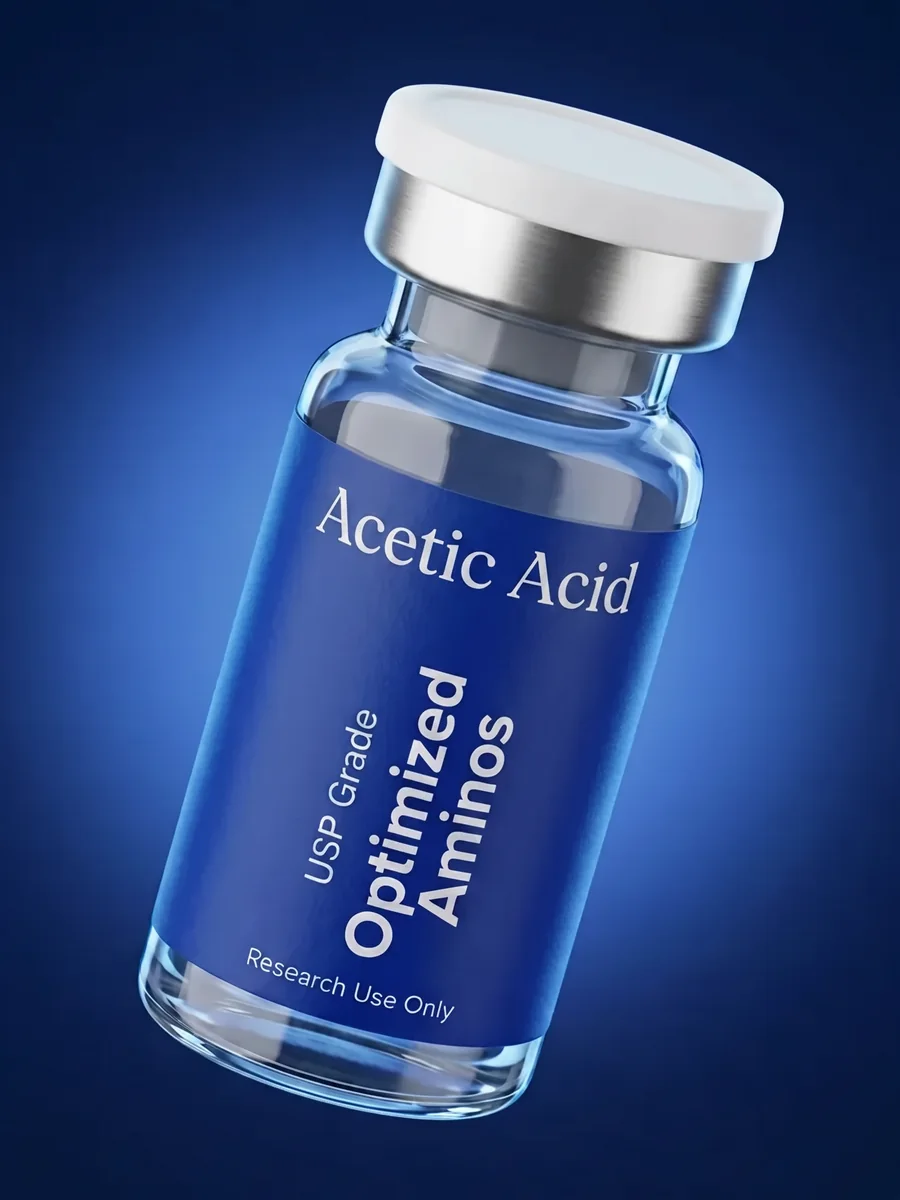
Dilute acetic acid solution for laboratory reconstitution of peptides with poor solubility in bacteriostatic water. For laboratory research use only. Not for human or animal consumption.
View productUSP-grade bacteriostatic water (0.9% benzyl alcohol) in a sterile 10 mL multi-use vial. Manufactured under cGMP conditions and tested for endotoxins, sterility, and particulate matter. A standard laboratory solvent. Store at controlled room temperature away from direct light. Sold as a laboratory reagent for research use only. Not for human or animal injection or any clinical use.
View product