Research Blog
Sterile Technique at the Research Bench: A Handling Guide
Published
Reconstituted peptides are fragile, contamination-prone solutions. This guide covers the aseptic handling habits — surface prep, vial hygiene, single-use consumables — that keep a research sample intact from first draw to storage. Research use only.
For laboratory research use only. This article describes general aseptic handling practice for reconstituted research peptides at the bench. It contains no dosing, human-use, veterinary, or clinical guidance and describes laboratory technique only.
Why sterile technique is a data-quality issue
A lyophilized peptide in a sealed vial is remarkably stable. The moment it's reconstituted, that changes: the solution becomes a nutrient-friendly liquid that microbial contaminants are happy to colonize, and every time a needle enters the stopper there's an opportunity to introduce them. Contamination isn't just a sterility problem — it's a data problem. A cloudy, colonized, or degraded solution undermines any measurement made from it, and it does so silently, because the sample can look fine for a while before it doesn't. Good aseptic technique is what keeps a research sample representing the compound you intended to study rather than whatever grew in it.
This guide assumes you've already reconstituted correctly; if you haven't, start with our reconstitution guide and return here for the handling habits that protect the solution afterward.
Prepare the workspace before you open anything
Aseptic technique starts before the first vial is touched. Clear the bench of clutter, because every extra object is a surface a needle or stopper can brush against. Wipe the working area with 70% isopropyl alcohol and let it air-dry — the drying time is when the alcohol actually does its work, so don't rush it. Work away from air vents, open windows, and foot traffic, all of which move airborne particles across your field. Assemble everything you'll need first: solvent, consumables, labels, and a sharps container within reach, so you're never leaving an open vial exposed while you hunt for something.
Hands and gloves
Wash hands, then don clean gloves. Gloves aren't sterile out of the box, so wipe the gloved fingertips with alcohol as well, and re-wipe any time you touch your face, phone, or a non-clean surface. The discipline is simple: if a gloved hand contacts anything that isn't part of the clean setup, decontaminate before continuing.
Vial and stopper hygiene
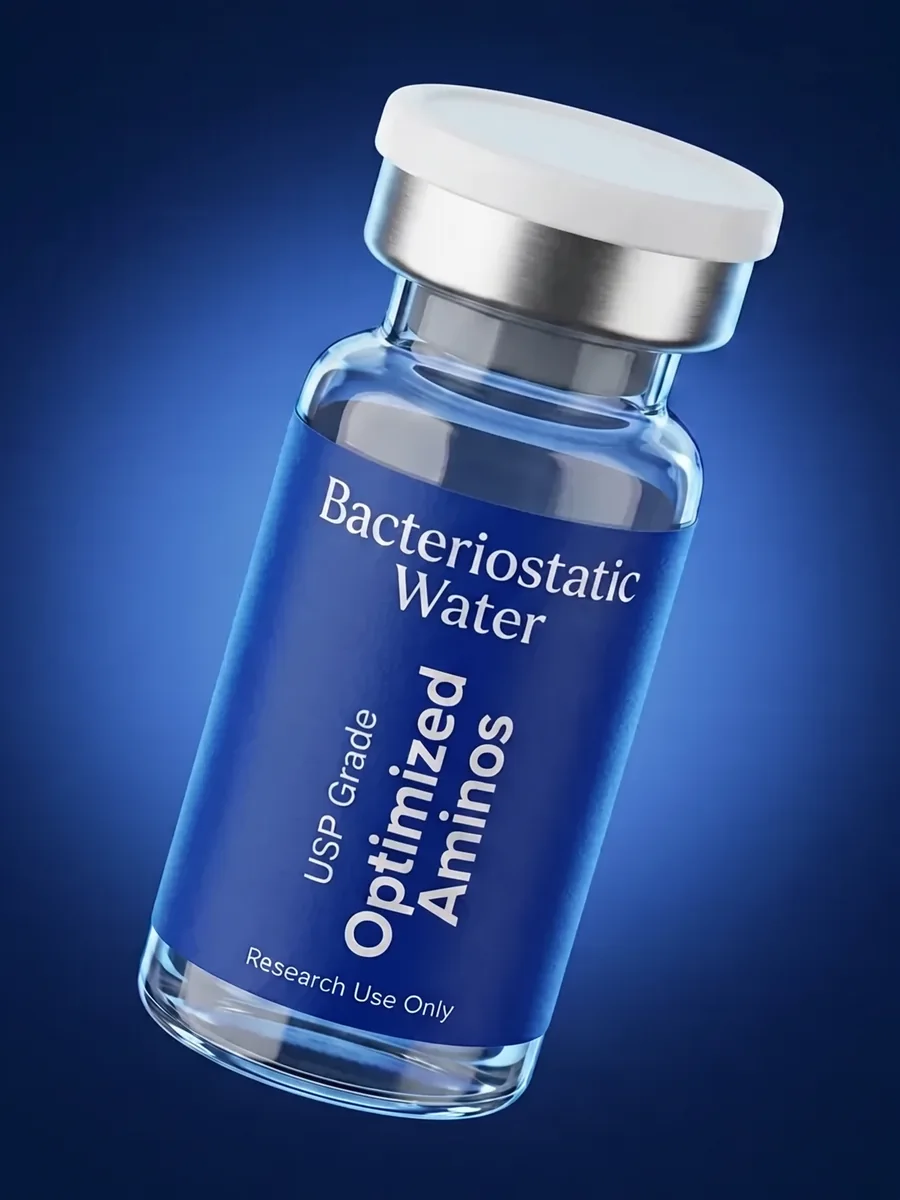
The rubber stopper is the single most important surface in the whole procedure, because it's the gateway into the solution. Swab it with a fresh alcohol wipe and let it dry every single time before a needle goes in — not just on first use. Treat the stopper as contaminated the instant it's exposed to open air again. When drawing solvent such as bacteriostatic water, the bacteriostatic agent gives some margin against incidental contamination in a multi-draw vial, but it is a safety net, not a substitute for swabbing. Never touch the stopper with your fingers, and never lay a vial down on its side with the stopper exposed.
Needles and the no-touch rule
The core principle of aseptic work is the "no-touch" rule: any surface that will contact the solution — the needle, the inside of the stopper path, the syringe tip — must never contact anything non-clean. A needle that grazes the outside of a vial, the bench, or a gloved fingertip is compromised and should be replaced. Which leads to the most important consumable habit of all.
One needle, one draw
Reusing a needle is the fastest way to contaminate a research sample. Each pass through a rubber stopper dulls and micro-damages the needle tip, and a coring event — where the needle punches a tiny plug out of the stopper — can drop rubber fragments into the solution. A dull needle also tears the stopper, widening the entry channel for contaminants on later draws. Single-use needles are inexpensive relative to the value of the sample they protect. Use a fresh one for each draw, and dispose of it immediately in a proper sharps container rather than leaving it on the bench.
- Fresh needle for every entry into the vial.
- Swab the stopper and let it dry before every entry.
- Never re-cap and re-use a needle that has already been through a stopper.
- Keep the sharps container open and within reach so used needles leave the field at once.
After the draw: label, store, and protect
Once reconstituted, the solution is on a clock. Label the vial immediately with the compound, concentration, and the date it was reconstituted — an unlabelled vial is a data-integrity hazard waiting to happen. Return it to cold storage promptly; time spent warm at the bench is time the solution is least stable. For how temperature actually affects a peptide in solution, our storage stress-test breakdown covers what degradation looks like and how quickly it sets in. Inspect the solution before each use: it should be clear and particle-free. Cloudiness, floating matter, or a color change are reasons to discard the vial, not to push on.
The habit that ties it together
None of these steps is complicated in isolation. What makes aseptic technique work is doing all of them, every time, without deciding that this one draw is fine to shortcut. The compounds themselves are only as trustworthy as the handling around them — which is why we publish third-party certificates in the COA archive, and why the same care that goes into producing a clean BPC-157 batch has to continue at your bench. A verified vial mishandled after opening is no longer verified.
Further reading
- How to reconstitute research peptides with bacteriostatic water — the step that precedes everything here.
- Peptide storage stress test — what happens to a solution that isn't kept cold.
- The COA archive — verify the material before you ever open it.
All information on this page is provided for laboratory research and educational use only. Optimized Aminos products are not intended for human or veterinary use, and nothing here should be read as dosing or administration guidance.
For laboratory and research use only. Not for human consumption.
Related research compounds
Compounds referenced in this article, available as research-grade lyophilized peptides with third-party tested COA.