Research Blog
DSIP vs Selank: A Sleep-and-Stress Axis Research Comparison
Published
A research-literature comparison of DSIP and Selank: different origins, different receptor pathways, and where the preclinical literature on each actually diverges. Research use only.
For laboratory and research use only. Not for human consumption.
Two Short Neuropeptides, Two Different Research Literatures
DSIP (delta sleep-inducing peptide) and Selank are both short, well-characterized neuropeptides frequently stocked side by side in research catalogs, and both show up in searches about sleep, stress, and cognitive-axis research compounds. But the published literature on each examines different pathways, different model systems, and different endpoints. This comparison lays out what separates them so a lab can pick the correct reference material for a given protocol, rather than treating "calming neuropeptide" as one interchangeable category.
Discovery and Structural Background
DSIP's Origin
DSIP was isolated during mid-20th-century research into substances associated with sleep-related brain states in animal models. Its name reflects the delta-wave EEG activity researchers were studying at the time of its identification, not a claimed effect. It is a short, naturally occurring peptide, which makes it straightforward to synthesize and to confirm by mass spectrometry.
Selank's Origin
Selank is a synthetic analog developed from the endogenous immunomodulatory peptide tuftsin, engineered by Russian researchers for improved metabolic stability. Unlike DSIP, which is a naturally occurring sequence, Selank is a designed analog — its structure was specifically modified to resist rapid enzymatic breakdown, which is part of why it appears frequently in stability and pharmacokinetics-focused research literature.
Where the Research Diverges
DSIP in Sleep and Circadian Models
Preclinical work on DSIP centers on circadian-rhythm signaling, stress-response pathways, and neuromodulatory activity in animal models, growing out of its original sleep-associated discovery context. Because it is an endogenous peptide, much of the literature focuses on characterizing where and how it acts in these systems rather than a single defined application. Findings in these model systems describe research observations only, not effects in humans.
Selank in Anxiolytic and Immune Models
Selank's literature base sits primarily in anxiolytic-model and neuroimmune research, building on its tuftsin lineage. Published work has examined its interaction with GABA-A signaling components and markers of immune-system modulation in rodent studies. This is a distinct research question from DSIP's circadian/stress-pathway focus, even though both compounds are sometimes grouped informally as "calming" research peptides.
Side-by-Side Comparison
| Attribute | DSIP | Selank |
|---|---|---|
| Origin | Naturally occurring, isolated from sleep-state research | Synthetic analog of tuftsin |
| Primary research literature | Circadian rhythm, stress-response, sleep-associated signaling | Anxiolytic models, GABA-A pathway, immune modulation |
| Structural class | Short endogenous neuropeptide | Engineered peptide analog |
| Typical vial size sold here | 10mg lyophilized | 10mg lyophilized |
| Reconstitution fluid | Bacteriostatic water | Bacteriostatic water |
Reconstitution and Handling
Both peptides are supplied as lyophilized powder and handled the same way at the bench: reconstitute gently with bacteriostatic water, swirl rather than shake to avoid aggregation, and refrigerate the reconstituted solution. Concentration math differs by vial and target dilution, so use the compound-specific guides: our DSIP reconstitution guide and Selank reconstitution guide each walk through the mg-to-mL math for a 10mg vial.
Sourcing: Verify Identity Before Comparing Literature
A comparison of research findings is only meaningful if the material itself is confirmed. For either peptide, look for mass-spectrometry identity confirmation, an HPLC purity trace with a sharp main peak, and independent third-party testing. Every batch sold here carries a published Certificate of Analysis. Our DSIP literature overview covers what published sleep-associated research has actually examined in more depth.
Frequently Asked Questions
Are DSIP and Selank the same class of peptide?
No. DSIP is a naturally occurring endogenous peptide; Selank is a synthetic analog engineered from tuftsin. They are studied in overlapping but distinct research literatures.
Do DSIP and Selank act on the same receptor pathways?
Published research associates them with different systems — DSIP with circadian and stress-response signaling, Selank with GABA-A pathway components and immune-modulation markers. The literature does not describe them as interchangeable.
Can DSIP and Selank be reconstituted the same way?
Both are lyophilized powders reconstituted with bacteriostatic water using the same general technique, though the mg-to-mL math differs by vial size and target concentration — see the compound-specific reconstitution guides linked above.
Is one better studied than the other?
Both have decades of published preclinical literature, but in different research domains, so "better studied" depends on which pathway a protocol is investigating.
How should identity and purity be verified for either peptide?
Through a Certificate of Analysis showing mass-spectrometry identity confirmation and HPLC purity data from independent third-party testing, not from label claims alone.
Are these peptides approved for human or veterinary use?
No. Both are sold strictly for laboratory research use, and nothing in the published literature discussed here describes human or veterinary application.
Further Reading
- DSIP 10mg — third-party tested research material with a published COA.
- Selank 10mg — third-party tested research material with a published COA.
- Selank Research Overview — mechanism and anxiolytic-model literature in depth.
Reviewed by the Optimized Aminos research team — last updated August 27, 2026.
For laboratory and research use only. Not for human consumption.
Related research compounds
Compounds referenced in this article, available as research-grade lyophilized peptides with third-party tested COA.
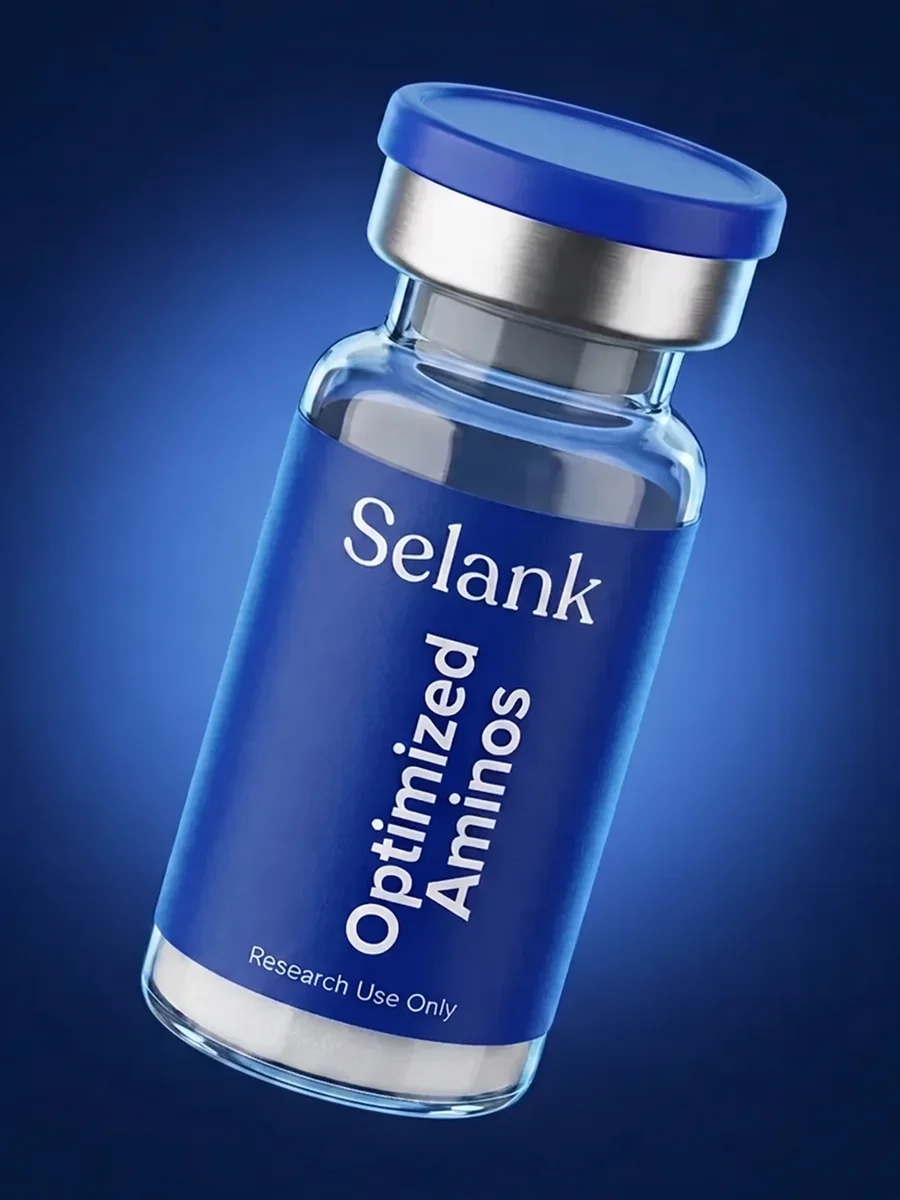
Selank — synthetic heptapeptide analog of tuftsin (Thr-Lys-Pro-Arg-Pro-Gly-Pro). Manufactured at >98% purity, verified by HPLC and mass spectrometry. Referenced in published preclinical literature on peptide signaling. Supplied as lyophilized powder in a sealed sterile vial. Store at 2-8°C; reconstitute with bacteriostatic water for laboratory use. For in-vitro laboratory and analytical research use only. Not a drug, supplement, cosmetic, or therapeutic product. Not for human or animal consumption, ingestion, injection, or any clinical use. Not FDA-approved.
View product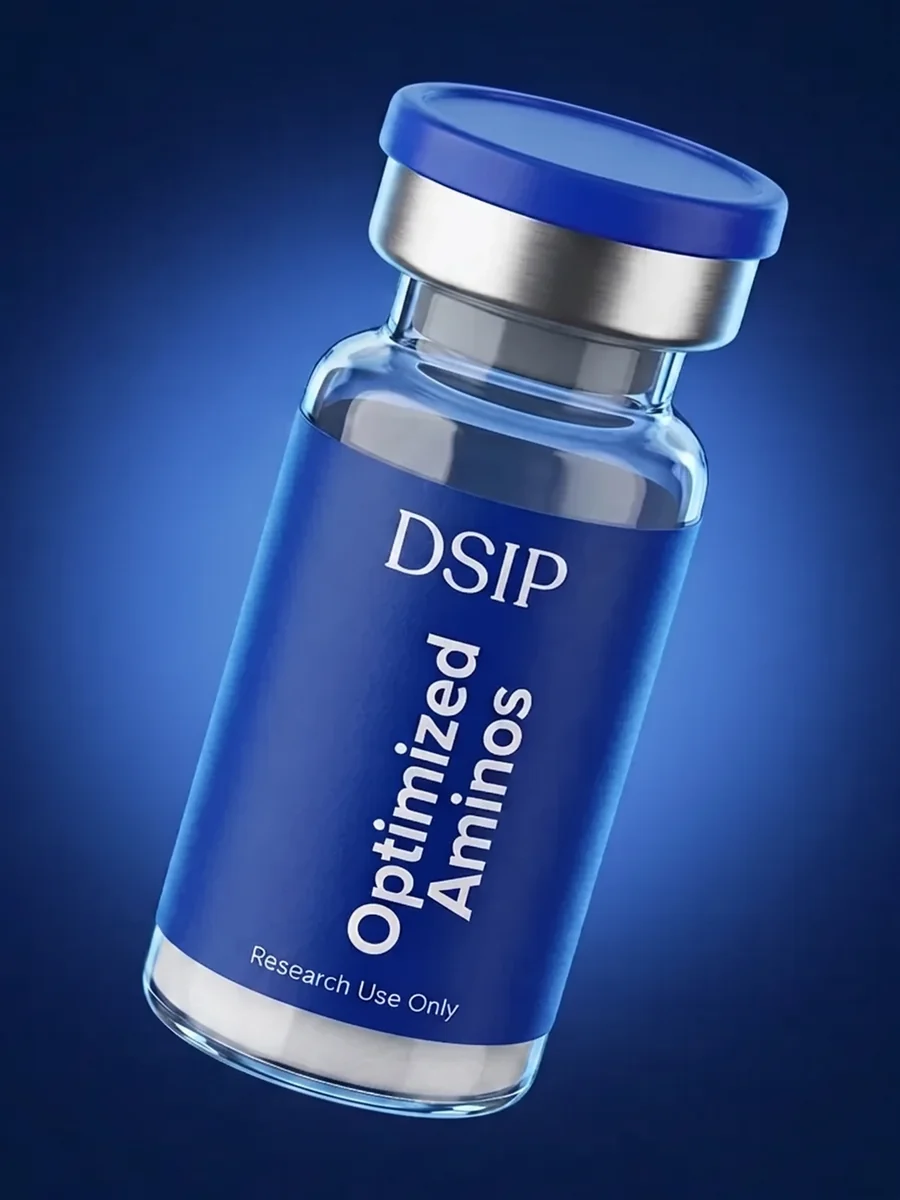
DSIP (Delta Sleep-Inducing Peptide), 10 mg per vial, supplied as a research-grade lyophilized reference peptide. Synthesized at >98% purity, verified by HPLC and mass spectrometry. Referenced in published preclinical literature on neuroendocrine signaling. Each vial is sealed under nitrogen for long-term stability. Store at -20°C; reconstitute with bacteriostatic water. For in-vitro laboratory and analytical research use only. Not a drug, supplement, or therapeutic product. Not for human or animal consumption, ingestion, injection, or any clinical use. Not FDA-approved.
View product