Research Blog
Selank vs Semax: Two Nootropic Research Peptides Compared
Published
Selank vs Semax: sequences, parent molecules (tuftsin vs an ACTH fragment), the pathways each is studied along, and why they are not interchangeable.
For laboratory research use only. This article compares two research peptides as they appear in the published preclinical literature. It describes laboratory and animal-model research only, contains no dosing, human-use, veterinary, or clinical guidance, and makes no health or benefit claims.
Selank and Semax are both short synthetic heptapeptides from the Russian research tradition, and both end in the same stabilising Pro-Gly-Pro tail, but they are built on different parent molecules and studied along different pathways. Semax is derived from a fragment of adrenocorticotropic hormone (ACTH), and its preclinical literature centres on neurotrophic signalling such as BDNF. Selank is derived from tuftsin, an immunomodulatory peptide, and its literature centres on anxiety-related behaviour and GABAergic signalling in animal models. They are grouped together because they share an origin and a handling profile, not because they are interchangeable.
Structure and origin
Semax
Semax has the sequence Met-Glu-His-Phe-Pro-Gly-Pro (molecular weight about 813.9 Da). Its first four residues are the ACTH(4–7) sequence; the Pro-Gly-Pro extension slows its breakdown. It is usually described in the literature as an analog of the ACTH(4–10) fragment, which places it in the melanocortin-related family.
Selank
Selank has the sequence Thr-Lys-Pro-Arg-Pro-Gly-Pro. Its first four residues are tuftsin, a naturally occurring immunomodulatory tetrapeptide; the same Pro-Gly-Pro extension stabilises it. Its structural heritage is entirely different from Semax's, which is the first clue that the two have been investigated along different lines.
What the research has focused on
Semax: neurotrophic and melanocortin-related pathways
The Semax literature clusters around neurotrophic signalling. Rodent studies have examined its effect on brain-derived neurotrophic factor (BDNF) and its receptor trkB: for example, a 2006 study in Brain Research reported changes in BDNF and trkB expression in the rat hippocampus. Other work has used Semax as a probe in animal models of cerebral ischemia and neural stress. The through-line is neurotrophic factor expression and neuronal resilience in controlled models.
Selank: anxiety-related and GABAergic pathways
Selank's research leans a different way. Its tuftsin heritage links it to immunomodulatory signalling, but it has been studied most in animal models of anxiety-related behaviour, where the literature examines GABAergic and serotonergic pathways. A 2016 study in Frontiers in Pharmacology, for example, examined how Selank administration affected the expression of genes involved in GABAergic neurotransmission in rodents. BDNF-related measures appear in both literatures, which is part of why the two are grouped, but the framing of the research differs.
Side-by-side summary
| Semax | Selank | |
|---|---|---|
| Sequence | Met-Glu-His-Phe-Pro-Gly-Pro | Thr-Lys-Pro-Arg-Pro-Gly-Pro |
| Parent molecule | ACTH fragment | Tuftsin |
| Structural family | Melanocortin-related | Tuftsin analog |
| Main research framing | Neurotrophic and neuroprotective signalling | Anxiety-related and GABAergic signalling |
| Shared features | Pro-Gly-Pro tail; BDNF-related measures; studied mainly in rodent and cell models | |
Choosing between them for a research program
Because they map to different pathways, the useful question is not which is better but which matches the model a program is built around. Work framed around neurotrophic signalling, neural stress or melanocortin-related biology aligns with the Semax literature. Work framed around anxiety-related behaviour or GABAergic signalling aligns with the Selank literature. Some designs include both as comparators precisely because their mechanisms diverge.
Handling: effectively identical
Both are supplied as lyophilized powder and handled like other short peptides: reconstitute gently with bacteriostatic water, swirl rather than shake, refrigerate the solution, and keep the dry vial cold and dark. Our reconstitution guide and storage guide apply to both.
Documentation for both
Both products on this site are third-party tested by Janoshik Analytical. Their reports do not include a mass-spectrometry identity panel; our guide to what a 99% purity figure means explains the difference.
Frequently Asked Questions
Is Semax related to Selank?
Only loosely. Both are Russian-origin synthetic heptapeptides that end in the same Pro-Gly-Pro sequence, but Semax is built on an ACTH fragment and Selank on tuftsin, and they are studied along different pathways.
Are Selank and Semax the same thing?
No. They have different sequences, different parent molecules and different research literatures. Treating them as one compound with two names misses the distinction the research draws.
Why are they so often sold and discussed together?
They share a research origin, a similar size and structure, and an identical handling profile, and both appear in central-nervous-system research. That makes them natural neighbours in a catalogue, even though they answer different research questions.
Further reading
- Selank 10mg and Semax 10mg: both third-party tested by Janoshik Analytical.
- Semax's Russian research origins: the history behind the compound.
- The peptide chemistry glossary: the pathway and structural terms used above.
For laboratory and research use only. Not for human or animal consumption.
Related research compounds
Compounds referenced in this article, available as research-grade lyophilized peptides with third-party tested COA.
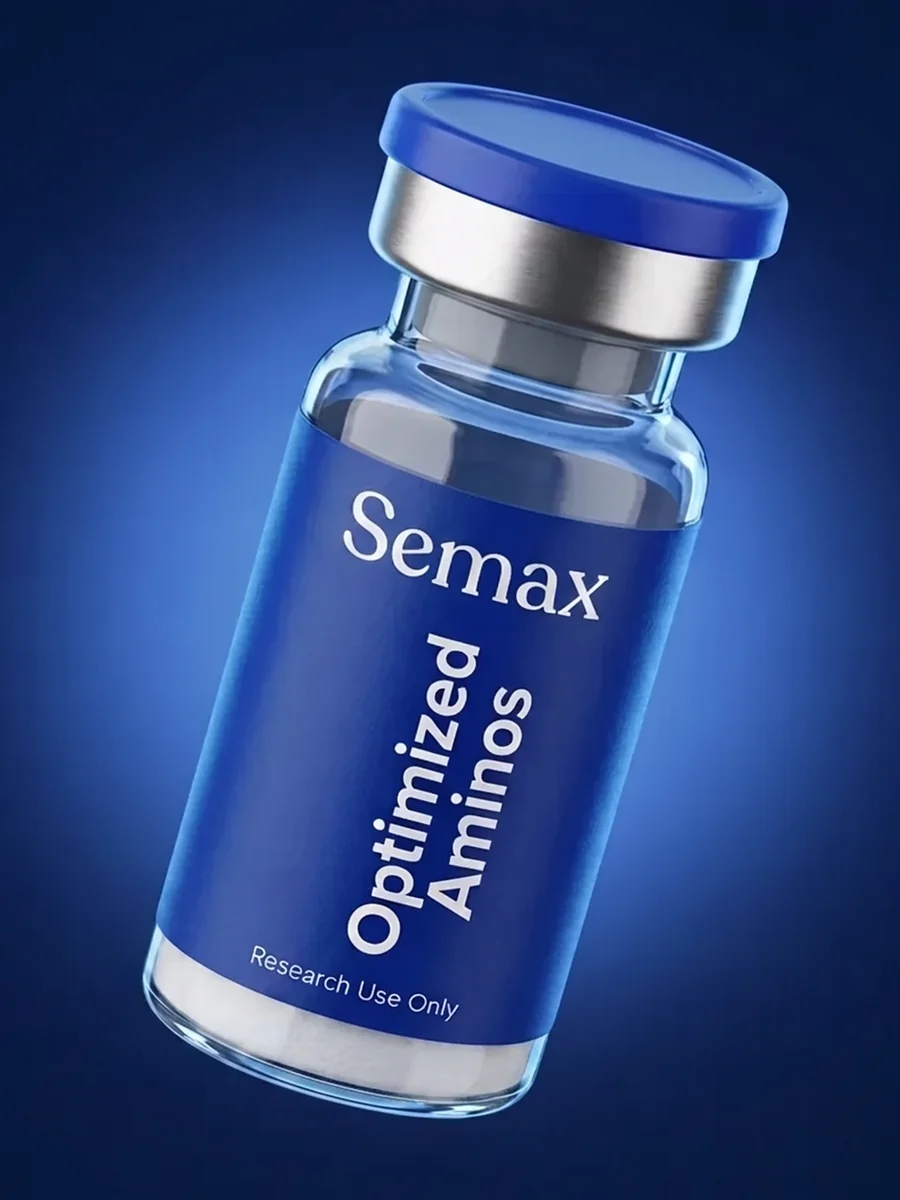
Semax — synthetic heptapeptide analog of ACTH(4-10), sequence Met-Glu-His-Phe-Pro-Gly-Pro (MW 813.93 Da). Manufactured at >98% purity. Third-party tested. Studied in published preclinical neuroscience literature. Supplied as a stable lyophilized powder; store at 2-8°C protected from light. For in-vitro laboratory and analytical research use only. Not a drug, supplement, cosmetic, or therapeutic product. Not for human or animal consumption, ingestion, injection, or any clinical use. Not FDA-approved.
View product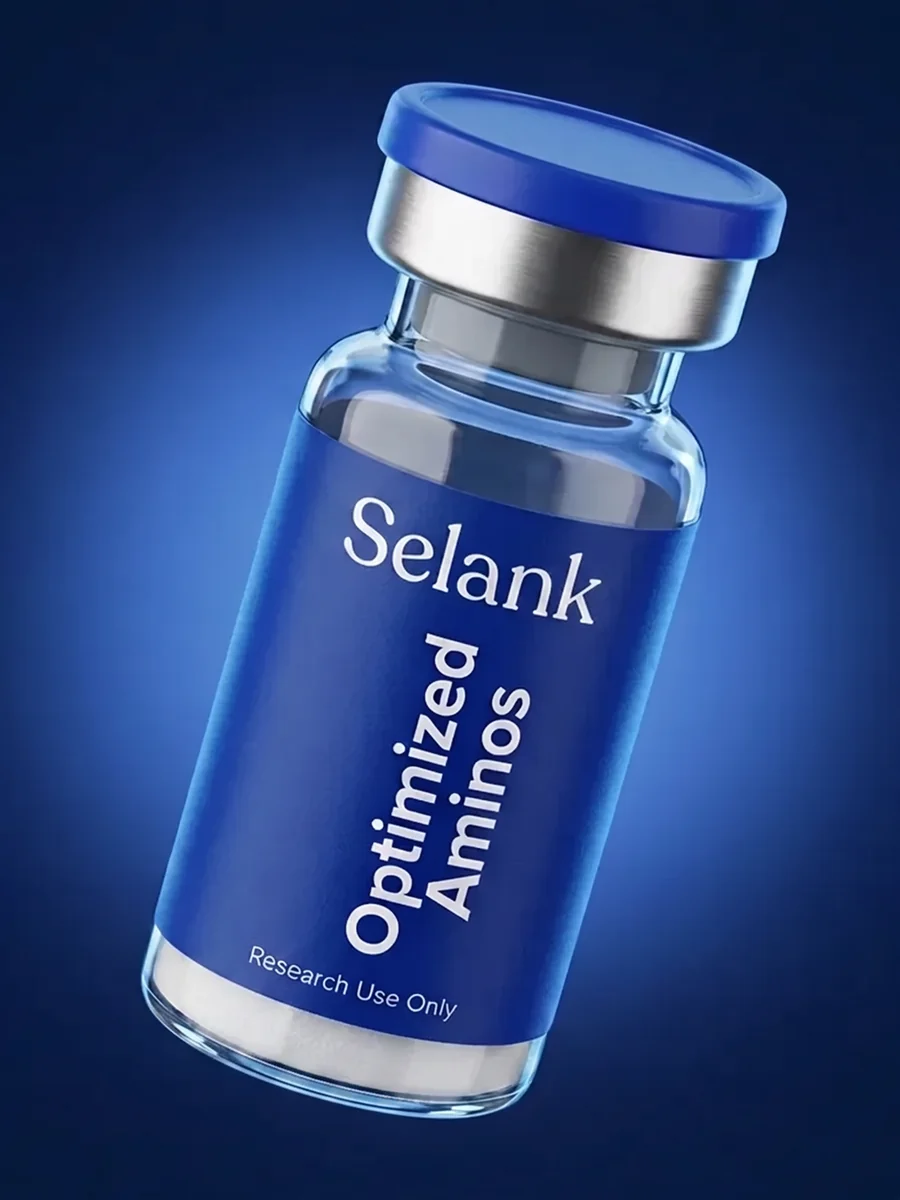
Selank — synthetic heptapeptide analog of tuftsin (Thr-Lys-Pro-Arg-Pro-Gly-Pro). Manufactured at >98% purity. Third-party tested. Referenced in published preclinical literature on peptide signaling. Supplied as lyophilized powder in a sealed sterile vial. Store at 2-8°C. For in-vitro laboratory and analytical research use only. Not a drug, supplement, cosmetic, or therapeutic product. Not for human or animal consumption, ingestion, injection, or any clinical use. Not FDA-approved.
View product