Research Blog
N-Acetyl Semax Amidate vs Semax: A Research Comparison
Published
N-Acetyl Semax Amidate is a modified Semax analog studied in research literature. Compare structural differences and cognitive-research positioning here.
For laboratory and research use only. Not for human consumption.
N-Acetyl Semax Amidate is a structural analog of Semax, one of the more widely referenced peptides in cognitive-research literature. This comparison summarizes what published sources describe about the structural modifications separating the two sequences and how each is positioned within the existing research literature.
Key facts: N-Acetyl Semax Amidate is built from the same parent sequence as Semax, a heptapeptide derived from ACTH(4-10), with two added modifications: N-terminal acetylation and C-terminal amidation. These modifications are discussed in peptide chemistry literature as changes intended to alter the molecule's stability and research handling properties relative to unmodified Semax. Both peptides are referenced in cognitive-research peptide literature, and researchers comparing them typically focus on structural and stability differences rather than regarding the two as interchangeable. Both are supplied strictly as lyophilized research chemicals for laboratory use.
Semax as the Parent Sequence
Semax is described extensively in the peptide research literature as a synthetic heptapeptide derived from a fragment of adrenocorticotropic hormone, specifically the ACTH(4-10) sequence, with additional amino acids appended to the structure. It has a long research history originating from Russian pharmacological literature, which our article on Semax's Russian research origins covers in detail, including how the compound has been studied across four decades of published work. Semax serves as the reference point, or parent sequence, from which several modified analogs — including N-Acetyl Semax Amidate — have been developed and studied.
For researchers who want a broader look at how Semax is positioned relative to other cognitive-research peptides, our comparisons of Semax versus Selank and Selank versus Semax both provide additional context on how the compound is framed within the broader nootropic-research peptide literature.
What Structural Modifications Define N-Acetyl Semax Amidate
The Acetyl Group
The first modification described in the literature is the addition of an acetyl group to the N-terminus of the Semax sequence. Acetylation is a chemical modification referenced broadly across peptide chemistry research, and it is generally discussed in the literature as a way to alter a peptide's terminal charge and, in some published discussions, its resistance to certain enzymatic degradation pathways encountered during laboratory research handling.
Amidation of the C-Terminus
The second modification is amidation at the C-terminus, meaning the terminal carboxyl group characteristic of the unmodified peptide is replaced with an amide group. Like acetylation, amidation is a modification frequently discussed in the peptide stability literature as a structural change that can affect a molecule's charge profile and its behavior in solution during laboratory research use. Together, these two modifications are what published sources cite as distinguishing N-Acetyl Semax Amidate from the parent Semax sequence at a structural level.
How Published Research Frames the Two Analogs
Because N-Acetyl Semax Amidate shares its core sequence origin with Semax, it is typically discussed in the same body of cognitive-research peptide literature, with researchers noting the structural modifications as the primary point of distinction rather than describing the two as functionally equivalent research tools. Published comparisons tend to focus on how the acetylation and amidation changes are theorized to influence the molecule's behavior during laboratory handling and storage, rather than proposing a different research target altogether. Readers looking for broader definitions of terms like "amidation," "acetylation," and "terminal modification" as used throughout this literature can consult our peptide chemistry glossary.
Comparing Stability Discussions in the Literature
Peptide chemistry literature frequently discusses terminal modifications like those found in N-Acetyl Semax Amidate in the context of research handling properties — for example, how a compound behaves across freeze-thaw cycles, or how consistently it can be measured using analytical methods like HPLC. These discussions are presented as general peptide-chemistry principles rather than compound-specific performance claims, and researchers are encouraged to rely on their own analytical verification rather than assuming stability characteristics based on structural class alone. Sourcing decisions should always be paired with independent verification; researchers can review our third-party testing page for the kind of documentation that should accompany any Semax-family research peptide.
Concentration and Reconstitution Math for Laboratory Records
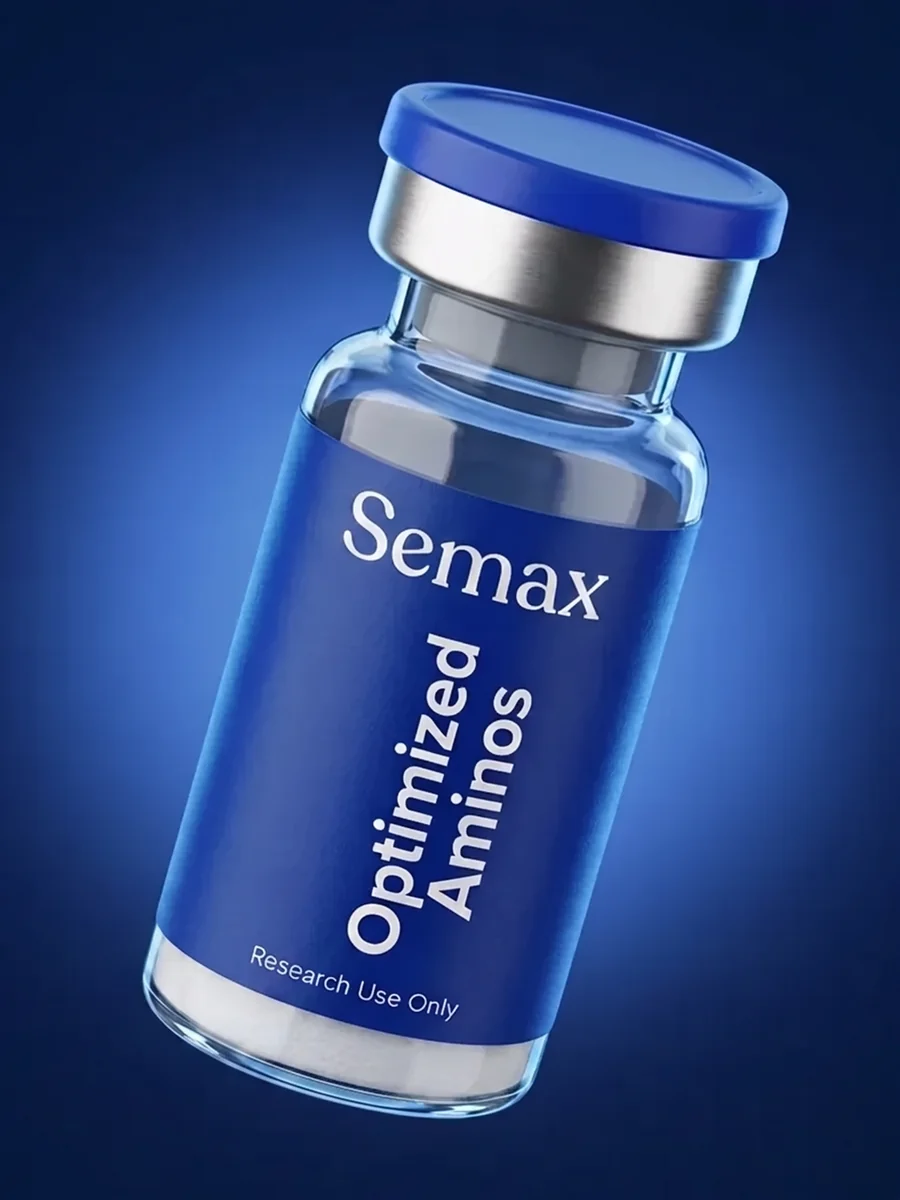
Both Semax and N-Acetyl Semax Amidate are typically supplied as lyophilized powder for laboratory reconstitution, and both use the same standard concentration calculation for documentation purposes: total peptide mass in the vial (mg) divided by the volume of diluent added (mL) equals the concentration in mg/mL. A vial documented at 10 mg reconstituted with 2 mL of solvent, for instance, yields a recorded concentration of 5 mg/mL. Researchers can use our reconstitution calculator to verify this figure for either compound before recording it in a laboratory notebook. Semax stock intended for comparative studies is available as Semax 10mg, and researchers running side-by-side cognitive-research protocols often pair it with Selank 10mg to standardize a broader nootropic-research comparison panel.
Frequently Asked Questions
What is the parent compound for N-Acetyl Semax Amidate?
N-Acetyl Semax Amidate is described in research literature as a structural analog of Semax, the heptapeptide sequence derived from a fragment of adrenocorticotropic hormone, ACTH(4-10). Semax serves as the parent sequence from which the modified analog is built.
What structural changes differentiate N-Acetyl Semax Amidate from Semax?
Published descriptions note two modifications: an acetyl group added to the N-terminus and amidation of the C-terminus, both absent from the parent Semax sequence. Researchers studying peptide stability describe these modifications as changes intended to alter how the molecule is handled in solution and how it may resist enzymatic breakdown compared to unmodified Semax.
Why do researchers discuss acetylation and amidation in peptide stability literature?
Acetylation and amidation are chemical modifications frequently referenced in peptide chemistry literature because they can change a peptide's charge distribution and its susceptibility to exopeptidase activity in laboratory assays. Literature comparing modified and unmodified peptide analogs often uses these terms to explain observed differences in research handling properties between a parent sequence and its modified counterpart.
Are Semax and N-Acetyl Semax Amidate studied in the same research contexts?
Both peptides appear in cognitive-research peptide literature and are frequently discussed alongside each other because of their shared ACTH(4-10)-derived origin. Researchers comparing the two typically focus on structural and stability differences described in published sources rather than regarding them as interchangeable.
How is concentration calculated when reconstituting these peptides for lab documentation?
The standard laboratory calculation divides the peptide mass in milligrams by the diluent volume in milliliters to yield a concentration in mg/mL, a figure researchers log for each vial. A reconstitution calculator tool can help verify this math against the certificate of analysis before recording it.
For laboratory and research use only. Not for human consumption.
Related research compounds
Compounds referenced in this article, available as research-grade lyophilized peptides with third-party tested COA.