Research Blog
FDA-Approved Peptide Drugs vs. Research-Use-Only Peptides: The 2026 Reference List
Published
A structured, compound-by-compound reference distinguishing FDA-approved prescription peptide drugs (semaglutide, tirzepatide, liraglutide) from Research-Use-Only peptides sold for laboratory research (retatrutide, BPC-157, MOTS-c, and more).
For laboratory and research use only. Not for human consumption.
Reviewed by the Optimized Aminos research team — last updated August 9, 2026.
"Peptide" is a chemistry term, not a regulatory one — and that single fact causes most of the confusion buyers and researchers run into. On one side of the peptide world sit FDA-approved prescription drugs: semaglutide, tirzepatide, liraglutide — reviewed by the FDA, manufactured under pharmaceutical GMP, and dispensed only through a licensed pharmacy against a prescription. On the other side sits a much larger category: Research-Use-Only (RUO) peptides, such as retatrutide, BPC-157, and MOTS-c, sold to laboratories and research organizations for in vitro and preclinical study, and explicitly not formulated, labeled, or approved for human administration. This reference sorts the most commonly searched compound names into the correct column so the distinction is unambiguous.
Key Facts
- Semaglutide and tirzepatide are patented, FDA-approved prescription drugs (Ozempic/Wegovy/Rybelsus; Mounjaro/Zepbound). Optimized Aminos does not sell either compound in any form.
- Research-Use-Only peptides such as retatrutide, BPC-157, and MOTS-c have no FDA-approved human indication and are sold strictly as laboratory reagents under RUO labeling.
- A small number of compound names — tesamorelin is the clearest example — have both an FDA-approved pharmaceutical product for a narrow indication and a separate, unapproved RUO research form. The two are not interchangeable.
- FDA approval status can be verified directly through the FDA's public drug-approval records; RUO status should be verified through a supplier's batch-specific Certificate of Analysis (COA).
Why "FDA-Approved" and "Research-Use-Only" Are Not the Same Category
An FDA-approved drug has moved through a New Drug Application (NDA) or Biologics License Application (BLA) review: controlled manufacturing, clinical trial data reviewed against a specific indication, and an approved package insert defining who can be prescribed the drug and for what. A compound sold RUO has taken none of those steps for human use. It may be chemically well-characterized and even studied in registered clinical trials (as retatrutide currently is), but until and unless it clears FDA review, it remains, by definition, unapproved for human administration — and any supplier selling it must label it accordingly. This is the FDA's own long-standing distinction for reagents labeled "research use only," codified in guidance the agency has maintained for over a decade.
FDA-Approved Peptide Drugs (Informational Only — Not Sold Here)
The compounds below are prescription pharmaceuticals. They are included for reference so readers can distinguish them from the RUO peptides in the next section — Optimized Aminos does not sell, ship, or offer any of the following in any form.
| Compound | Brand Name(s) | FDA-Approved Indication | First U.S. Approval |
|---|---|---|---|
| Semaglutide | Ozempic, Wegovy, Rybelsus | Type 2 diabetes; chronic weight management | 2017 (Ozempic) |
| Tirzepatide | Mounjaro, Zepbound | Type 2 diabetes; chronic weight management | 2022 (Mounjaro) |
| Liraglutide | Victoza, Saxenda | Type 2 diabetes; chronic weight management | 2010 (Victoza) |
| Dulaglutide | Trulicity | Type 2 diabetes | 2014 |
| Exenatide | Byetta, Bydureon | Type 2 diabetes | 2005 (Byetta) |
Every compound above is manufactured to a fixed pharmaceutical specification, carries a National Drug Code, and is intended to reach patients only through a pharmacy with a prescription behind it. None of them appear anywhere in the Optimized Aminos catalog.
Research-Use-Only Peptides (Sold for Laboratory Research)
The compounds below have no FDA-approved human indication. They are manufactured and sold as laboratory reagents — labeled "for research use only, not for human consumption" — for use by qualified researchers in in vitro and preclinical (animal-model) study designs.
| Compound | Structural Class | Typical Research Context | FDA Human-Use Status |
|---|---|---|---|
| Retatrutide | Triple agonist peptide (GLP-1 / GIP / glucagon receptor) | Metabolic-pathway research in published trial and preclinical literature | Investigational; not FDA-approved — available as an RUO research compound |
| BPC-157 | Synthetic 15-amino-acid peptide fragment | Preclinical tissue-repair and gastrointestinal model research | No FDA-approved human indication |
| MOTS-c | Mitochondrial-derived peptide | Cellular energy-metabolism research | No FDA-approved human indication |
| Tesamorelin (RUO form) | GHRH analog | Growth-hormone-axis research in model systems | Distinct from the FDA-approved Egrifta pharmaceutical (see below) |
| TB-500 / Thymosin Beta-4 fragment | Synthetic peptide fragment | Tissue and wound-model research | No FDA-approved human indication |
The One Gray-Zone Case Worth Understanding: Tesamorelin
Tesamorelin is the compound name most likely to cause confusion, because it genuinely exists in two separate lanes. Egrifta is an FDA-approved pharmaceutical product containing tesamorelin, indicated narrowly for HIV-associated lipodystrophy, manufactured under pharmaceutical GMP, and dispensed by prescription. Separately, tesamorelin acetate is also sold by laboratory-supply vendors as an RUO research reagent for preclinical study of the growth-hormone-releasing-hormone axis. These are not the same product: the RUO material is not manufactured to Egrifta's pharmaceutical specification, is not FDA-reviewed for human administration, and is not labeled or intended for human use. Treating the two as interchangeable — assuming an RUO vial is "the same thing as" the approved drug — is a common and important mistake to avoid when reading supplier listings.
How to Tell the Two Categories Apart in Practice
A few practical signals reliably separate an FDA-approved pharmaceutical from an RUO research compound:
- Point of sale. Approved drugs are dispensed by a pharmacy against a prescription. RUO peptides are sold by laboratory-supply vendors, typically behind a research-use attestation.
- Labeling. Approved drugs carry an FDA-reviewed package insert and NDC number. RUO peptides carry "for laboratory research use only, not for human consumption" labeling and no NDC.
- Documentation. Approved drugs come with prescribing information. RUO compounds should come with a batch-specific Certificate of Analysis showing identity and purity testing — this is the credential a research supplier should be judged on. Optimized Aminos publishes this documentation on its third-party testing page for exactly this reason.
For a fuller walk-through of the legal framework behind RUO sales, see our explainer on where research-peptide legality currently stands. For the specific nuance of compounded semaglutide and tirzepatide versus the FDA-approved originator products, see our comparison of compounded and FDA-approved GLP-1 drugs — that piece covers the compounding-pharmacy angle this reference intentionally does not duplicate.
Where This Fits in the Broader GLP-1 Research Landscape
Semaglutide and tirzepatide are the two compounds most often searched alongside RUO incretin-pathway peptides like retatrutide, simply because they act on overlapping biological targets (GLP-1 and, for tirzepatide and retatrutide, GIP receptors as well). For a structured overview of how the RUO incretin and growth-hormone-secretagogue peptide families relate to one another, see our GLP-1 family research peptides hub, which indexes the individual compound pages this reference points to.
Frequently Asked Questions
What makes a peptide "FDA-approved" versus "research-use-only"?
An FDA-approved peptide drug — such as semaglutide or tirzepatide — has gone through a formal New Drug Application review, has a defined pharmaceutical formulation, and carries an approved prescribing label for a specific indication. A research-use-only (RUO) peptide has not gone through that review for human use; it is manufactured and sold as a laboratory reagent for in vitro and preclinical study, labeled "not for human consumption."
Is semaglutide or tirzepatide sold as a research peptide?
No. Semaglutide (Ozempic, Wegovy, Rybelsus) and tirzepatide (Mounjaro, Zepbound) are patented, FDA-approved prescription drugs dispensed only through a licensed pharmacy against a valid prescription. Optimized Aminos does not sell either compound in any form; this article covers them for informational and reference purposes only.
Are BPC-157 and retatrutide FDA-approved drugs?
No. Neither BPC-157 nor retatrutide currently holds FDA approval for human use. Retatrutide is an investigational compound studied in registered clinical trials but not yet approved, and BPC-157 has no FDA-reviewed human indication at all. Both are sold in the research market strictly as RUO laboratory compounds.
Why is tesamorelin sometimes listed as both approved and research-use-only?
Tesamorelin is unusual because it exists in two separate forms: the FDA-approved pharmaceutical product Egrifta, indicated narrowly for HIV-associated lipodystrophy, and a separate RUO tesamorelin acetate reagent sold to laboratories for research. The two are not manufactured to the same specification and are not interchangeable.
Where can I verify whether a specific peptide compound has FDA approval?
The FDA's own Drugs@FDA database and annual novel drug approval lists are the authoritative source for confirming whether a compound has an approved prescription drug status. For RUO research compounds, the equivalent verification step is checking the supplier's batch-specific Certificate of Analysis rather than an FDA approval record.
References
- U.S. Food and Drug Administration, Center for Drug Evaluation and Research. Novel Drug Approvals for 2022 (lists tirzepatide/Mounjaro's May 2022 approval).
- U.S. Food and Drug Administration. Drugs@FDA: FDA-Approved Drugs database.
- Frías JP, Davies MJ, Rosenstock J, et al. Tirzepatide versus Semaglutide Once Weekly in Patients with Type 2 Diabetes. N Engl J Med. 2021 (SURPASS-2 trial).
- Wilding JPH, Batterham RL, Calanna S, et al. Once-Weekly Semaglutide in Adults with Overweight or Obesity. N Engl J Med. 2021 (STEP 1 trial).
For laboratory and research use only. Not for human consumption.
Related research compounds
Compounds referenced in this article, available as research-grade lyophilized peptides with third-party tested COA.
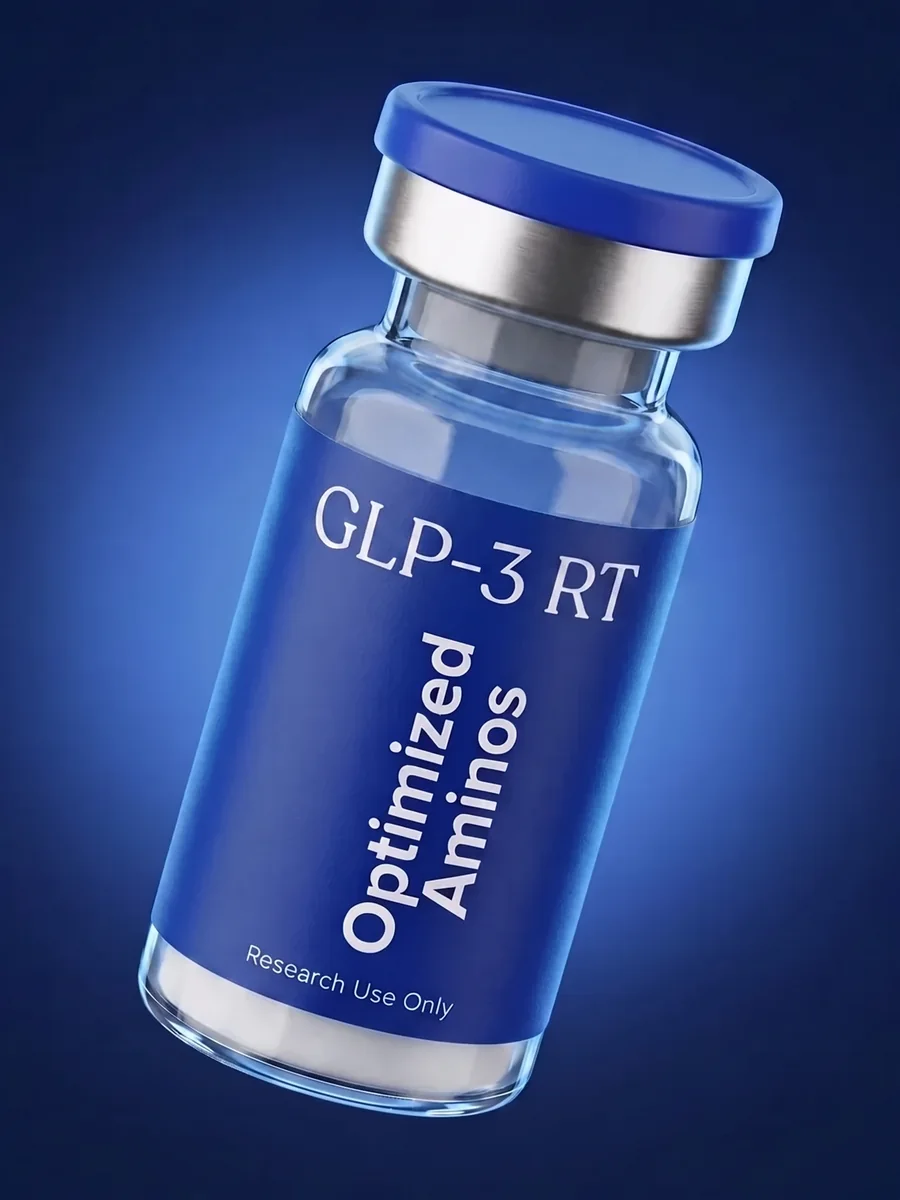
Retatrutide (LY-3437943) reference material — a synthetic peptide investigated in published academic literature as a multi-receptor agonist (MW ~4813 Da). Synthesized at >98% purity with identity confirmed by LC-MS/MS. Supplied as lyophilized powder requiring cold-chain storage at -20°C; cold-pack shipping recommended. Reconstitute with bacteriostatic water. For in-vitro laboratory and analytical research use only. Not a drug, supplement, or therapeutic product. Not for human or animal consumption, ingestion, injection, or any clinical use. Not FDA-approved or evaluated for safety or efficacy.
View product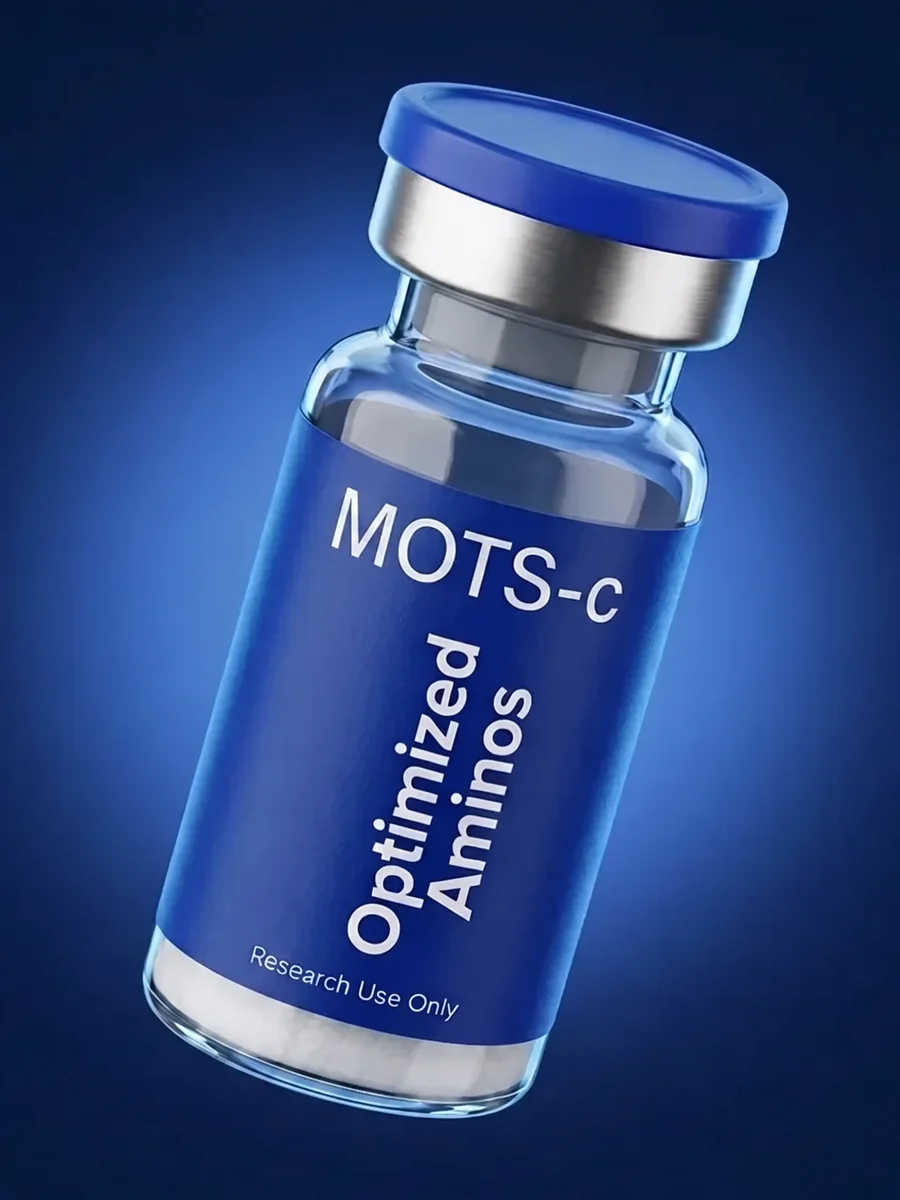
MOTS-c reference peptide, 10 mg per vial. Supplied as a white lyophilized powder, synthesized at >98% purity and verified by HPLC and mass spectrometry. Referenced in published in-vitro literature on mitochondrial peptide signaling. Store frozen (≤ -20°C) for long-term stability; protect from moisture and light. Reconstitute with bacteriostatic water. For in-vitro laboratory and analytical research use only. Not a drug, supplement, or therapeutic product. Not for human or animal consumption, ingestion, injection, or any clinical use. Not FDA-approved.
View product