Research Blog
HGH Fragment 176-191 Research: What Published Studies Describe
Published
HGH Fragment 176-191 is the C-terminal segment of growth hormone studied in lipolysis-focused research. See its structure, mechanism, and research context.
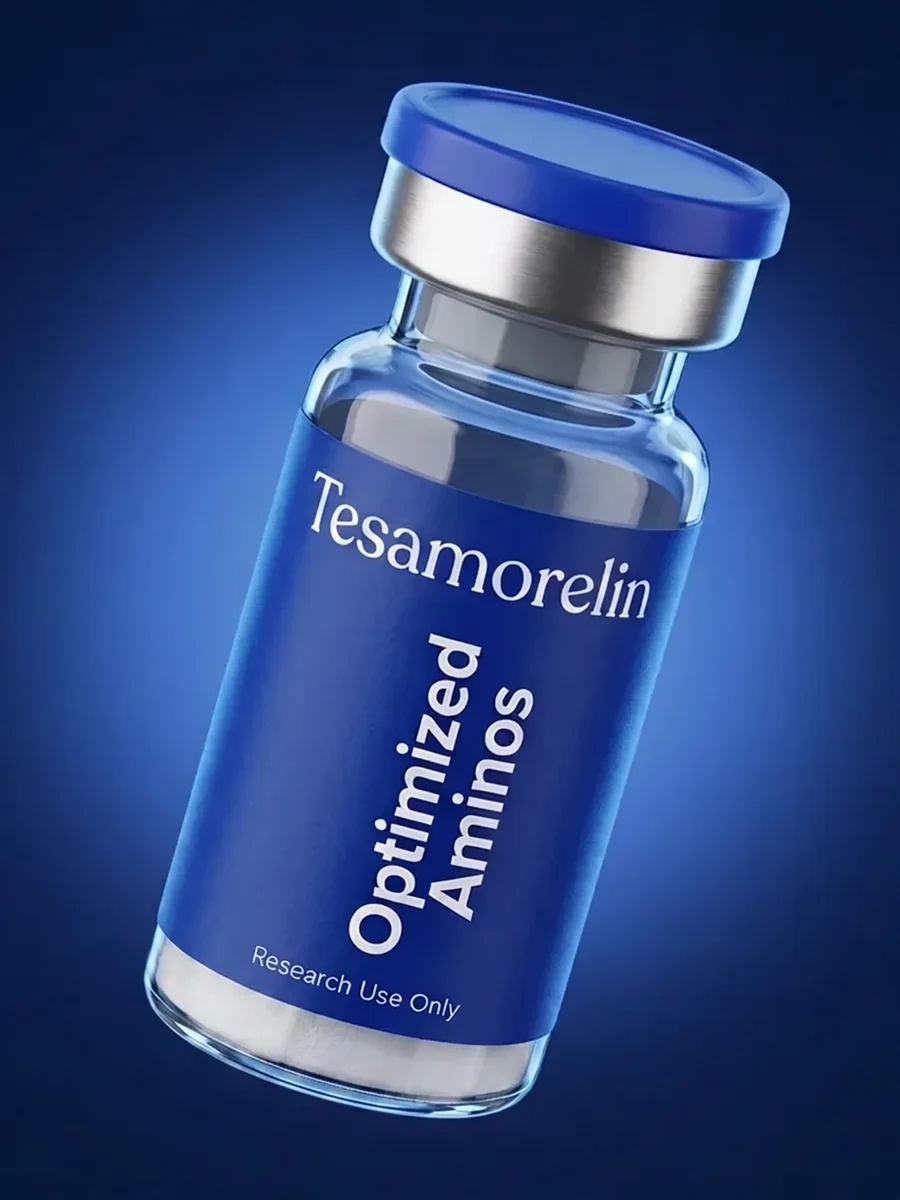
For laboratory and research use only. Not for human consumption.
HGH Fragment 176-191 is a name that shows up frequently in peptide research catalogs and academic literature discussing growth hormone biology, but the compound itself is only a small slice of the full growth hormone molecule. This overview summarizes what published research describes about its structure, its proposed mechanism, and the research models in which it has been studied.
Key facts: HGH Fragment 176-191 corresponds to the C-terminal 16-amino-acid segment (residues 176-191) of the 191-amino-acid human growth hormone sequence. Published literature describes it as lacking the region of the GH molecule associated with growth hormone receptor binding, which researchers use to distinguish its studied profile from that of full-length GH. It is related to, but structurally distinct from, the modified analog AOD9604. Research on the fragment has used in vitro and animal-model systems, and it is supplied strictly as a lyophilized research chemical for laboratory use.
What Is HGH Fragment 176-191?
Human growth hormone is a 191-amino-acid single-chain protein, and researchers have long worked to identify which segments of that chain are responsible for which biological activities described in the literature. HGH Fragment 176-191 refers specifically to the final 16 residues of that chain — the C-terminal end, numbered 176 through 191. Early sequence-mapping research identified this region as being associated in published studies with lipid-metabolism-related activity distinct from the growth-promoting activity attributed to other regions of the GH molecule.
Because it represents only a fragment rather than the intact hormone, researchers describe HGH Fragment 176-191 as a tool for isolating and studying one specific region of GH biology without the confounding variables introduced by the rest of the molecule's structure.
Structural Position Within the Growth Hormone Sequence
The growth hormone molecule is organized into several structurally and functionally distinct regions, as described across the peptide chemistry literature. The receptor-binding domains responsible for engaging the growth hormone receptor are located elsewhere in the chain, not within the 176-191 segment. This positioning is the structural basis researchers cite when explaining why the isolated fragment is studied separately from full-length GH-receptor-mediated research.
Readers who want a broader primer on how peptide sequences are numbered, mapped, and described in scientific literature can review our peptide chemistry glossary, which defines many of the structural terms referenced throughout fragment and analog research.
How the Literature Describes Its Mechanism
Distinct From GH-Receptor-Mediated Signaling
Full-length growth hormone is described in the literature as exerting many of its effects through binding to the growth hormone receptor, which activates the JAK2-STAT5 signaling cascade associated with a range of downstream research findings, including those related to insulin sensitivity and tissue growth. Because HGH Fragment 176-191 does not contain the receptor-binding domain, published research frames its studied activity as occurring through a mechanism that is reported to be independent of this classic receptor pathway. Some published sources discuss the fragment's association with lipid-metabolism-related research signals in adipose tissue models, while explicitly noting that it does not reproduce the broader receptor-mediated signaling profile documented for full-length GH.
The AOD9604 Distinction
Researchers reviewing supplier literature will also encounter the name AOD9604, which is a modified analog built from the same 176-191 region but incorporating an added tyrosine residue and additional stabilizing changes designed to improve handling characteristics in laboratory settings. HGH Fragment 176-191 and AOD9604 are related in sequence origin but are not identical molecules, and researchers should always confirm the exact sequence listed on a certificate of analysis rather than assuming the two names are interchangeable.
Research Models Referenced in Published Studies
Published literature on HGH Fragment 176-191 spans both in vitro cell-culture research, where isolated tissue or cell lines are exposed to the peptide under controlled conditions, and animal-model research, where whole-organism responses are documented. These research models allow investigators to compare the fragment's profile against full-length GH within the same experimental framework, and they form the basis for most of the mechanistic claims found in the existing literature. Researchers sourcing this compound for laboratory work should confirm third-party purity and identity testing before use; our guide on how to spot a fake peptide COA covers what to look for on documentation accompanying a research fragment like this one.
Sourcing and Documentation Considerations
Because HGH Fragment 176-191 is a short synthetic sequence, it is typically produced using standard solid-phase peptide synthesis methods. Our overview of how research peptides are made explains this process in more detail, which can help researchers evaluate manufacturing quality when comparing suppliers. Regulatory status is another consideration researchers regularly ask about; our article on whether research peptides are legal in 2026 summarizes the current research-chemical classification landscape relevant to compounds like this one.
Researchers who want to independently confirm purity data before logging a fragment into a study protocol can review our third-party testing data for reference on what a rigorous certificate of analysis should include. Researchers examining the broader growth hormone axis alongside HGH Fragment 176-191 may also find our IGF-1 LR3 product page useful background for comparative research involving related growth-factor pathway compounds.
Concentration and Reconstitution Math for Laboratory Records
Because HGH Fragment 176-191 is supplied as a lyophilized powder, laboratory documentation requires converting the vial's peptide mass into a working concentration once a diluent is added. The standard calculation is straightforward: divide the total peptide mass in the vial (in milligrams) by the volume of diluent added (in milliliters) to obtain a concentration expressed in mg/mL. For example, a vial documented at 2 mg reconstituted with 1 mL of bacteriostatic water yields a recorded concentration of 2 mg/mL for laboratory notebook purposes. Researchers who need to cross-check this math, or who are working with vials of different mass and diluent volumes, can use our reconstitution calculator to generate and log a concentration figure alongside the compound's certificate of analysis.
Frequently Asked Questions
What distinguishes HGH Fragment 176-191 from full-length growth hormone in research literature?
Published literature describes HGH Fragment 176-191 as consisting only of the C-terminal 16-amino-acid region of the growth hormone sequence, residues 176-191, rather than the full 191-amino-acid chain. Because it omits the N-terminal and central regions of the molecule, researchers report that it lacks the structural region associated with binding the growth hormone receptor in the manner described for full-length GH, which is why studies frame its research profile as distinct from classic GH-mediated signaling.
Does HGH Fragment 176-191 bind the growth hormone receptor the same way full-length GH does?
No. Research literature indicates that the growth hormone receptor-binding domain is located outside the 176-191 region, so the isolated fragment does not engage the receptor in the same way the intact hormone does in published binding-affinity studies. This structural distinction is central to how researchers frame comparisons between the fragment and full-length GH in the literature.
Is HGH Fragment 176-191 the same molecule as AOD9604?
They are related but not identical. AOD9604 is described in the literature as a modified analog built from the same 176-191 region, incorporating an added tyrosine residue and other stabilizing modifications, while HGH Fragment 176-191 refers to the unmodified core sequence. Some published materials use the terms loosely, so researchers reviewing a certificate of analysis should confirm the exact sequence and modifications listed.
What research models have published studies used to examine HGH Fragment 176-191?
Published studies referenced in the literature have used in vitro cell-culture systems and animal-model research to examine the fragment's activity in isolated tissue and whole-organism contexts. These research models are described in the literature as the basis for comparing the fragment's profile to that of full-length growth hormone.
How is peptide concentration calculated after reconstitution for laboratory records?
For laboratory documentation, researchers typically divide the total peptide mass in a vial (in milligrams) by the volume of diluent added (in milliliters) to record a concentration in mg/mL. For example, a vial documented at 5 mg reconstituted with 2 mL of bacteriostatic water yields a recorded concentration of 2.5 mg/mL, a calculation researchers can cross-check with a reconstitution calculator tool.
For laboratory and research use only. Not for human consumption.