Research Blog
Ion Channel Modulators: Mechanisms, Types, and Therapeutic Roles
Published
Discover how ion channel modulators enhance drug design and therapy. Learn about their mechanisms, types, and crucial roles in medicine.

Ion Channel Modulators: Mechanisms, Types, and Therapeutic Roles
Ion channel modulators are molecules that alter the functional activity of ion channels, either enhancing or suppressing ion flux across cellular membranes. They act through direct binding to channel subunits or through indirect mechanisms that influence gating conformations, conductance states, or channel trafficking. The pharmacological scope of this class is substantial: ion channels represent the second largest drug target class, with a large number of drugs currently on the market acting on them. That figure places ion channels behind only G protein-coupled receptors in therapeutic relevance.
Modulator diversity spans small organic molecules, peptide toxins, lipids, and endogenous signaling molecules. Each class engages channels through distinct biophysical mechanisms, from steric pore occlusion to long-range allosteric conformational shifts. Understanding these distinctions is foundational for rational drug design and for interpreting experimental data in electrophysiology and structural biology.
Key functional classes and interaction types include:
- Pore blockers: Molecules that physically occlude the ion conduction pathway, reducing or eliminating current flow.
- Gating modifiers: Compounds that shift the voltage or ligand dependence of channel activation or inactivation without necessarily entering the pore.
- Allosteric modulators: Agents binding sites distal to the pore that alter channel conformation and gating indirectly.
- Positive modulators (activators/openers): Compounds that increase open probability or conductance.
- Negative modulators (inhibitors/blockers): Compounds that reduce open probability, accelerate inactivation, or block ion flow.
- Indirect modulators: Molecules acting through upstream signaling pathways, such as G protein-coupled receptors (GPCRs) or kinases, to alter channel phosphorylation state or lipid environment.
Table of Contents
- How do ion channel modulators alter channel function at the molecular level?
- How are ion channel modulators classified by mechanism and molecular type?
- Key examples of ion channel modulators across major channel families
- What therapeutic applications do ion channel modulators have in disease research?
- Why high-purity research peptides matter for ion channel modulator studies
- What side effects and toxicity profiles should researchers understand?
- What are the main challenges in developing drugs that target ion channels?
- Which techniques are most useful for studying ion channel modulators in the laboratory?
- Optimized-aminos supports precise ion channel modulator research
- Key Takeaways
How do ion channel modulators alter channel function at the molecular level?
The mechanisms by which compounds modulate ion channels are more varied than a simple “open” or “block” binary. Gating and modulation are tightly interwoven processes shaped by both intrinsic channel architecture and extrinsic chemical signals.
Direct pore block is the most conceptually straightforward mechanism: a molecule enters the open channel and physically obstructs ion flow. The degree of block often depends on membrane voltage, because the electric field across the membrane can either pull the blocker deeper into the pore or expel it, producing characteristic voltage-dependent kinetics. Quaternary ammonium ions and many local anesthetics operate this way in voltage-gated sodium channels.
Gating modulation is mechanistically richer. Compounds can shift the voltage dependence of activation or inactivation, effectively changing the threshold at which a channel opens or closes. Voltage-gated channel gating involves movement of charged transmembrane segments; modulators that bind to or near these segments can stabilize either the resting or activated conformation, altering the energy landscape of gating transitions.
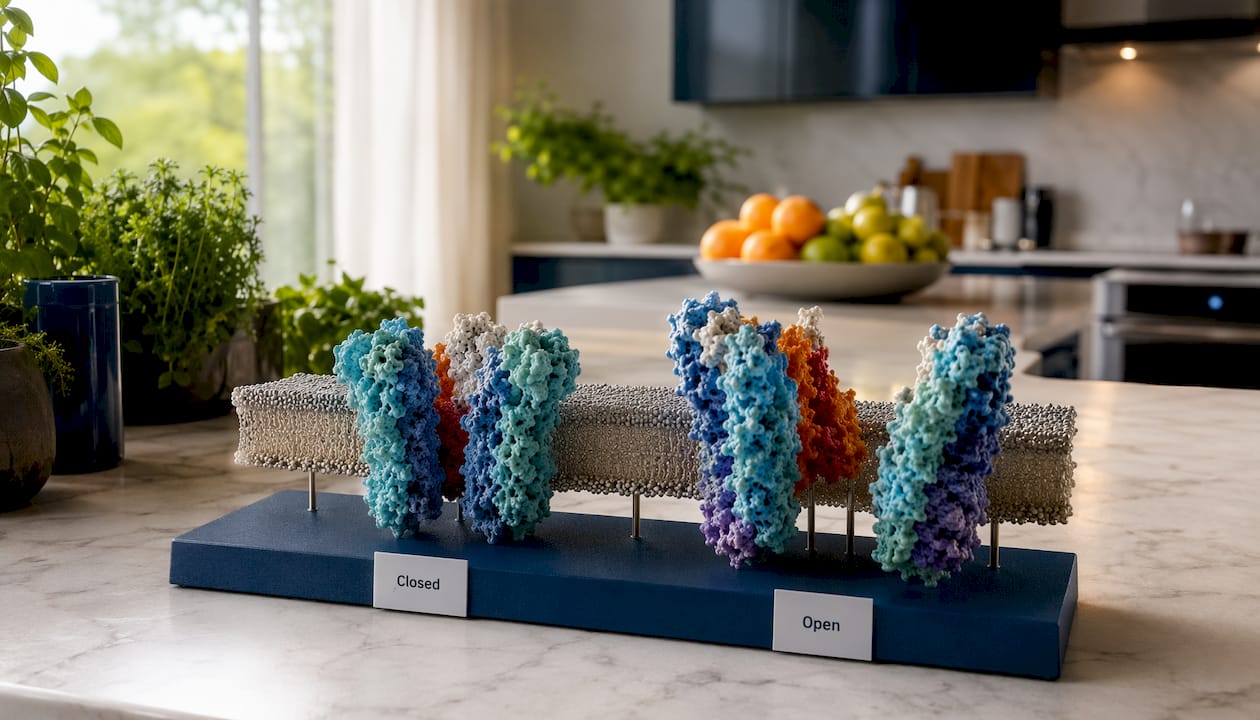
Allosteric modulation has emerged as a dominant paradigm in modern ion channel pharmacology. The region around the outer pore mouth is particularly rich in regulatory allosteric sites that can be exploited for selective therapeutic targeting. A critical conceptual point: many compounds historically labeled “blockers” do not occlude the pore at all. Apamin, the bee venom peptide, prevents conduction through SK (K(Ca)2) channels via an allosteric mechanism, not pore occlusion. Similarly, the tarantula toxin DkTx prevents TRPV1 channels from closing by binding residues away from the selectivity filter. These findings suggest the pharmacological vocabulary needs to be more precise than “blocker” versus “opener.”
Lipid modulation is a regulatory layer that is often underappreciated in pharmacological studies. Phosphoinositides, particularly PI(4,5)P2, serve as obligate co-factors for many channels, stabilizing gating conformations by coupling voltage-sensor or ligand-binding domains to the pore gate. Depletion of PI(4,5)P2 can close channels even when primary stimuli remain unchanged. Cholesterol and other membrane lipids further modulate channel function through bilayer mechanical properties and by organizing channels into specific membrane microdomains.
Redox modulation adds another layer of complexity. Reactive oxygen and nitrogen species can covalently modify cysteine and methionine residues within channel proteins, shifting gating states and altering ligand sensitivity. This mechanism is particularly relevant in neurological diseases where oxidative stress is elevated.
Structural biology has transformed mechanistic understanding. Cryo-EM structures have revealed binding sites with atomic precision, showing how small molecules and peptides contact specific residues within channel subunits. Most currently approved ion channel drugs predate these structural advances, having been discovered before cryo-EM and high-throughput patch clamp were available. The implication is that a large portion of the druggable conformational space in ion channels remains unexplored.
Key mechanistic categories:
- Orthosteric modulation: Binding at the primary ligand or ion binding site, directly competing with endogenous activators.
- Allosteric modulation: Binding at secondary sites, inducing conformational changes that propagate to the gate.
- State-dependent binding: Preferential binding to open, closed, or inactivated channel states, producing use-dependent pharmacology.
- Protein-protein interaction modulation: Disrupting or stabilizing interactions between channel subunits and auxiliary proteins, scaffolding complexes, or signaling partners.
How are ion channel modulators classified by mechanism and molecular type?
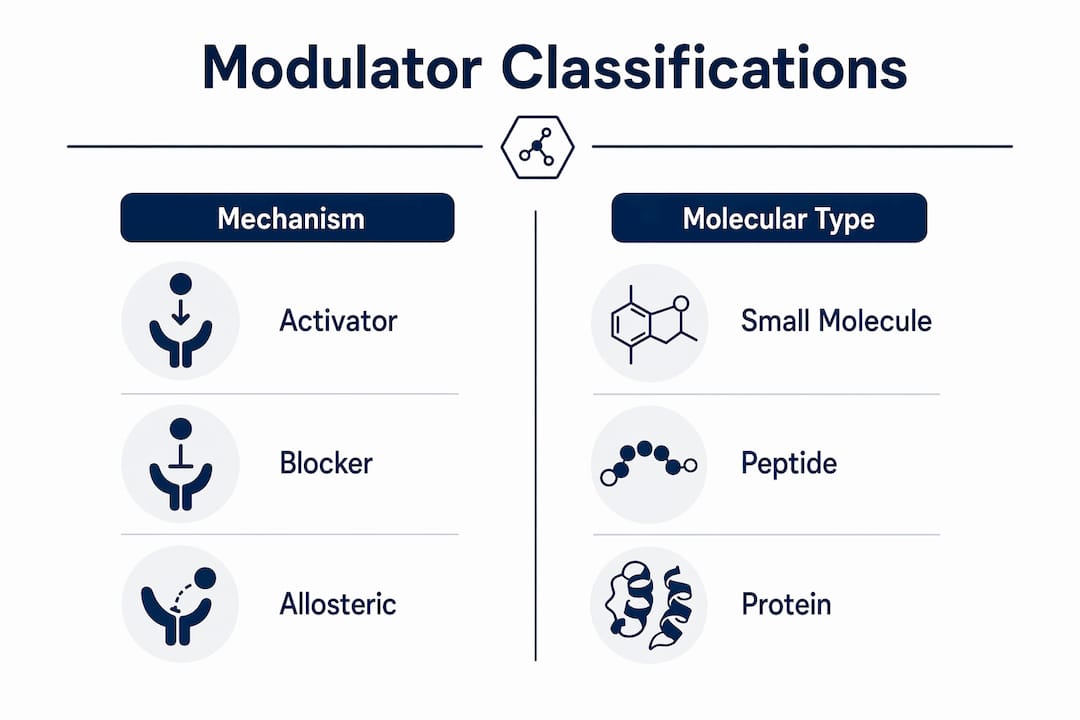
Classification of ion channel modulators can be approached from multiple angles: the direction of effect, the binding site, the chemical nature of the modulator, or the channel family targeted. No single taxonomy is universally adopted, but the following framework reflects current ion channel pharmacology practice.
By direction of effect:
- Activators (openers): Increase channel open probability or conductance. Examples include ML297, which activates GIRK channels at nanomolar EC50 concentrations with demonstrated antiseizure effects in vivo, and KCNQ1 activators like CP1 that mimic the lipid PIP2 to enhance voltage sensor-pore coupling.
- Inhibitors (blockers): Reduce current through pore block, gating modification, or allosteric mechanisms. This category encompasses the majority of clinically used ion channel drugs.
By binding site:
- Orthosteric modulators: Compete directly with endogenous ligands or ions at the primary binding site.
- Allosteric modulators: Act at sites topographically distinct from the primary activation site, modifying gating without competing with the endogenous ligand.
By chemical nature:
- Small molecules: The dominant class in clinical use, including dihydropyridines, phenylalkylamines, and benzothiazepines for calcium channels.
- Peptide toxins: Often exhibit superior selectivity and potency compared to small molecules. Psalmotoxin 1 (PcTx1) inhibits ASIC1a with pIC50 values of 9.0–9.3, a level of potency rarely achieved by small molecules at the same target.
- Lipids: Endogenous lipids like PI(4,5)P2 and arachidonic acid function as physiological modulators.
- Inorganic ions and metals: Zinc, calcium, and protons modulate multiple channel types.
By mechanism of access:
- Direct modulators: Bind channel subunits directly.
- Indirect modulators: Act through upstream pathways. GIRK channels, for instance, are indirectly modulated by GPCRs that release Gβγ subunits, which then bind directly to the channel. Reuptake inhibitors and releasing agents can also alter channel activity indirectly by changing the local concentration of endogenous modulators.
| Modulator Type | Chemical Class | Example | Primary Mechanism |
|---|---|---|---|
| Activator | Small molecule | ML297 | Direct GIRK channel activation |
| Activator | Lipid | PI(4,5)P2 | Stabilizes open gating conformation |
| Inhibitor | Peptide toxin | Psalmotoxin 1 | Allosteric block of ASIC1a |
| Inhibitor | Small molecule | Diltiazem | Pore block of L-type Ca²⁺ channel |
| Allosteric inhibitor | Peptide | Apamin | Allosteric SK channel block |
| Gating modifier | Peptide toxin | DkTx | Prevents TRPV1 closure |
| Indirect modulator | Signaling protein | Gβγ subunit | GIRK channel gating via G-protein |
Key examples of ion channel modulators across major channel families
The breadth of ion channel pharmacology becomes concrete when you examine specific modulators across the major channel families. The table below cross-references representative modulators with their targets and primary mechanisms.
| Modulator | Target Channel | Mechanism | Therapeutic Relevance |
|---|---|---|---|
| Nifedipine | L-type Ca²⁺ (Cav1.2) | Pore block, inactivation shift | Hypertension, angina |
| Lidocaine | Nav1 (voltage-gated Na⁺) | State-dependent pore block | Local anesthesia, arrhythmia |
| Memantine | NMDA receptor | Open-channel block | Alzheimer’s disease |
| Psalmotoxin 1 | ASIC1a | Allosteric inhibition | Pain, neurological research |
| ML297 | GIRK1/2 | Direct activation | Antiseizure (preclinical) |
| GAT1508 | GIRK1/2 | Direct activation | Cardiac and neurological research |
| Apamin | SK (K(Ca)2) | Allosteric block | Research tool, arrhythmia |
| Ivacaftor | CFTR (Cl⁻) | Gating potentiator | Cystic fibrosis |
| APETx2 | ASIC3 | Allosteric inhibition | Pain research |
| DkTx | TRPV1 | Gating modifier | Pain, inflammation research |
Voltage-gated calcium channels are among the most clinically exploited targets. Dihydropyridines like nifedipine, phenylalkylamines like verapamil, and benzothiazepines like diltiazem each bind distinct but overlapping sites on Cav1.2, producing use-dependent and state-dependent block. Their differential binding kinetics explain why these three subclasses have different clinical profiles despite targeting the same channel.
Voltage-gated sodium channels are targeted by local anesthetics and antiepileptics through state-dependent mechanisms. Lidocaine preferentially binds the inactivated state, meaning rapidly firing neurons are more susceptible than quiescent ones. This selectivity for active tissue is a pharmacodynamic feature, not a pharmacokinetic one.
GIRK channels illustrate the complexity of indirect and direct modulation operating in parallel. GIRK channels are regulated by G-proteins, the lipid PI(4,5)P2, cholesterol, and small molecules like ML297 and GAT1508, as well as by alcohol. ML297 activates GIRK channels with high potency and produces antiseizure effects in animal models, making it a valuable research tool for dissecting GIRK-mediated physiology.
ASIC channels demonstrate the advantage of peptide modulators over small molecules. Small molecule ASIC inhibitors like amiloride are generally non-selective, also blocking epithelial sodium channels (ENaC) at similar concentrations. Peptide toxins from spider venoms, including psalmotoxin 1 and Pi-hexatoxin-Hi1a, achieve orders-of-magnitude greater selectivity for specific ASIC subtypes. Pi-hexatoxin-Hi1a is selective for ASIC1a with only mild activity at ASIC1b, and its inhibition is very slowly reversible, a kinetic profile useful for sustained experimental interventions.
NMDA receptors are ligand-gated channels where memantine’s open-channel block mechanism produces clinically useful neuroprotection. Unlike competitive antagonists, memantine’s voltage-dependent block means it preferentially inhibits pathological, sustained NMDA receptor activation while sparing physiological, transient activation.
What therapeutic applications do ion channel modulators have in disease research?
Ion channel modulators have established clinical roles across cardiovascular medicine, neurology, and genetic disease, while emerging research is expanding their potential into oncology and immunology.
Cardiovascular disease remains the most mature therapeutic area. Calcium channel blockers reduce vascular smooth muscle tone and cardiac contractility, making them first-line agents for hypertension, angina, and certain arrhythmias. Voltage-gated sodium channel blockers are used for cardiac arrhythmia management and local anesthesia. ATP-sensitive potassium channel blockers, such as sulfonylureas, are used in type II diabetes to stimulate insulin secretion.
Cystic fibrosis represents a landmark example of ion channel-targeted therapy at the molecular level. CFTR is a chloride channel whose dysfunction underlies cystic fibrosis. Ivacaftor is a CFTR potentiator that increases the open probability of mutant CFTR channels, addressing the gating defect directly rather than compensating downstream. This mechanism-first approach has become a model for precision ion channel pharmacology.
Neuroscience and pain research are areas where peptide modulators show particular promise. Venom-derived peptides targeting ASIC and TRP channels are being investigated for analgesic applications. The high selectivity of these peptides for specific channel subtypes reduces the risk of off-target effects that have historically limited small molecule analgesics.
Oncology is an emerging frontier. Potassium channels are expressed on immune cells, and their modulation can influence T-cell activation and immune surveillance. Combined ion channel and immunotherapy approaches may unblock immune responses in preclinical oncology models, suggesting that ion channel modulators could serve as adjuncts to immune checkpoint inhibitors.
Key therapeutic application areas:
- Cardiovascular: Calcium channel blockers (hypertension, angina), sodium channel blockers (arrhythmia, local anesthesia), potassium channel blockers (type II diabetes).
- Neurological: NMDA receptor antagonists (Alzheimer’s disease), GABA receptor modulators (epilepsy, anxiety), ASIC inhibitors (pain, ischemia).
- Genetic channelopathies: CFTR modulators (cystic fibrosis), SCN1A-targeted therapies (Dravet syndrome).
- Oncology: Potassium channel modulators combined with immune checkpoint inhibitors (preclinical).
- Emerging peptide therapeutics: High-selectivity peptide modulators for ASIC, TRP, and GIRK channels in pain, epilepsy, and cardiac research.
Why high-purity research peptides matter for ion channel modulator studies
Peptide modulators occupy a distinct and increasingly important position in ion channel research. Their structural complexity allows them to engage channel surfaces with a precision that small molecules rarely achieve, particularly at allosteric sites that are topographically defined by secondary and tertiary protein structure. For researchers working with peptide-based modulators, compound quality is not a secondary consideration; it directly determines the reproducibility and interpretability of experimental results.
HPLC purity above 99% is the accepted standard for research-grade peptide modulators. Impurities at even low percentages can introduce confounding biological activity, particularly when working with nanomolar-potency compounds like psalmotoxin 1, where a 1% contaminant at a similar concentration range could meaningfully alter observed pharmacology. A lot-specific Certificate of Analysis (COA) provides the documentation chain needed to attribute experimental outcomes to a specific compound preparation.
Understanding peptide structure and function is foundational for designing experiments with peptide-based ion channel modulators. Disulfide bond integrity, for example, is critical for the activity of many venom-derived peptides, and this structural feature must be confirmed analytically before use.
Optimized-aminos supplies research-grade peptides verified at 99%+ purity by HPLC and mass spectrometry, with third-party-tested COAs published for each product. For researchers studying ion channel modulation, this documentation standard supports the traceability requirements of rigorous pharmacological studies. Bundled research sets simplify procurement when multiple peptide modulators are needed for comparative studies across channel families.
Key quality considerations for peptide ion channel modulator research:
- HPLC purity verification: Confirms the primary compound constitutes at least 99% of the preparation.
- Mass spectrometry confirmation: Verifies molecular identity and detects sequence errors or oxidation artifacts.
- Lot-specific COA: Provides analytical data for experimental documentation.
- Lyophilized storage format: Maximizes stability during shipping and long-term storage.
- Reconstitution guidance: Proper solvent selection (aqueous, DMSO, or acidic buffers depending on peptide) is critical for maintaining activity.
What side effects and toxicity profiles should researchers understand?
The therapeutic utility of ion channel modulators is bounded by their toxicity profiles, which are largely a function of channel distribution and selectivity. Because many ion channels are expressed in multiple tissues, modulators that lack subtype selectivity tend to produce off-target effects that limit their clinical or experimental utility.
Calcium channel blockers illustrate this clearly. L-type calcium channels are expressed in both vascular smooth muscle and cardiac muscle. Dihydropyridines like nifedipine have greater selectivity for vascular channels, while phenylalkylamines like verapamil have more pronounced cardiac effects, including negative chronotropy and dromotropy. Excessive blockade of cardiac L-type channels produces bradycardia, heart block, and negative inotropy, effects that become dose-limiting in clinical use.
Sodium channel blockers carry proarrhythmic risk when they suppress cardiac sodium channels excessively, a toxicity that became clinically prominent following the CAST trial, which demonstrated increased mortality with certain class IC antiarrhythmics in post-myocardial infarction patients. State-dependent binding kinetics partially mitigate this risk, but the therapeutic window remains narrow for many agents in this class.
Peptide modulators generally exhibit narrower toxicity profiles than small molecules, precisely because their structural complexity enables higher subtype selectivity. However, peptide stability in biological systems, immunogenicity, and delivery challenges introduce their own considerations for in vivo applications. In vitro research use avoids many of these concerns, which is one reason peptide modulators are particularly valuable as laboratory tools.
Central nervous system toxicity is a recurring concern for modulators targeting neuronal channels. NMDA receptor antagonists at supratherapeutic doses produce dissociative effects; GABA receptor modulators carry sedation and dependence liability. Researchers designing in vitro studies with these compounds should account for concentration-dependent off-target activity at related channel subtypes.
What are the main challenges in developing drugs that target ion channels?
Ion channel drug development faces a specific set of challenges that distinguish it from other target classes, even as the field benefits from increasingly powerful structural and computational tools.
Subtype selectivity is the central challenge. Most channel families comprise multiple subtypes with high sequence homology in the pore region, the site most accessible to small molecule blockers. Achieving selectivity between, for example, Nav1.7 (pain-relevant) and Nav1.5 (cardiac) requires targeting regions outside the pore, which demands structural information and more complex medicinal chemistry. Allosteric sites near the outer pore mouth offer higher therapeutic selectivity and are increasingly targeted in modern drug design programs.
State-dependent pharmacology complicates both screening and clinical translation. A compound’s apparent potency depends on which gating state the channel occupies during the assay, and this varies with membrane potential, stimulation frequency, and the presence of other modulators. Standardizing these conditions across screening platforms is technically demanding.
Historical discovery bias has shaped the current drug landscape in ways that may not reflect optimal targeting. Most approved ion channel drugs were identified through phenotypic screening before the molecular targets were characterized, and before cryo-EM and high-throughput patch clamp were available. This means the chemical space around many well-validated targets has not been systematically explored with modern tools.
Ultra-large virtual screening is one response to this gap. Computational approaches can evaluate libraries of billions of drug-like compounds against cryo-EM-derived channel structures, identifying novel scaffolds that would never emerge from conventional high-throughput screening. Docking-based virtual screening has already identified selective modulators of TRPV5 with cryo-EM-confirmed binding sites, and allosteric modulators of BK channels with mechanisms confirmed by mutagenesis and atomistic simulation.
The Golden Ratio experimental method offers a practical tool for researchers working with limited compound supply: by testing two ion channel blockers at concentrations producing 61.8% inhibition, the assay maximizes the statistical difference between syntopic (same site) and allotopic (different site) binding models, enabling efficient binding site mapping with minimal material.
Peptide-based drug development addresses the selectivity problem from a different angle. Venom-derived peptides have evolved over millions of years to target specific channel subtypes with high affinity, providing natural starting points for drug design. The challenge is converting these into therapeutically viable agents, which requires solving stability, delivery, and immunogenicity issues.
Which techniques are most useful for studying ion channel modulators in the laboratory?
Characterizing how a compound modulates an ion channel requires techniques that can measure electrical activity at the single-channel or whole-cell level, resolve structural binding modes, and map interaction sites.
Patch-clamp electrophysiology remains the gold standard for functional characterization. The technique allows direct measurement of ionic currents through channels in isolated cells or membrane patches, with millisecond time resolution. Whole-cell patch clamp captures the integrated current from all channels in a cell, while single-channel recording in cell-attached or excised patch configurations resolves the open probability, conductance, and kinetics of individual channels. High-throughput automated patch clamp platforms have substantially increased screening throughput, enabling compound libraries to be evaluated against specific channel subtypes under controlled voltage protocols.
Voltage-clamp fluorometry combines electrophysiology with fluorescence measurements, allowing simultaneous tracking of gating charge movement and pore opening. This technique is particularly useful for dissecting the mechanism of gating modifiers, because it can distinguish compounds that act on the voltage sensor from those acting on the pore gate.
Cryo-EM structural biology has transformed the field by providing near-atomic resolution structures of channels in multiple conformational states, often with bound modulators. Cryo-EM structures of TRPV5 with bound inhibitors identified new binding sites and provided mechanistic insight into subtype selectivity. For 5-HT3 receptors, cryo-EM structures revealed cryptic binding pockets for positive allosteric modulators like BrAmp, subsequently validated by site-directed mutagenesis and electrophysiological analysis.
Molecular dynamics simulation complements structural data by modeling the dynamic behavior of channels and modulators over time. Atomistic simulations have confirmed the mechanism of BK channel allosteric modulators by showing how binding at the voltage sensor-cytosolic tail domain interface perturbs Ca²⁺-dependent gating.
Ligand-based virtual screening is valuable when experimental structural data is limited. Pharmacophore modeling, quantitative structure-activity relationship (QSAR) analysis, and 3D shape matching can identify candidate modulators from large compound databases based on similarity to known active compounds. These computational predictions then guide experimental validation by patch clamp or binding assays.
Binding site mapping using mutagenesis combined with functional assays identifies which residues contact a modulator. When combined with the Golden Ratio inhibition method, researchers can determine whether two modulators share a binding site using minimal compound quantities, a practical advantage when working with expensive or difficult-to-synthesize peptides. For researchers building a foundational understanding of peptide biochemistry before designing modulator studies, this methodological context is directly applicable.
Optimized-aminos supports precise ion channel modulator research
Researchers working with peptide-based ion channel modulators need compound quality that matches the precision of their experimental design. A peptide with 95% purity introduces ambiguity that no statistical analysis can fully resolve, particularly at nanomolar working concentrations where minor contaminants can produce measurable biological signals.
Optimized-aminos provides research peptides verified at 99%+ purity by HPLC and confirmed by mass spectrometry, with a third-party-tested COA published for every product. Compounds ship in lyophilized form within 1–2 business days, and the peptide directory covers a broad range of compounds relevant to receptor-pathway and ion channel research. For labs running comparative studies across multiple modulators, pre-built research peptide bundles reduce procurement time without compromising documentation standards. Every compound is traceable from synthesis to delivery, which is the baseline requirement for publishable pharmacological data.
Key Takeaways
Ion channel modulators act through mechanistically distinct pathways, and subtype selectivity, driven by allosteric site targeting and peptide-based design, is the defining challenge and opportunity in this field.
| Point | Details |
|---|---|
| Second largest drug target class | Ion channels represent the second largest drug target class, with approximately 130 drugs currently targeting them as of 2024, behind only G protein-coupled receptors. |
| Allosteric mechanisms dominate | Many labeled “blockers” act allosterically, not by pore occlusion; apamin and DkTx are well-characterized examples. |
| Peptide modulators offer superior selectivity | Psalmotoxin 1 inhibits ASIC1a with pIC50 values of 9.0–9.3, a potency level rarely matched by small molecules at the same target. |
| Cryo-EM and patch clamp drive modern discovery | Most approved ion channel drugs predate cryo-EM and high-throughput patch clamp, leaving large areas of druggable conformational space unexplored. |
| Optimized-aminos for research use | Optimized-aminos supplies HPLC-verified, 99%+ purity peptides with third-party-tested COAs for reproducible ion channel modulator studies. |
Recommended
- MOTS-c — Research Peptide | Optimized Aminos
- PT-141 and Melanotan II: What Receptor-Pathway Research Has
- DSIP 10mg — Research Peptide | Optimized Aminos
- KLOW 80mg — Research Peptide | Optimized Aminos
For laboratory and research use only. Not for human or animal consumption.