Research Blog
MSDS vs COA: What Lab Managers and QA Need to Know
Published
Learn the key differences between MSDS and COA, ensuring safe handling and accurate quality control for chemical products in your lab.

MSDS vs COA: What Lab Managers and QA Need to Know
An SDS (the current, GHS-aligned name for what was formerly called an MSDS) communicates hazards and safe handling for a chemical product. A COA verifies the analytical test results for a specific production batch. These two documents answer fundamentally different questions, and confusing them creates real risk, whether that is a missed hazard during shipping or an out-of-spec batch released into a validated workflow.
Quick orientation:
- SDS (formerly MSDS): Product-level hazard and handling information, legally required under OSHA’s Hazard Communication Standard for hazardous chemicals in U.S. workplaces.
- COA (Certificate of Analysis): Batch-specific analytical verification of identity, purity, and composition, issued by the manufacturer’s QC lab or an accredited third party.
Immediate next steps:
- Request the SDS before handling, storing, or shipping any chemical, and confirm it is current.
- Request a lot-specific COA before approving incoming material for use or release.
Pro Tip: When a shipment arrives, pull the SDS first to confirm safe handling conditions, then pull the COA to verify the batch meets specification. Both documents should be on file before the material leaves quarantine.
Key Takeaways
An SDS governs safe handling and is legally required under OSHA’s Hazard Communication Standard; a COA verifies batch-level analytical results and is required by contract in regulated supply chains. Both documents are necessary, and neither substitutes for the other.
| Point | Details |
|---|---|
| SDS vs COA core difference | SDS = product-level hazard communication (OSHA-required); COA = batch-specific analytical verification (contract-required in regulated chains). |
| When to request each | Request the SDS before handling or shipping; request a lot-specific COA before releasing incoming material from quarantine. |
| COA red flags to stop a release | Missing lot number, absent test methods, any out-of-spec value, or a COA dated after the shipment date. |
| SDS reading priority | Start with Sections 2, 4, and 5 for hazard and emergency data; check Section 8 for PPE and Section 16 for the revision date. |
| Optimized-aminos documentation | Each batch ships with a third-party HPLC and MS-verified COA, accessible via the public COA archive before purchase. |
Table of Contents
- What is an SDS, and how does it differ from the older MSDS format?
- What is a COA, and what analytical data does it contain?
- How do SDS and COA compare side by side?
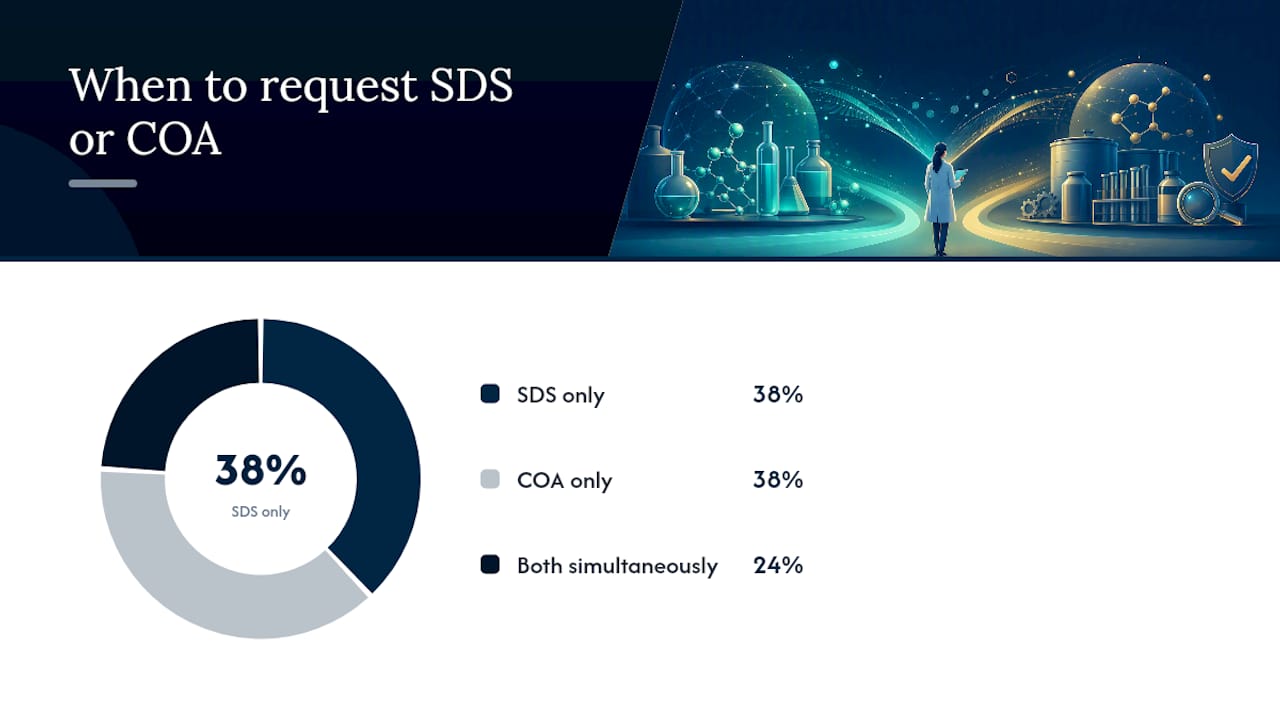
- When should you request an SDS, and when should you request a COA?
- How to read an SDS quickly: a safety-professional checklist
- How to read a COA: a QA and procurement verification checklist
- Common mistakes and an incoming-material checklist
- Sample COA walkthrough using a research peptide
- Sources
What is an SDS, and how does it differ from the older MSDS format?
A Safety Data Sheet (SDS) is the standardized document that communicates chemical hazards, safe handling procedures, emergency response information, and regulatory classifications for a given product. The term “MSDS” (Material Safety Data Sheet) refers to the older, pre-GHS format that varied significantly between manufacturers. The OSHA Hazard Communication Standard (29 CFR 1910.1200) replaced the variable MSDS format with a consistent, 16-section SDS structure aligned with the Globally Harmonized System (GHS) of Classification and Labeling of Chemicals. For U.S. workplaces, that transition was completed in 2015.
The practical difference is significant. An MSDS might have had 8 sections or 12, organized however the manufacturer chose. An SDS always has exactly 16 sections in a fixed order, which means a safety officer in an emergency knows exactly where to find first-aid measures (Section 4) or firefighting information (Section 5) without scanning an unfamiliar layout.
The 16 SDS sections and their practical priority:
- Sections 1–3: Product identification, hazard identification, composition and ingredient information. Start here to confirm you have the right product and understand its hazard classification.
- Sections 4–6: First aid, firefighting, and accidental release measures. Critical for emergency response planning.
- Sections 7–8: Handling/storage and exposure controls/PPE. Daily operational safety for lab and warehouse staff.
- Sections 9–11: Physical/chemical properties, stability/reactivity, and toxicological information. Relevant for technical review and risk assessment.
- Section 14: Transport information. Required when shipping by road, air, or sea.
- Section 16: Other information, including the SDS revision date. Always check this to confirm the sheet is current.
OSHA requires employers to maintain SDSs and make them accessible to workers at all times during a shift. An SDS that is locked in a filing cabinet or stored on a password-protected system that workers cannot access during an emergency is a compliance failure, not just a procedural gap.
OSHA’s Hazard Communication guidance specifies that employers must keep SDSs readily accessible and train workers on how to read them. The American Chemical Society recommends maintaining both printed binders near chemical storage and indexed digital backups searchable by CAS number.
What is a COA, and what analytical data does it contain?
A Certificate of Analysis is a batch-specific quality document issued by a manufacturer’s QC laboratory or an accredited third-party testing lab. Unlike an SDS, which applies to a product formulation regardless of when it was made, a COA is tied to a single production lot. It confirms that the specific batch you received was tested and met defined specifications at the time of manufacture.
Industry guidance describes COAs as essential in B2B and regulated supply chains precisely because they provide traceability at the lot level. A COA without a lot number is not a COA in any meaningful sense.
Required fields on a valid COA:
- Product name and CAS number (or equivalent identifier)
- Lot or batch number
- Manufacturing date and expiration or retest date
- Test results with specification ranges for each parameter
- Test methods used (e.g., HPLC, GC, MS, UV spectroscopy, titration)
- Signatory name, title, and date of release
Typical analytical parameters reported:
- Identity: Confirms the compound is what it claims to be, often by MS fragmentation pattern or IR spectrum.
- Assay/purity: The percentage of the active compound present, typically measured by HPLC or GC with a stated acceptance criterion (e.g., ≥98.0%).
- Impurity limits: Individual and total impurity thresholds, reported against specification.
- Physical tests: Appearance, solubility, moisture content (Karl Fischer), residue on ignition.
COAs are used by QA and procurement teams for incoming-material release decisions, traceability records, shelf-life substantiation, and dispute resolution when a batch fails downstream testing.
How do SDS and COA compare side by side?
The complementary relationship between COAs and SDSs is well established in practical QA guidance: the COA answers “is this batch within specification?” while the SDS answers “how do we handle and respond to hazards?” Neither document substitutes for the other.
| Dimension | SDS (formerly MSDS) | COA |
|---|---|---|
| Primary purpose | Hazard communication and safe handling | Batch quality verification and traceability |
| Issued by | Manufacturer, importer, or distributor | Manufacturer QC lab or accredited third-party lab |
| Legal/regulatory status | Legally required under OSHA HCS (29 CFR 1910.1200) for hazardous chemicals | Not federally mandated, but required by contract in regulated supply chains |
| Batch-specific | No — applies to the product formulation | Yes — tied to a specific lot number |
| Typical contents | 16 standardized sections: hazards, PPE, storage, transport, emergency response | Identity, assay/purity, impurity limits, test methods, lot number, signatory |
| Primary audience | Safety officers, emergency responders, workers, shippers | QA managers, procurement, regulatory affairs, lab scientists |
| When to request | Before handling, storing, or shipping any chemical | Before releasing incoming material; at time of purchase for regulated applications |
Key takeaways by audience:
- Safety professionals: The SDS is your primary document. It governs how you handle, store, and respond to incidents involving a chemical.
- QA and procurement teams: The COA is your primary document. It tells you whether the batch you received is fit for its intended use.
When should you request an SDS, and when should you request a COA?
The short answer: request both, but know which one to act on first depending on the operational context.
Request an SDS when:
- Receiving any new chemical into a facility for the first time
- Planning transport by road, air, or sea (Section 14 governs hazard classification for shipping)
- Conducting emergency response planning or worker training
- Assessing storage compatibility with existing inventory
- Responding to a spill, exposure, or fire
Request a COA when:
- Approving incoming raw materials before release from quarantine
- Verifying a batch for use in a validated or regulated manufacturing step
- Conducting R&D where compound purity directly affects experimental outcomes
- Fulfilling traceability requirements under GLP, GMP, or ISO 17025 frameworks
- Responding to a customer or regulatory audit requesting lot-level documentation
Supplier guidance recommends cross-checking the COA lot number against the product label as a standard step before any material enters a workflow.
Situations where you need both simultaneously:
- A hazardous solvent used in a validated pharmaceutical synthesis step requires an SDS for worker safety and a batch COA confirming solvent grade and impurity profile.
- Importing a regulated chemical requires both documents at customs: the SDS for hazard classification and the COA for product identity and specification compliance.
- A vendor audit or customer qualification visit will typically request both on file for each raw material.
In regulated supply chains covering pharma, food-contact materials, and exported cosmetics, buyers routinely require lot-specific COAs and current SDSs before accepting material into production. Mixing up which document is required for which purpose can cause customs delays and compliance failures in international chemical commerce.
How to read an SDS quickly: a safety-professional checklist
When a chemical arrives or an incident occurs, you rarely have time to read all 16 sections in sequence. This prioritized checklist gets you to the critical information fast.
- Section 2 — Hazard identification: Read the GHS hazard statements and pictograms first. These tell you the primary risk category (flammable, toxic, corrosive, oxidizer) and the signal word (Danger vs. Warning).
- Section 4 — First aid measures: Know the exposure routes (inhalation, skin, eye, ingestion) and the immediate response for each before you open the container.
- Section 5 — Firefighting measures: Identify suitable extinguishing media and any special hazards from combustion products.
- Section 7 — Handling and storage: Confirm storage temperature, incompatible materials, and ventilation requirements before placing the chemical in inventory.
- Section 8 — Exposure controls and PPE: Identify required gloves, respirator type, eye protection, and any engineering controls (fume hood, local exhaust).
- Section 14 — Transport information: Check UN number, hazard class, and packing group before any shipment is arranged.
- Section 16 — Other information: Verify the SDS revision date. An SDS more than three years old for a frequently updated chemical warrants a request for the current version from the supplier.
Pro Tip: Keep a printed SDS binder near chemical storage areas for emergency responders who may not have system access during an incident, and maintain a digital index searchable by CAS number for day-to-day operational queries.
How to read a COA: a QA and procurement verification checklist
A COA can look authoritative even when it is missing critical information. Work through this checklist before releasing any material.
Verification checklist:
- Lot number match: Confirm the lot number on the COA matches the lot number on the product label and the purchase order. A COA for a different lot is not documentation for the material you received.
- Assay/purity result vs. specification: The reported assay value must fall within the stated specification range. A result of 97.4% against a specification of ≥98.0% is a failure, regardless of how the COA is labeled.
- Test methods listed: Every critical parameter should show the method used (e.g., HPLC-UV at 220 nm, GC-FID, LC-MS/MS). Methods without identification cannot be independently verified.
- Lab accreditation or third-party signature: For regulated applications, confirm the issuing lab holds relevant accreditation (ISO 17025 or equivalent) or that a named, titled signatory is present.
- Date of analysis vs. shipment date: A COA dated after the shipment date is a red flag. The analysis should precede or accompany the shipment.
- Specification ranges present: Results without stated acceptance criteria are unverifiable. Every parameter should show both the result and the pass/fail range.
Red flags that should stop a release:
- Missing lot number
- No test methods listed for critical assays
- Any out-of-spec value, even if the COA is marked “Pass”
- COA issued after the shipment date
- No signatory name or date
- Generic COA not tied to a specific batch
A COA without explicit test methods is a quality assertion, not quality evidence. When methods are omitted, request the method trace or third-party confirmation before releasing material for high-risk or regulated use.
Pro Tip: Treat a verified COA as a legal-quality artifact: store it with the lot record, link it to test reports in your LIMS or ERP, and retain it for audit or dispute resolution. An unsigned or undated COA weakens traceability and may not hold up during an inspection.
Common mistakes and an incoming-material checklist
The most frequent errors in documentation practice are not complex. They are consistent, predictable, and avoidable.
Common mistakes:
- Accepting a COA without checking whether reported values fall within the stated specification ranges. A number that looks reasonable is not the same as a number that passes.
- Ignoring SDS hazard warnings because a chemical seems familiar. Reformulations, new impurity profiles, or changed storage requirements may appear in an updated SDS without any other notification.
- Failing to match the COA lot number to the product label. A COA for lot A does not verify lot B.
- Filing SDSs and COAs separately with no cross-reference, making audit retrieval slow and error-prone.
- Releasing material from quarantine before QA review is complete, particularly under schedule pressure.
Industry guidance consistently identifies these errors as leading causes of overlooked quality issues and safety failures. A missed hazard warning can escalate from a procedural gap to a lab incident; an out-of-spec batch released without COA verification can invalidate experimental results or trigger a recall.
Incoming-material checklist:
- Confirm the SDS is on file and current before the material enters the facility.
- Confirm the COA is lot-specific: lot number on COA = lot number on label = lot number on purchase order.
- Verify all COA results fall within stated specification ranges.
- Confirm storage conditions on the SDS match available storage in the facility.
- Place material in quarantine until QA review is complete and documented.
- Log both the SDS and COA in your records system (LIMS, ERP, or document management) with the lot number as the linking key.
- Escalate to the QA manager or safety officer if any document is missing, out-of-spec, or undated.
Sample COA walkthrough using a research peptide
A peptide COA from a third-party-tested supplier illustrates how to interpret the key fields in practice.
A result below it, even by a fraction of a percent, requires investigation before release. The method (HPLC-UV at a stated wavelength) must be listed so the result can be independently reproduced or challenged.
A signed, dated COA from an accredited or named third-party lab is the difference between a quality claim and quality evidence. During an audit or a dispute with a downstream customer, an unsigned COA provides no accountability chain and may be rejected as insufficient documentation.
Pro Tip: Link the COA to your procurement record at the time of receiving, not after. Retroactive filing creates gaps in the traceability chain that auditors notice immediately. The COA archive at Optimized-aminos publishes third-party-tested documentation per product, accessible at the point of procurement.
A lab manager’s rule of thumb for documentation triage
When a shipment arrives, the sequence matters. Pull the SDS first: confirm the material can be safely received, stored, and handled by the staff on duty. Then pull the COA: confirm the batch is within specification before it leaves quarantine. These are not simultaneous steps. A material that fails the SDS check (wrong storage conditions, missing hazard controls) should not proceed to QA release regardless of what the COA says.
For physical storage, keep a printed SDS binder near each chemical storage area. Emergency responders need that information without system access. COAs belong in the LIMS or ERP, linked by lot number, where they can be retrieved instantly during an audit or a downstream complaint.
Escalate to the QA manager when any COA value falls outside specification, when a COA lot number does not match the label, or when no COA accompanies a regulated material. Escalate to the safety officer when an SDS is missing, outdated, or describes hazard controls your facility cannot currently meet.
Third-party-tested COAs and HPLC-verified peptides from Optimized-aminos
Researchers who need both documentation and verified purity in a single procurement step will find that Optimized-aminos ships each batch with a third-party HPLC and mass spectrometry-verified COA, matched to the specific lot in the vial. There is no need to request documentation separately or follow up with a supplier after delivery.
Every product in the catalog, from individual research-grade peptides like MOTS-c to prebuilt kits like the Metabolic Pathway Research Kit, ships with third-party-tested COA documentation and arrives within 1–2 business days. The COA archive is publicly accessible, so procurement teams can review documentation before placing an order. For labs that need to verify purity standards and traceability before committing to a supplier, that archive is the practical starting point. Browse the full catalog at Optimized-aminos to confirm documentation practices for each compound.
Sources
- Osha
- American Chemical Society - Safety Data Sheets
- MSDS, TDS & COA guide - GlobalFormulation
- Interpreting Certificates of Analysis (COA) and Safety Data Sheets (SDS)
This article provides general educational information about chemical documentation practices. For compliance decisions, consult the applicable OSHA standard, your facility’s safety officer, or a qualified regulatory professional.
Recommended
- Buy MOTS-c | Research Grade 99%+ | Optimized Aminos
- Batch Numbers & Traceability: How to Cross-Reference a Pepti
- Net Content Labeled vs. Actual Mass on a Peptide Vial: What
- How to Read an HPLC Chromatogram on a Peptide COA | Optimize
For laboratory and research use only. Not for human or animal consumption.