Research Blog
How Long Do Reconstituted Peptides Last? A Shelf-Life Timeline for Research Vials
Published
A timeline-focused look at how long a reconstituted (mixed) research-peptide vial typically remains stable, and the factors that shorten that window.
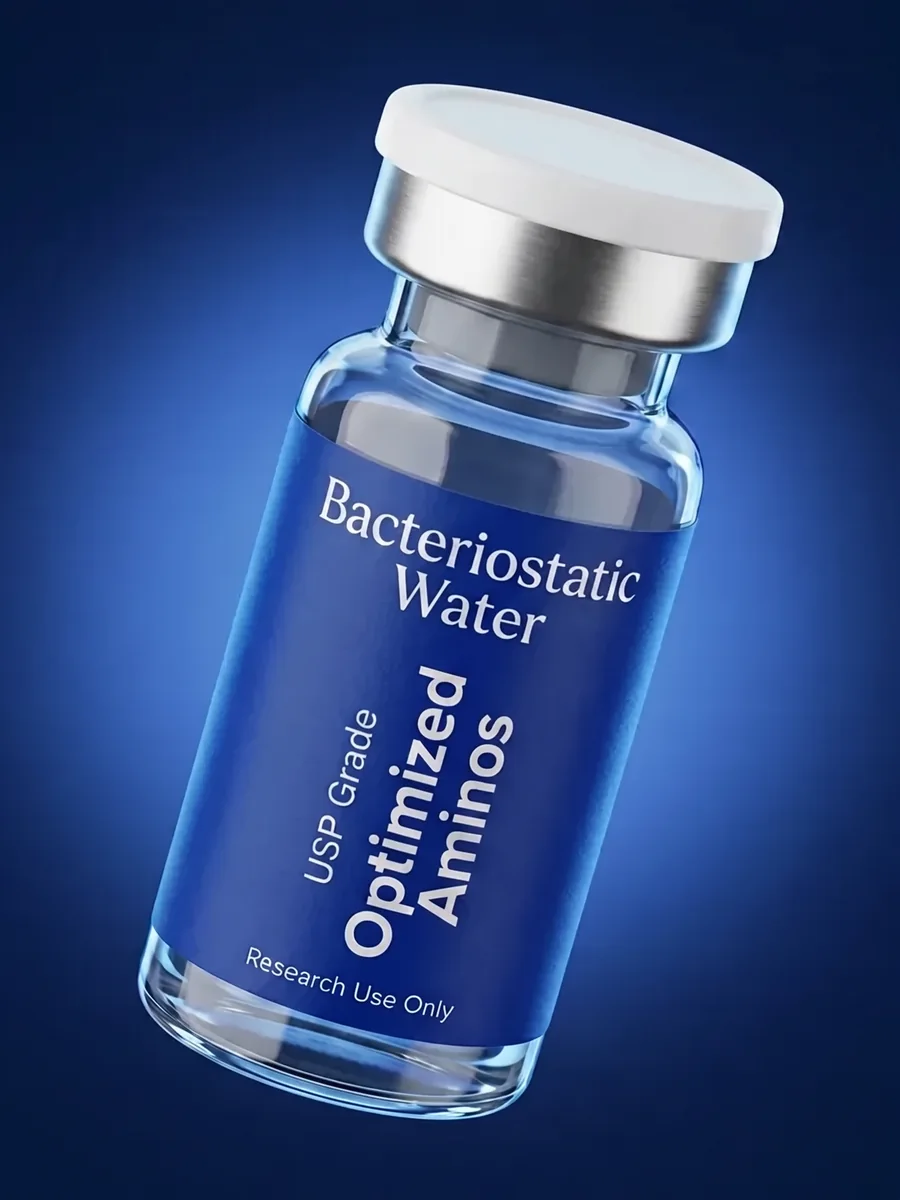
For laboratory and research use only. Not for human consumption.
A lyophilized (freeze-dried) peptide and a reconstituted (mixed-with-diluent) peptide are not the same thing from a stability standpoint, and researchers sometimes treat the two as interchangeable when planning experiment timelines. This article focuses specifically on the shelf-life clock that starts the moment a vial is mixed — not on how to reconstitute a vial, and not on general fridge-versus-freezer storage basics, both of which are covered in our other storage guides linked below.
Key Facts
- Lyophilized peptide in its dry, sealed state is generally far more stable over time than the same peptide once reconstituted in a diluent.
- Reconstitution introduces an aqueous environment, which activates hydrolysis and microbial growth as ongoing degradation pathways.
- Common laboratory practice and general research-storage guidance often describe a two-to-four-week stable window for a refrigerated, dark-stored reconstituted vial, though this varies by peptide and handling.
- Repeated freeze-thaw cycling is generally reported as accelerating degradation, separate from the benefit of low-temperature storage itself.
- Labeling a vial with its reconstitution date is a simple, reliable way to track the mixed-vial timeline in a laboratory setting.
Why Reconstitution Changes the Stability Equation
In its lyophilized state, a peptide is a stable, dry powder with minimal molecular mobility — this is why unreconstituted vials, stored properly, are generally reported as remaining stable for extended periods. Reconstitution changes that picture entirely. Once a diluent, typically bacteriostatic water, is added, the peptide chain is now suspended in an aqueous solution. Water enables hydrolysis — the breakdown of peptide bonds through reaction with water molecules — and an aqueous environment also supports microbial growth in a way a dry powder does not. This is the core reason a "how long does it last" question needs two different answers depending on whether the vial in question is still lyophilized or has already been mixed.
A General Timeline for a Reconstituted Vial
The First 24–48 Hours
Immediately after reconstitution, a properly handled vial is generally at its most stable point in the post-mix timeline. This is also the window in which researchers typically confirm the solution appears clear (rather than cloudy or discolored), which is often treated as a basic visual check before proceeding with a research protocol, separate from any formal stability assay.
Roughly the First Two to Four Weeks
General research-storage literature and common laboratory practice frequently describe a stable window of approximately two to four weeks for a reconstituted vial kept consistently refrigerated (roughly 2–8°C) and shielded from light. This is a general guideline rather than a fixed rule — the actual window is influenced by the specific peptide sequence, the diluent used, the concentration, and how consistently the storage temperature was maintained across that period.
Beyond Four Weeks
Past the general two-to-four-week window, published and practical guidance becomes more variable, and confidence in the solution's original concentration and integrity typically declines. Some research protocols call for freezing a reconstituted solution to extend its usable window further, though this comes with its own tradeoffs discussed below.
Factors That Shorten the Window
- Temperature inconsistency. A vial that cycles between refrigeration and room temperature, or is left out for extended periods, is generally reported as degrading faster than one kept at a stable, cold temperature.
- Light exposure. Some peptide sequences are reported as light-sensitive, and storage in a dark environment (such as an opaque container or a closed refrigerator) is a commonly cited precaution.
- Repeated freeze-thaw cycling. While freezing itself can extend stability, repeatedly freezing and thawing the same vial introduces its own stress on the peptide structure and is generally treated as a separate risk factor rather than a neutral action.
- Diluent choice and concentration. The type of diluent and the resulting concentration of the mixed solution are both cited in research-storage discussions as variables that influence how long a solution remains usable.
- Contamination risk. Each time a vial is accessed, there is an opportunity for microbial introduction, which is part of why sterile technique during reconstitution and subsequent draws is generally emphasized in laboratory settings.
Practical Tracking for a Laboratory Setting
A simple, low-effort practice is to label each vial with its reconstitution date at the time of mixing. This turns "how long has this been mixed" from a guess into a quick lookup, and makes it easier to apply a consistent internal cutoff for a given research protocol. This is distinct from tracking the original lyophilized-vial storage timeline, which is covered separately in our guide on how to store research peptides: refrigeration and freezing basics. For the reconstitution process itself — how to mix a vial correctly — see our step-by-step reconstitution guide, and for a look at how storage conditions affect stability under tested conditions, our peptide storage stress-test findings examine refrigeration performance directly.
Getting the Concentration Math Right From the Start
Shelf-life tracking only matters if the underlying concentration math was correct at the moment of reconstitution. The reconstitution calculator can help confirm the mg-to-mL concentration for a given vial size and diluent volume before mixing, reducing the chance that timeline tracking is applied to an incorrectly concentrated solution from the outset.
What This Means for a Working Vial
Whatever compound is being reconstituted, the timeline logic above applies the same way — for example, a BPC-157 10mg vial mixed with our bacteriostatic water follows the same two-to-four-week refrigerated-stability pattern described in this article.
FAQ
Why does a peptide's shelf life change once it's reconstituted?
Lyophilized (freeze-dried) peptide is in a dry, powder-stable state with very limited molecular movement. Once a diluent is added, the peptide is in an aqueous solution, which introduces hydrolysis and microbial growth as active degradation pathways that were not significant in the dry state.
How long does a reconstituted research peptide typically stay stable?
General research-storage literature and common laboratory practice often describe a mixed vial as remaining reasonably stable for roughly two to four weeks under refrigerated, dark storage, though this window varies by specific peptide sequence, diluent, and how consistently cold-chain conditions are maintained.
Does freezing a reconstituted vial extend its usable window?
Some research-storage guidance suggests that freezing a reconstituted solution can extend stability beyond the refrigerated timeline, but repeated freeze-thaw cycles are generally reported as a separate stress factor that can accelerate degradation, so the benefit depends heavily on how the vial is handled afterward.
What is the single biggest factor that shortens post-reconstitution shelf life?
Temperature consistency is generally cited as the most significant factor. A reconstituted vial left at room temperature or exposed to repeated temperature swings will typically show a shorter stable window than one kept consistently refrigerated and shielded from light.
For laboratory and research use only. Not for human consumption.