Research Blog
Retatrutide Research: What Published Studies Describe About the Triple GIP/GLP-1/Glucagon Agonist
Published
What published receptor-pharmacology studies report about retatrutide's triple GIP/GLP-1/glucagon receptor engagement, assay methods, and model-system findings.
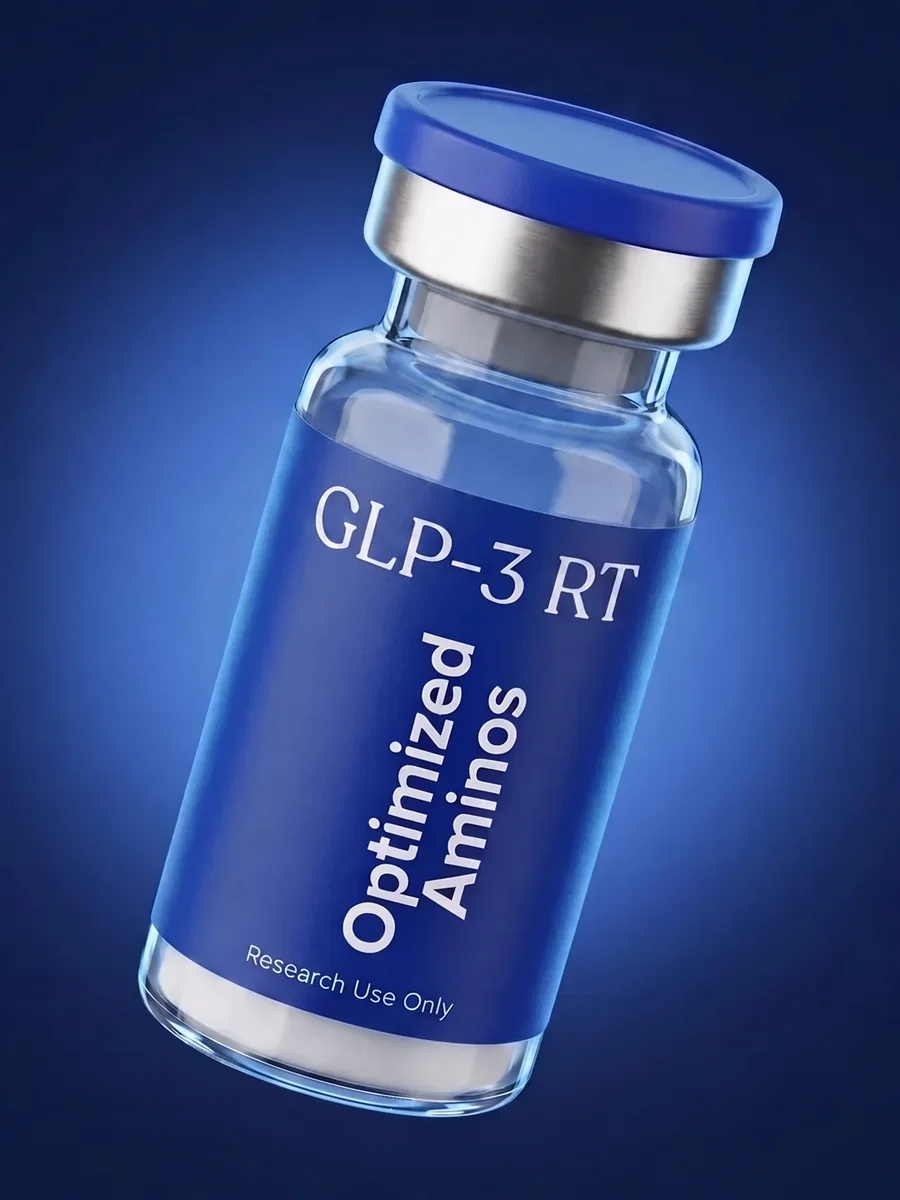
Retatrutide has become one of the most closely watched molecules in incretin-receptor research literature, largely because of its distinguishing pharmacological feature: unlike single- or dual-receptor agonists, retatrutide is engineered and studied as a triple agonist engaging the GIP receptor, the GLP-1 receptor, and the glucagon receptor. This article summarizes what published receptor-pharmacology and model-system studies describe about that triple engagement — the assay methods used, the reported binding and activation characteristics, and how retatrutide's receptor profile is positioned relative to other incretin-family peptides in the literature.
Key Facts
- Retatrutide is characterized in published pharmacology literature as a triple agonist at the GIP receptor, GLP-1 receptor, and glucagon receptor.
- Receptor engagement is typically measured using cAMP-accumulation assays in cell lines transfected to express each human receptor individually.
- Published studies report EC50 values (a measure of agonist potency) separately for each of the three receptors to characterize retatrutide's engagement profile.
- Retatrutide's structure includes a fatty-acid side chain, a modification design shared conceptually with other long-acting incretin-receptor peptides for extending time in circulation in model systems.
- Retatrutide is structurally and pharmacologically distinct from tirzepatide (dual GIP/GLP-1) and semaglutide (GLP-1 only) as reported in comparative receptor studies.
The Triple-Agonist Concept in Receptor Pharmacology
The GIP receptor, GLP-1 receptor, and glucagon receptor are all class B G-protein-coupled receptors (GPCRs) that signal predominantly through the Gαs pathway, activating adenylate cyclase and raising intracellular cyclic AMP (cAMP) upon ligand binding. Because all three receptors share this downstream signaling architecture, researchers can use a common assay format — a cAMP-accumulation readout — across cell lines individually transfected to express each receptor, allowing a single compound's activity at all three targets to be characterized using comparable methodology.
Retatrutide is described in published pharmacology papers as engineered to engage all three of these receptors within a single peptide backbone, distinguishing it from earlier single-receptor agonists (GLP-1-only compounds) and from dual agonists such as tirzepatide, which is reported in the literature to engage the GIP and GLP-1 receptors but not the glucagon receptor.
How Receptor Engagement Is Measured
In a typical in vitro characterization study, researchers transfect a host cell line (commonly a Chinese hamster ovary, or CHO, cell line) to stably express the human GIP receptor, GLP-1 receptor, or glucagon receptor. The transfected cells are then exposed to varying concentrations of the test peptide, and intracellular cAMP accumulation is measured using a luminescence- or fluorescence-based reporter assay. The resulting dose-response curve is used to calculate an EC50 value — the concentration at which the compound produces half its maximal signaling response — for each receptor independently. This approach lets published studies report, side by side, how potently a molecule activates each of the three receptor targets relative to the corresponding native hormone (GIP, GLP-1, or glucagon) as a reference standard.
What Model-System Studies Have Reported
Beyond isolated cell-based receptor assays, published research on retatrutide has extended into in vivo rodent model systems designed to characterize how triple receptor engagement translates into measurable physiological signaling in a whole-organism context. These studies typically track model-system-specific endpoints such as circulating hormone levels, receptor-pathway biomarkers, and body-composition metrics in rodent cohorts over defined study periods, comparing peptide-treated groups to vehicle-control groups under a specific experimental protocol. The methodological point relevant to researchers is that these studies are model-system observations reported in the primary literature — not claims about human outcomes — and any researcher reviewing this literature should look directly at the original publication's methods section to understand species, dosing protocol (as used in that specific animal study), and endpoint definitions before drawing conclusions for their own research design.
Structural Features Discussed in the Literature
Retatrutide's peptide backbone incorporates a fatty-acid acylation, a structural strategy also used in other long-acting incretin-receptor peptides to promote reversible albumin binding in circulation, which published pharmacokinetic studies link to an extended presence of the compound in model-system circulation compared to unmodified native hormone sequences. This structural feature is discussed alongside receptor-binding data in characterization papers as one explanation for the compound's pharmacokinetic profile in the animal models studied.
Positioning Relative to Other Incretin-Family Peptides
Because retatrutide, tirzepatide, and semaglutide are frequently discussed together in the receptor-pharmacology literature, it's useful to be precise about how their receptor engagement profiles are reported to differ:
- Semaglutide is characterized as a GLP-1 receptor agonist only.
- Tirzepatide is characterized as a dual agonist engaging the GIP and GLP-1 receptors.
- Retatrutide is characterized as a triple agonist engaging the GIP, GLP-1, and glucagon receptors.
For researchers who want a full head-to-head walkthrough of how these three receptor-engagement profiles are reported across the published literature, see our companion article, retatrutide vs. tirzepatide vs. semaglutide: a research comparison. Readers specifically interested in the dual-agonist mechanism should also see our tirzepatide dual-agonist research overview for the GIP/GLP-1 pairing that retatrutide's triple profile builds on.
Why Assay Verification Matters
Given how much of retatrutide's research interest centers on precise receptor-engagement data, the analytical identity and purity of any research sample used to reproduce or extend these findings matters as much as the pharmacology itself. A peptide sample that doesn't match its stated sequence or purity specification will not reproduce published receptor-binding characteristics.
Our retatrutide research product page is the listing for researchers designing their own receptor-engagement or model-system studies; the retatrutide sold here is third-party tested by Janoshik Analytical.
Frequently Asked Questions
What three receptors does retatrutide engage in published pharmacology studies?
Published receptor-binding and cell-based assay studies describe retatrutide as engaging the GIP receptor, the GLP-1 receptor, and the glucagon receptor, making it a triple agonist across all three incretin/glucagon-family receptor targets.
How do researchers measure receptor activation in cell-based assays?
Cell-based assays commonly measure activation through cyclic AMP (cAMP) accumulation in cell lines transfected to express the human GIP, GLP-1, or glucagon receptor, reporting potency as an EC50 value for each receptor.
What model systems have been used to study retatrutide's triple receptor engagement?
Published research on retatrutide has used in vitro receptor-binding and cAMP-signaling assays in transfected cell lines alongside in vivo rodent models used to characterize receptor engagement patterns across the three target receptors.
Is retatrutide the same molecule as tirzepatide or semaglutide?
No. Retatrutide, tirzepatide, and semaglutide are structurally distinct peptides with different receptor engagement profiles; tirzepatide is described in the literature as a dual GIP/GLP-1 agonist and semaglutide as a GLP-1 receptor agonist, while retatrutide is characterized as a triple GIP/GLP-1/glucagon receptor agonist.
For laboratory and research use only. Not for human consumption.