Research Blog
Retatrutide vs Tirzepatide vs Semaglutide: A Research Comparison of Three Incretin Molecules
Published
How the research literature distinguishes three of the most-studied incretin molecules — a single, dual, and triple receptor agonist — by mechanism, receptor targets, and structure.
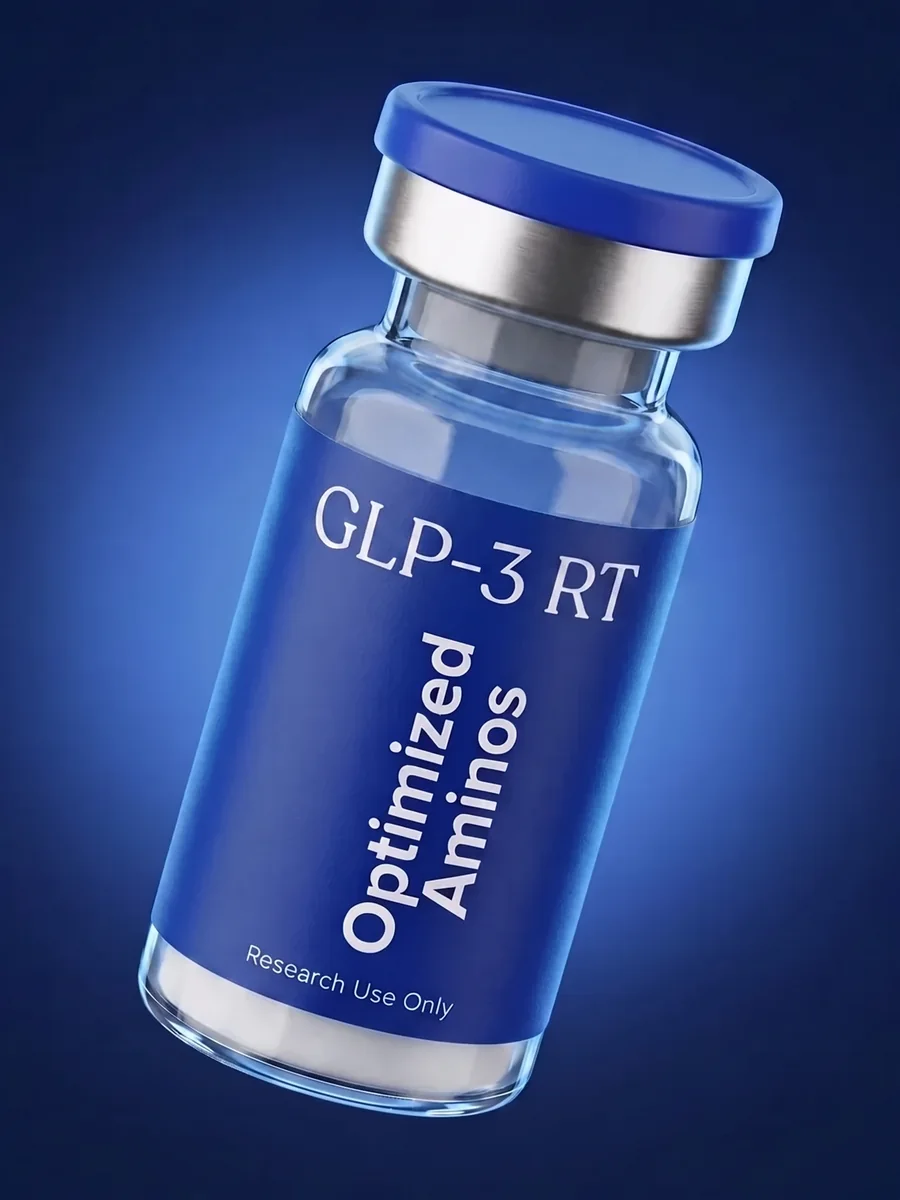
For laboratory and research use only. Not for human consumption.
For laboratory research use only. The following summarizes publicly available preclinical and biochemical literature for reference. It is not medical, veterinary, or dosing guidance and makes no health, therapeutic, or outcome claims. These materials are intended for qualified researchers handling compounds in a controlled laboratory setting.
Few queries in metabolic research come up as often as retatrutide vs tirzepatide vs semaglutide. The three are grouped together because they trace a clean progression within the incretin field: a single-receptor agonist, a dual-receptor agonist, and a triple-receptor agonist. Understanding how the literature distinguishes them is the fastest way to make sense of an entire class of molecules.
Three molecules, three receptor scopes
The cleanest way to hold these three apart is by how many receptors each engineered peptide is designed to activate.
Semaglutide — a single GLP-1 receptor agonist
Semaglutide is described in the literature as a selective agonist of the glucagon-like peptide-1 (GLP-1) receptor. It is the structurally simplest of the three in receptor scope: one target, one primary signaling axis. Research characterization focuses on its binding at the GLP-1 receptor and downstream readouts such as cyclic AMP accumulation in cell-based assays. Its extended half-life relative to native GLP-1 is a defining engineered feature.
Tirzepatide — a dual GIP/GLP-1 receptor agonist
Tirzepatide adds a second receptor. It is characterized as a dual agonist engaging both the glucose-dependent insulinotropic polypeptide (GIP) receptor and the GLP-1 receptor from a single peptide backbone. The research question that defines it is receptor balance — the relative potency at GIP versus GLP-1 — because that ratio is what distinguishes one dual agonist from another in signaling studies.
Retatrutide — a triple GLP-1/GIP/glucagon agonist
Retatrutide extends the concept to three receptors, adding glucagon-receptor activity to the GIP/GLP-1 pair. It is the most pharmacologically complex of the three, and the glucagon component is the feature most often highlighted as setting it apart. Its preclinical characterization centers on balanced activity across all three receptors at once — a nontrivial molecular-design problem, since each receptor has different structural requirements.
The progression: one, two, three receptors
Viewed together, the three molecules trace the arc of incretin peptide engineering over the past decade: start with a single well-validated target (GLP-1), add a complementary incretin receptor (GIP), then add a third metabolic receptor (glucagon). Each added receptor increases the design difficulty because the molecule must maintain appropriate potency at every target simultaneously. This is why researchers rarely describe one as simply "stronger" than another — they occupy different points on a receptor-scope spectrum and answer different mechanistic questions.
Structural and stability notes
All three are synthetic peptides modified for research stability and an extended half-life relative to the native hormones they derive from. The engineering strategies overlap — fatty-acid acylation to promote albumin binding is a recurring theme in this class — but the sequences differ to accommodate their different receptor targets. For any of the three, the practical bench implications are the same: they ship as lyophilized powder, require reconstitution before use, and their solution stability is a variable worth controlling. Our explainer on peptide half-life in research solutions and our guide to reconstitution ratios apply directly.
How researchers actually compare them
In practice, comparison work relies on cell-based signaling assays that measure the response at each relevant receptor — GLP-1 for all three, GIP for tirzepatide and retatrutide, glucagon for retatrutide alone. Plotting potency at each receptor produces the "receptor-balance" profile that defines a given molecule. Because semaglutide engages only one of these receptors, its profile is one-dimensional; tirzepatide''s is two-dimensional; retatrutide''s is three-dimensional. That dimensional difference, more than any single potency number, is the substance of the comparison.
Read the pairwise comparisons next
This three-way overview is the map; the pairwise articles are the detail. For the incretin-versus-incretin question, see our retatrutide vs tirzepatide research comparison. For the triple-versus-single question, see retatrutide vs semaglutide in metabolic research. For how retatrutide sits among the broader family, see retatrutide vs GLP-1 class molecules. And for a look outside the incretin family entirely, our retatrutide vs cagrilintide comparison contrasts a triple agonist with an amylin analog.
Sourcing and verification for research
Any research-grade material in this class should arrive with a batch certificate of analysis confirming identity by mass spectrometry and purity by HPLC. You can review third-party testing records in our COA archive and browse retatrutide research material directly. Before committing to any source, our 2026 supplier-vetting framework walks through what documentation a trustworthy vendor provides.
For laboratory research use only. Nothing here is intended for human or animal use. All compounds referenced are supplied strictly for in-vitro and other controlled preclinical research by qualified professionals and are third-party tested for identity and purity. This content describes published research and asserts no health, therapeutic, or performance outcome.
For laboratory and research use only. Not for human consumption.
Related research compounds
Compounds referenced in this article, available as research-grade lyophilized peptides with third-party tested COA.