Research Blog
Retatrutide vs Semaglutide: A Metabolic-Research Comparison
Published
Retatrutide (triple agonist: GLP-1 + GIP + glucagon) vs semaglutide (single GLP-1 agonist) — how they differ in the metabolic-research literature and how to verify either. Research use only.
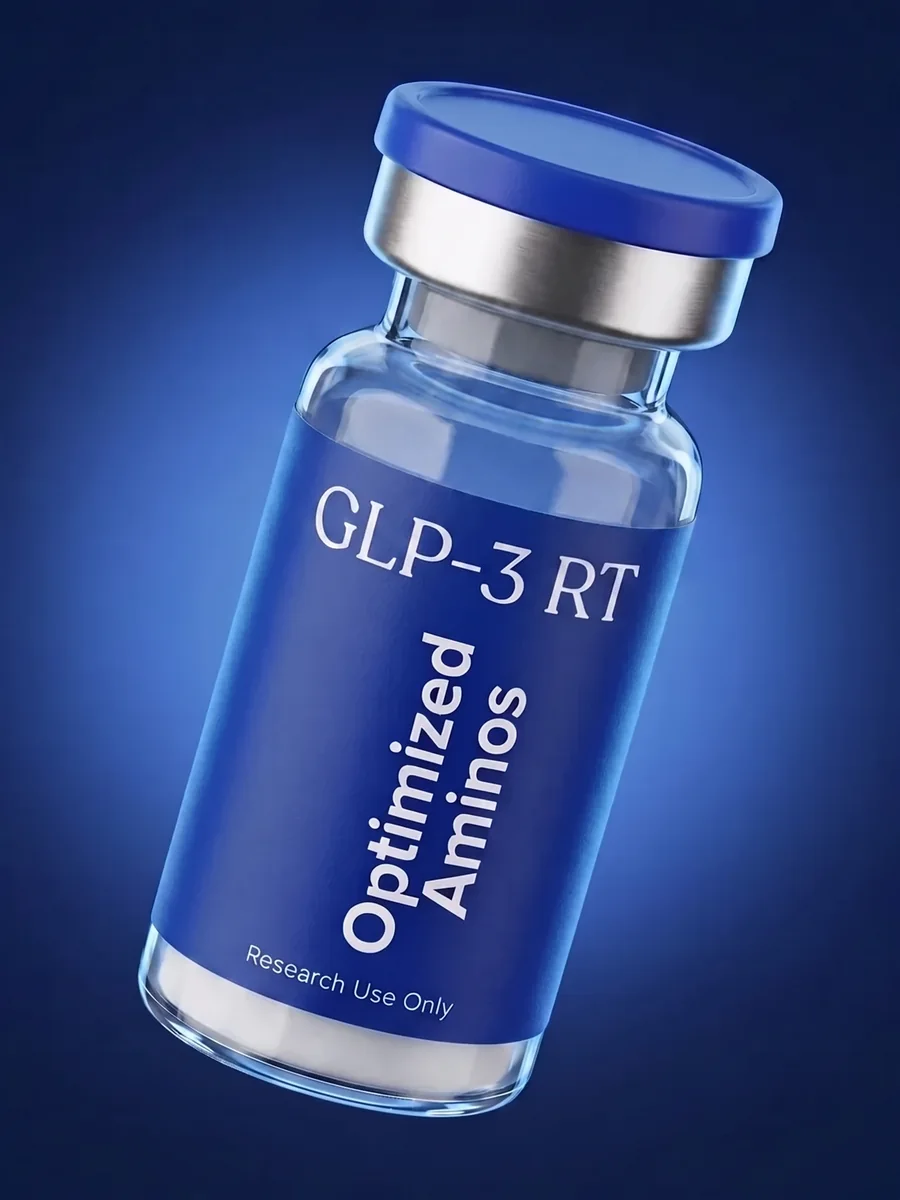
For laboratory research use only. This article compares two research peptides as they appear in the published preclinical and academic literature. It describes laboratory and clinical-trial research only, and contains no dosing, human-use, veterinary, weight-management, or treatment guidance of any kind.
Two incretin-pathway research peptides, often confused
Retatrutide and semaglutide are two of the most-discussed peptides in metabolic-pathway research, and because both act on the incretin system, researchers new to the area often lump them together. Structurally and mechanistically they are distinct, and the difference is the whole point. This article lays out how they differ in the research literature — receptor targets, structure, and why they're studied as separate tools.
The core difference: how many receptors they target
The incretin system involves several receptors, chiefly GLP-1 (glucagon-like peptide-1), GIP (glucose-dependent insulinotropic polypeptide), and the glucagon receptor. The number of these a peptide engages is what separates these two research compounds:
- Semaglutide is a single-receptor agonist — it targets the GLP-1 receptor. It's a long-studied GLP-1 analog and, in the research literature, the reference point for single-pathway incretin work.
- Retatrutide (research code LY-3437943) is a triple agonist — it engages the GLP-1, GIP, and glucagon receptors simultaneously. That three-receptor profile is exactly why it's studied as a distinct, newer-generation research tool rather than a semaglutide substitute.
Structural and generational context
Semaglutide is a GLP-1 analog with modifications that extend its stability in study models — a well-characterized, widely-referenced single-agonist peptide. Retatrutide belongs to a later wave of multi-receptor research peptides engineered to act on several incretin pathways at once. In the literature you'll often see this framed as single-agonist vs. multi-agonist research: semaglutide as the established single-target reference, retatrutide as a multi-target investigational compound. They are not two versions of the same molecule; they're different tools for studying different questions about the incretin system.
Why researchers study them side by side
Because one engages a single receptor and the other engages three, comparing them in the same model is how the research literature isolates what each receptor contributes. Semaglutide serves as a single-pathway baseline; retatrutide adds the GIP and glucagon dimensions. Studying them together isn't about ranking one as "better" — that would be a claim outside the scope of research-use material — it's about mapping the incretin system by comparing a narrow tool against a broad one.
Handling: effectively identical, with one caveat
From a bench standpoint the two are handled the same way. Both arrive lyophilized, both are reconstituted with bacteriostatic water, and both follow the same gentle-swirl, no-shaking rule and refrigerated storage for the reconstituted solution. The one practical note: metabolic research peptides like retatrutide are often cold-chain-sensitive, so store the dry vial as cold as its documentation specifies. Our reconstitution guide covers the concentration math that applies to either.
Sourcing: verify identity, because multi-agonists are easy to mislabel
With newer multi-receptor compounds, verifying you received the exact peptide matters even more — the names are similar and the molecules are not. Judge either one on documentation:
- Identity confirmation — the report should confirm the specific compound and its molecular weight, so "retatrutide" on the label is actually retatrutide in the vial, not a different incretin analog.
- Purity — a sharp main peak and an integration table, not a bare percentage. (See how to read an HPLC chromatogram.)
- Independent third-party testing — HPLC purity and mass-spec identity confirmed by an outside lab, not the seller.
Our peptides are third-party tested, and the certificate published for retatrutide is in the COA archive.
The bottom line
Semaglutide is a single-receptor (GLP-1) research peptide and the established single-agonist reference; retatrutide is a triple agonist (GLP-1 + GIP + glucagon) studied as a distinct, multi-target tool. They're compared not because they're interchangeable, but because a narrow agonist and a broad one, side by side, are how the incretin system gets mapped. Choose based on the receptor question your model is asking — and verify whichever you source with a real, independent third-party-tested COA.
Further reading
- Retatrutide 20mg — third-party tested research material with a published COA.
- How to read an HPLC chromatogram — confirm identity and purity before you rely on it.
- How to reconstitute research peptides — correct handling for metabolic-research peptides.
All information on this page is provided for laboratory research and educational use only. Optimized Aminos products are not intended for human or veterinary use, and nothing here should be read as describing effects in humans, as weight-management or treatment guidance, or as dosing or administration guidance.
For laboratory and research use only. Not for human consumption.
Related research compounds
Compounds referenced in this article, available as research-grade lyophilized peptides with third-party tested COA.