Research Blog
Retatrutide vs Cagrilintide: Triple Agonist and Amylin Analog Research Compared
Published
How retatrutide (a GLP-1/GIP/glucagon triple agonist) and cagrilintide (an amylin analog) compare across receptor targets, structure, and research use.
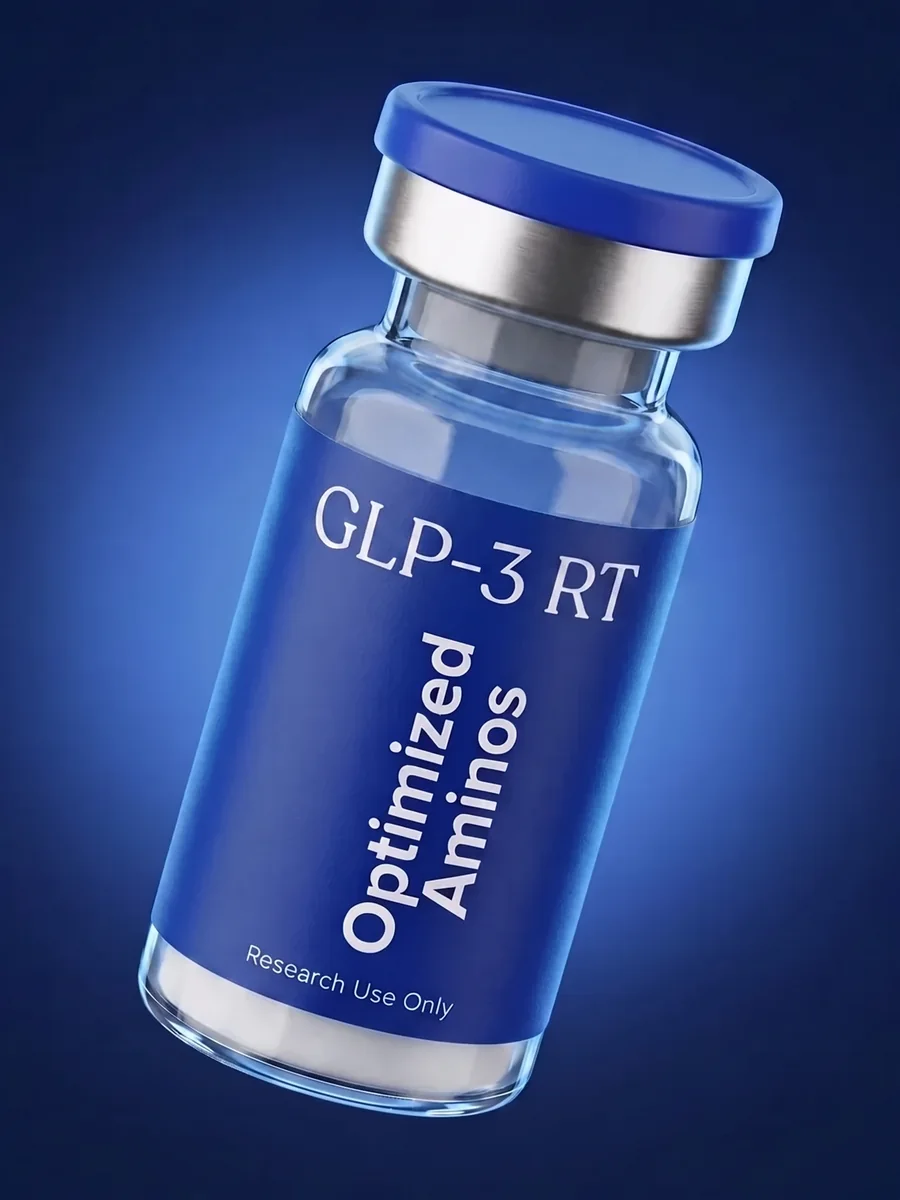
For laboratory research use only. The information below summarizes publicly available preclinical and biochemical literature for reference purposes. It is not medical, veterinary, or dosing guidance, and it makes no health, therapeutic, or outcome claims. These materials are intended for qualified researchers handling compounds in a controlled laboratory setting.
Two of the most-discussed compounds in modern metabolic-pathway research are retatrutide and cagrilintide. They are frequently mentioned in the same breath because both are studied in the context of energy-balance and incretin biology — but they belong to different pharmacological classes and engage different receptor systems. This article compares what the research literature describes about each, side by side, so that researchers can understand where the two molecules overlap and where they diverge.
Two different molecular classes
The single most important distinction is class. Retatrutide is described in the literature as a triple agonist — a single synthetic peptide engineered to activate three receptors: the glucagon-like peptide-1 (GLP-1) receptor, the glucose-dependent insulinotropic polypeptide (GIP) receptor, and the glucagon receptor. Cagrilintide, by contrast, is an amylin analog: a long-acting synthetic version of the pancreatic hormone amylin that engages amylin and calcitonin receptor complexes.
In other words, these are not two variations on the same mechanism. Retatrutide sits within the incretin/glucagon-agonist family alongside molecules covered in our comparison of retatrutide and other GLP-1 class molecules, while cagrilintide sits in the amylinergic family described in our cagrilintide amylin-analog research overview. Understanding that split is the foundation for everything else.
Receptor targets at a glance
Retatrutide — triple receptor agonism
Preclinical characterization of retatrutide focuses on its balanced activity across GLP-1, GIP, and glucagon receptors. Research models are typically used to study how simultaneous engagement of all three pathways influences signaling readouts such as cyclic AMP accumulation and downstream metabolic markers in cell-based and rodent systems. The glucagon-receptor component is the feature most often highlighted as distinguishing it from dual GIP/GLP-1 agonists.
Cagrilintide — amylin and calcitonin receptor engagement
Cagrilintide research centers on the amylin receptor family, which is formed when the calcitonin receptor associates with receptor-activity-modifying proteins (RAMPs). Studies describe cagrilintide''s extended half-life relative to native amylin and its stability in solution, making it a frequently used tool compound in amylinergic-pathway investigations.
Structural and stability notes
Both compounds are synthetic peptides modified for research stability, but the design goals differ. Retatrutide''s sequence is engineered to balance potency across three receptors at once — a nontrivial molecular-design problem, since each receptor has different structural requirements. Cagrilintide is modified from the amylin scaffold, which is prone to aggregation in its native form; the analog is designed to resist that aggregation and remain soluble over a longer working window.
For researchers handling either compound, these stability characteristics matter at the bench. Both ship as lyophilized powder and require reconstitution before use; our guide on how much bacteriostatic water to add during reconstitution and our explanation of peptide half-life in research solutions both apply directly to setting up experiments with these molecules.
Receptor balance and selectivity in research models
A theme unique to retatrutide is the question of receptor balance. Because a single molecule engages three receptors, researchers characterizing it often study the relative potency at each — how strongly it activates GLP-1 versus GIP versus glucagon receptors. That balance is a defining property of the molecule, and shifting it is precisely how medicinal chemists differentiate one triple agonist from another. Cell-based signaling assays measuring cyclic AMP responses at each receptor are the standard way this profile is mapped. Cagrilintide poses no equivalent question, because it is a single-class analog; its research characterization instead focuses on binding affinity and duration at the amylin receptor complexes and on its solution stability over time. This is a useful reminder that "comparing" the two is less about which is stronger and more about the fact that they were designed to answer entirely different pharmacological questions.
Why they are often studied together
A recurring theme in recent literature is the pairing of an incretin-based agonist with an amylin analog to investigate whether the two mechanisms are complementary in preclinical energy-balance models. This is why "retatrutide vs cagrilintide" is such a common search: researchers comparing the compounds are often deciding which single-mechanism tool to characterize first, or designing studies that examine both pathways. The comparison is mechanistic, not a ranking — each addresses a distinct receptor question.
Comparison summary
To consolidate: retatrutide is a triple agonist acting on GLP-1, GIP, and glucagon receptors and is the more pharmacologically complex of the two, defined by its glucagon-receptor activity. Cagrilintide is a single-class amylin analog defined by its engagement of amylin/calcitonin receptor complexes and its aggregation-resistant, long-acting design. They are studied in overlapping metabolic-research contexts but answer different receptor-biology questions. Neither is interchangeable with the other, and neither substitutes for the dual-agonist molecules covered in our retatrutide vs tirzepatide research comparison.
Sourcing and verification for research
Because both compounds are the subject of intense interest, purity and documentation are especially important. Any research-grade retatrutide should arrive with a batch certificate of analysis showing identity and purity data; you can browse our retatrutide research material and review third-party testing records in the COA archive. Cagrilintide is not currently in our catalog, but the same verification standard applies to any amylin-analog source: confirm the compound''s identity by mass spectrometry and its purity by HPLC before beginning work. Our checklist on how to spot a fake peptide COA walks through what a trustworthy certificate should contain.
For labs building out a metabolic-research bench, it is also worth keeping supporting materials on hand — reconstitution fluid such as bacteriostatic water and clean documentation practices reduce variability across runs.
For laboratory research use only. Nothing in this article is intended for human or animal use. All compounds referenced are supplied strictly for in-vitro and other controlled preclinical research by qualified professionals, and are third-party tested for identity and purity. This content describes published research and does not assert any health, therapeutic, or performance outcome.
For laboratory and research use only. Not for human consumption.
Related research compounds
Compounds referenced in this article, available as research-grade lyophilized peptides with third-party tested COA.