Research Blog
The Metabolic Trifecta Explained: Retatrutide, NAD+, and MOTS-c in One Research Kit
Published
What's inside the Metabolic Trifecta research kit, how Retatrutide, NAD+, and MOTS-c differ mechanistically, and the reconstitution math for all three vials.
For laboratory and research use only. Not for human consumption.
The Metabolic Trifecta combines three research peptides that each address a different node of metabolic pathway research: Retatrutide, a triple GIP/GLP-1/glucagon receptor agonist studied in incretin-pathway models; NAD+, a cofactor central to mitochondrial and cellular-energy research; and MOTS-c, a mitochondrial-derived peptide studied for its role in metabolic signaling. This overview covers what each component contributes, how the three mechanisms differ, and the reconstitution math for running all three in a single research protocol.
Why These Three Are Grouped as a "Trifecta"
Metabolic research increasingly separates into distinct pathway categories rather than treating "metabolism" as one target. Retatrutide's research profile centers on receptor-level incretin signaling — it is characterized in the literature as a triple agonist acting on GIP, GLP-1, and glucagon receptors simultaneously, distinguishing it from single- or dual-agonist molecules. NAD+ research operates at a different level entirely: cellular bioenergetics, where NAD+/NADH ratios are studied as a marker and driver of mitochondrial function across aging and metabolic-stress models. MOTS-c bridges the two — as a peptide encoded by mitochondrial DNA, it has been studied for AMPK-pathway activation and metabolic-stress signaling, connecting mitochondrial biology to the same downstream metabolic pathways that incretin research addresses. A side-by-side look at the mitochondrial-research angle is available in MOTS-c vs NAD+.
What's in the Kit
| Component | Primary Target | Molecular Class | Research Focus |
|---|---|---|---|
| Retatrutide | GIP, GLP-1, glucagon receptors | Triple receptor agonist peptide | Incretin-pathway signaling models |
| NAD+ | Cellular redox / sirtuin pathways | Dinucleotide cofactor | Mitochondrial and cellular-energy research |
| MOTS-c | AMPK pathway | Mitochondrial-DNA-encoded peptide | Metabolic-stress signaling research |
Reconstitution Math for the Kit
All three vials in the Metabolic Trifecta are reconstituted independently. The standard formula applies to each:
Concentration (mg/mL) = Peptide mass (mg) ÷ Diluent volume added (mL)
For the Retatrutide 20mg vial, adding 2 mL of bacteriostatic water yields 10 mg/mL; adding 4 mL yields 5 mg/mL. For NAD+, concentration depends on the labeled mass per vial as listed on the certificate of analysis — researchers should confirm the exact mg figure printed on their specific lot before calculating, since NAD+ vial sizes can vary by supplier batch. For MOTS-c, following the same mg ÷ mL formula against the labeled peptide mass gives the working concentration. Each vial should be logged separately in the lab notebook with its own reconstitution date, diluent volume, and resulting concentration, since the three components are not combined into a single premixed solution.
What the Published Literature Describes
No published study has evaluated Retatrutide, NAD+, and MOTS-c as a combined three-component protocol — each has its own independent literature base that researchers cite separately. Retatrutide's receptor-binding and preclinical metabolic findings have been published in diet-induced obesity rodent models and pharmacokinetic studies characterizing its triple-agonist binding profile. NAD+ research spans a wide range of model systems, from cell-culture studies of sirtuin activation to rodent aging models tracking NAD+/NADH ratios over time. MOTS-c's AMPK-pathway findings come primarily from cell-culture and rodent metabolic-stress models, with the peptide's mitochondrial-DNA origin cited as the basis for its distinct mechanism relative to nuclear-genome-encoded peptides. Researchers writing up findings that draw on more than one of these three literatures should cite each pathway's published model system explicitly rather than treating "metabolic research" as a single undifferentiated body of evidence.
Protocol Design Considerations
Because the three peptides in this kit act on distinct pathways — incretin receptors, cellular redox chemistry, and AMPK signaling — protocol designs generally track outcome measures specific to each pathway rather than a single combined metabolic endpoint. Documenting reconstitution concentration, storage temperature, and time-since-reconstitution separately for each of the three vials is standard practice, since degradation rates differ by molecule class: a triple-agonist peptide, a small-molecule cofactor, and a short mitochondrial peptide do not share a single stability profile.
Storage and Handling Notes
Reconstituted Retatrutide and MOTS-c should be refrigerated at 2-8°C and protected from light, consistent with standard lyophilized-peptide handling. NAD+ solutions are also light- and temperature-sensitive; researchers should consult the specific certificate of analysis for lot-specific stability guidance rather than assuming a uniform shelf life across all three vials in the kit.
MOTS-c's mitochondrial-DNA origin is what distinguishes it from the majority of research peptides, which are encoded by nuclear DNA. Background on how this molecule was first identified is covered in The Discovery of MOTS-c, which is useful context for researchers unfamiliar with why a mitochondrial-derived peptide is grouped alongside a cofactor like NAD+ rather than with conventional signaling peptides.
Frequently Asked Questions
Does the Metabolic Trifecta ship as one combined vial?
No — it ships as three separate vials (Retatrutide, NAD+, and MOTS-c), each reconstituted independently with its own concentration.
How is Retatrutide different from single-target incretin research peptides?
Retatrutide is characterized as a triple agonist acting on GIP, GLP-1, and glucagon receptors simultaneously, whereas many earlier-studied incretin peptides act on only one or two of these receptors. See the full Retatrutide research overview for mechanism detail.
Why is MOTS-c grouped with NAD+ rather than with Retatrutide?
MOTS-c and NAD+ are both studied in mitochondrial-research contexts — MOTS-c as a mitochondrial-DNA-encoded signaling peptide and NAD+ as a cofactor central to mitochondrial bioenergetics — while Retatrutide's literature centers on receptor-level incretin signaling. The MOTS-c vs NAD+ comparison covers this distinction in more depth.
Is there published research on the three-peptide combination itself?
No. Each component has its own independently published literature; the combination as a protocol has not been evaluated as a single studied entity in published research.
How should researchers calculate NAD+ concentration if vial mass varies by lot?
Always confirm the labeled peptide mass on the specific vial's certificate of analysis before applying the mg ÷ mL reconstitution formula, since NAD+ vial sizes can differ between supplier batches.
Reviewed by the Optimized Aminos research team — last updated August 15, 2026.
For laboratory and research use only. Not for human consumption.
Related research compounds
Compounds referenced in this article, available as research-grade lyophilized peptides with third-party tested COA.
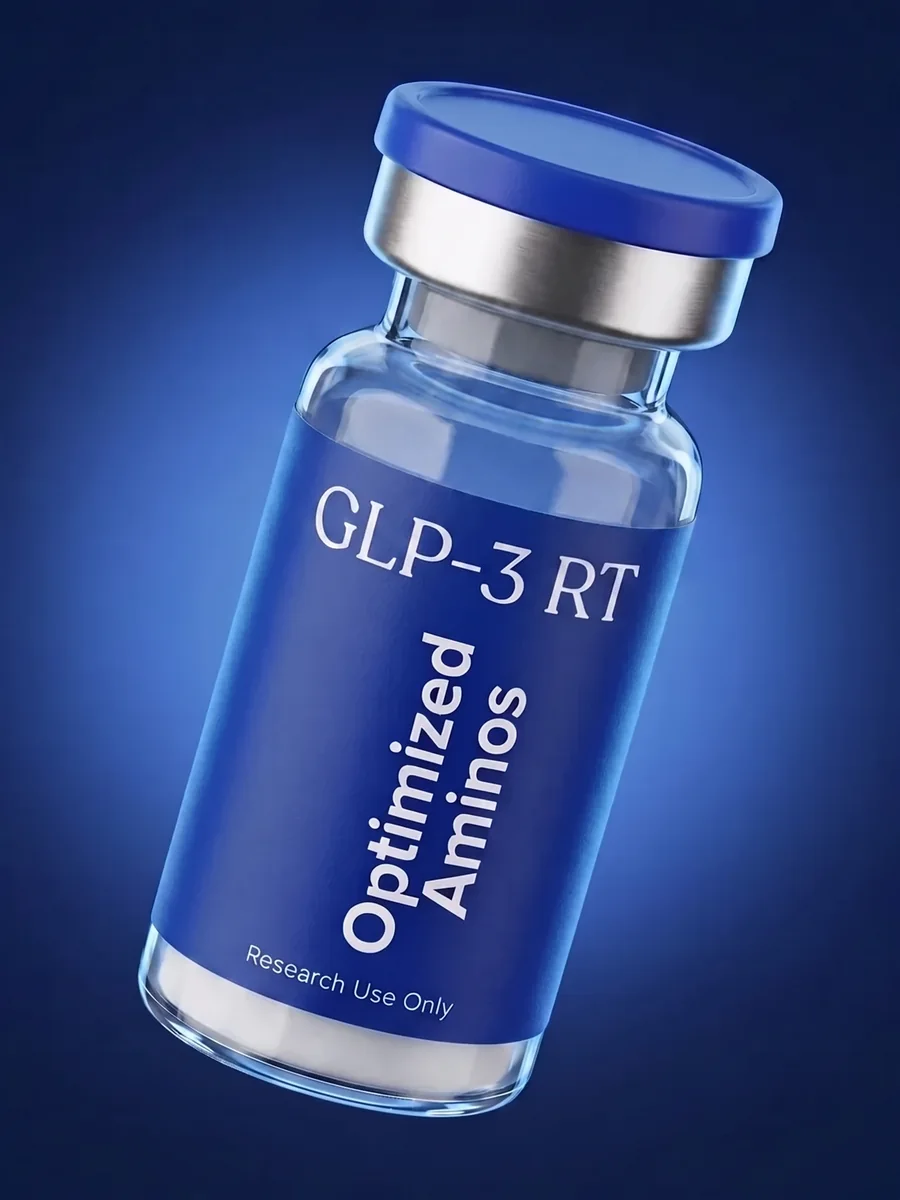
Retatrutide (LY-3437943) reference material — a synthetic peptide investigated in published academic literature as a multi-receptor agonist (MW ~4813 Da). Synthesized at >98% purity with identity confirmed by LC-MS/MS. Supplied as lyophilized powder requiring cold-chain storage at -20°C; cold-pack shipping recommended. Reconstitute with bacteriostatic water. For in-vitro laboratory and analytical research use only. Not a drug, supplement, or therapeutic product. Not for human or animal consumption, ingestion, injection, or any clinical use. Not FDA-approved or evaluated for safety or efficacy.
View product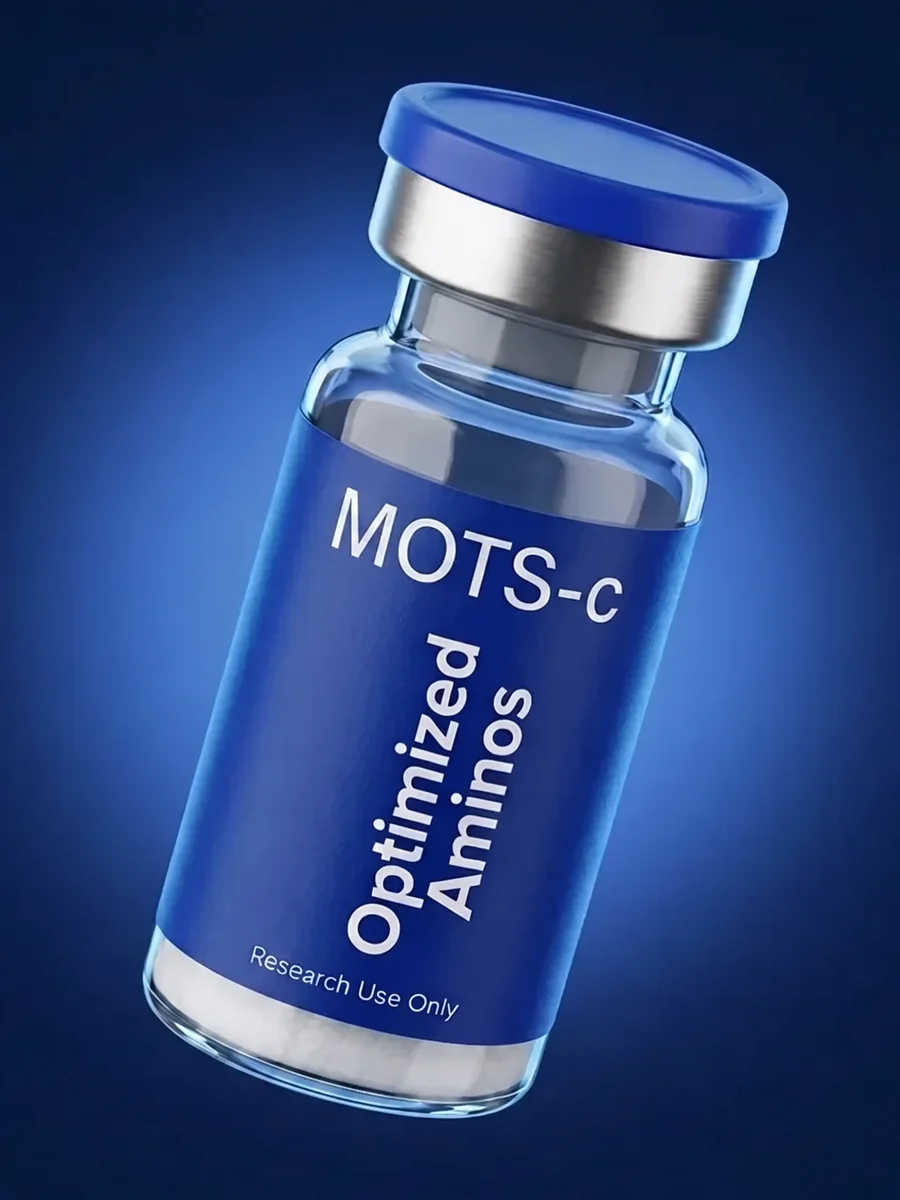
MOTS-c reference peptide, 10 mg per vial. Supplied as a white lyophilized powder, synthesized at >98% purity and verified by HPLC and mass spectrometry. Referenced in published in-vitro literature on mitochondrial peptide signaling. Store frozen (≤ -20°C) for long-term stability; protect from moisture and light. Reconstitute with bacteriostatic water. For in-vitro laboratory and analytical research use only. Not a drug, supplement, or therapeutic product. Not for human or animal consumption, ingestion, injection, or any clinical use. Not FDA-approved.
View product