Research Blog
Retatrutide, NAD+, and MOTS-c: A Mechanism Comparison for the Metabolic Trifecta Research Kit
Published
A side-by-side mechanism comparison of the three compounds in the Metabolic Trifecta kit — receptor-layer, cofactor-layer, and mitochondrial-signaling — with a spec table and why the kit pairs three non-overlapping pathways instead of three similar ones.
For laboratory and research use only. Not for human consumption.
The Metabolic Trifecta bundles three research compounds that share almost nothing mechanistically — a triple-receptor agonist peptide, a redox coenzyme, and a mitochondrial-derived signaling peptide. That's the actual logic behind the kit: three independent entry points into metabolic pathway research rather than three variations on one mechanism. This guide sets the three side by side — what each one is, where it acts, and why studying them together covers ground that studying any one alone does not.
Three Peptides, Three Distinct Pathway Nodes
Metabolic research spans multiple biological layers: receptor signaling at the cell surface, cofactor availability inside the cell, and organelle-level signaling from mitochondria. The Metabolic Trifecta's three components map onto exactly those three layers — Retatrutide at the receptor layer, NAD+ at the cofactor layer, and MOTS-c at the mitochondrial-signaling layer. None of the three substitutes for either of the others, which is the premise behind bundling them rather than a reason to pick just one.
Retatrutide — Triple Incretin-Receptor Agonism
Retatrutide (LY-3437943) is a synthetic peptide with a molecular weight of approximately 4,813 Da, studied in published literature as a multi-receptor agonist engaging the GIP, GLP-1, and glucagon receptors. Because it acts on three distinct incretin-family receptors rather than one, it is used in research models examining how combined receptor engagement compares with single- or dual-receptor agonism. The engineering behind that three-receptor design is covered in more depth in the guide to Retatrutide's triple-agonist molecular design.
NAD+ — A Redox Cofactor, Not a Receptor Ligand
NAD+ (nicotinamide adenine dinucleotide, MW 663.43 Da) operates at a different layer entirely. It isn't a receptor ligand — it's a coenzyme central to redox reactions and cellular energy metabolism, and more recent literature treats it as a consumed signaling substrate for enzymes such as sirtuins and PARPs, not only a static cofactor. Where Retatrutide research asks what happens when a receptor is engaged, NAD+ research more often asks what happens when cellular NAD+ availability itself changes. The distinction between NAD+'s coenzyme and substrate roles is covered in the guide to NAD+ in cellular research.
MOTS-c — A Mitochondrial-Derived Peptide
MOTS-c is a 16-amino-acid peptide encoded within mitochondrial DNA rather than nuclear DNA — a genuinely distinct origin from either of the other two compounds in this kit. It is referenced in published in-vitro literature on mitochondrial peptide signaling, positioning it as a research tool for studying communication between mitochondria and the rest of the cell, a layer of metabolic research that neither a surface receptor agonist nor a diffusible coenzyme directly addresses on its own. Its discovery and research background are covered in the MOTS-c discovery guide and compared directly against NAD+ in the MOTS-c vs NAD+ mitochondrial research comparison.
Spec Comparison Table
| Compound | Molecular Weight | Vial Mass (Trifecta kit) | Primary Pathway Layer | Molecular Class |
|---|---|---|---|---|
| Retatrutide | ≈ 4,813 Da | 20 mg | GIP / GLP-1 / glucagon receptors (cell surface) | Synthetic multi-receptor agonist peptide |
| NAD+ | 663.43 Da | 500 mg | Redox cofactor / sirtuin & PARP substrate (intracellular) | Dinucleotide coenzyme |
| MOTS-c | ≈ 2,174 Da | 10 mg | Mitochondrial-derived signaling | Mitochondrial DNA-encoded peptide |
The molecular-weight spread alone — from a 663 Da coenzyme to a nearly 4,813 Da multi-receptor peptide — is a rough proxy for how differently these three are handled experimentally, from reconstitution concentration to the assay formats each is typically used in.
Why Combine Them in One Research Kit
A protocol studying metabolic pathway research broadly rather than one isolated receptor benefits from tools that don't overlap. Pairing a receptor-layer agonist with a cofactor-layer coenzyme and a mitochondrial-signaling peptide gives a research design three non-redundant angles into energy metabolism instead of three redundant ones. That is the rationale documented in the general overview of what's inside the Metabolic Trifecta kit, and it is the same logic behind other multi-vial research kits in this catalog, such as the receptor-and-cofactor pairing in the GH Stack.
Reconstitution Differences Across the Three Vials
Because the three compounds differ this much mechanistically, they also differ in how they're reconstituted. Retatrutide and MOTS-c are both reconstituted with bacteriostatic water, consistent with most peptide-chain vials in this catalog. NAD+ is the exception — its listing specifies sterile saline for in-vitro applications instead, a distinction covered in full in the NAD+ reconstitution math guide. The complete vial-by-vial arithmetic for all three, including diluent volumes and resulting concentrations, is worked through in the Metabolic Trifecta reconstitution guide.
Frequently Asked Questions
Do Retatrutide, NAD+, and MOTS-c share a mechanism of action?
No. Retatrutide acts on cell-surface incretin receptors (GIP, GLP-1, glucagon), NAD+ functions as an intracellular redox cofactor and enzyme substrate, and MOTS-c is a mitochondrial-derived signaling peptide. They act at three distinct pathway layers.
Why does the Metabolic Trifecta pair three unrelated compounds instead of three similar ones?
The rationale is coverage rather than redundancy — a research design that touches receptor signaling, cofactor availability, and mitochondrial signaling addresses more of the metabolic research picture than three tools acting on the same node.
Which compound in the kit has the largest vial mass?
NAD+, at 500 mg per vial, compared with 20 mg for Retatrutide and 10 mg for MOTS-c. Reconstitution math for the 500 mg NAD+ vial is worked through separately since the scale differs substantially from the other two.
Are all three compounds in the kit reconstituted the same way?
No. Retatrutide and MOTS-c both use bacteriostatic water, consistent with most peptide vials in this catalog. NAD+'s listing specifies sterile saline for in-vitro applications instead.
What is MOTS-c's molecular origin, and how does it differ from the other two compounds?
MOTS-c is a 16-amino-acid peptide encoded in mitochondrial DNA rather than nuclear DNA. Retatrutide is a fully synthetic multi-receptor agonist peptide, and NAD+ is a naturally occurring dinucleotide coenzyme — three distinct molecular origins within one kit.
Where can I find the full reconstitution math for all three vials in the kit?
The Metabolic Trifecta reconstitution guide covers the mg-to-mL arithmetic for all three vials individually.
Reviewed by the Optimized Aminos research team — last updated 2026-08-21.
For laboratory and research use only. Not for human consumption.
Related research compounds
Compounds referenced in this article, available as research-grade lyophilized peptides with third-party tested COA.
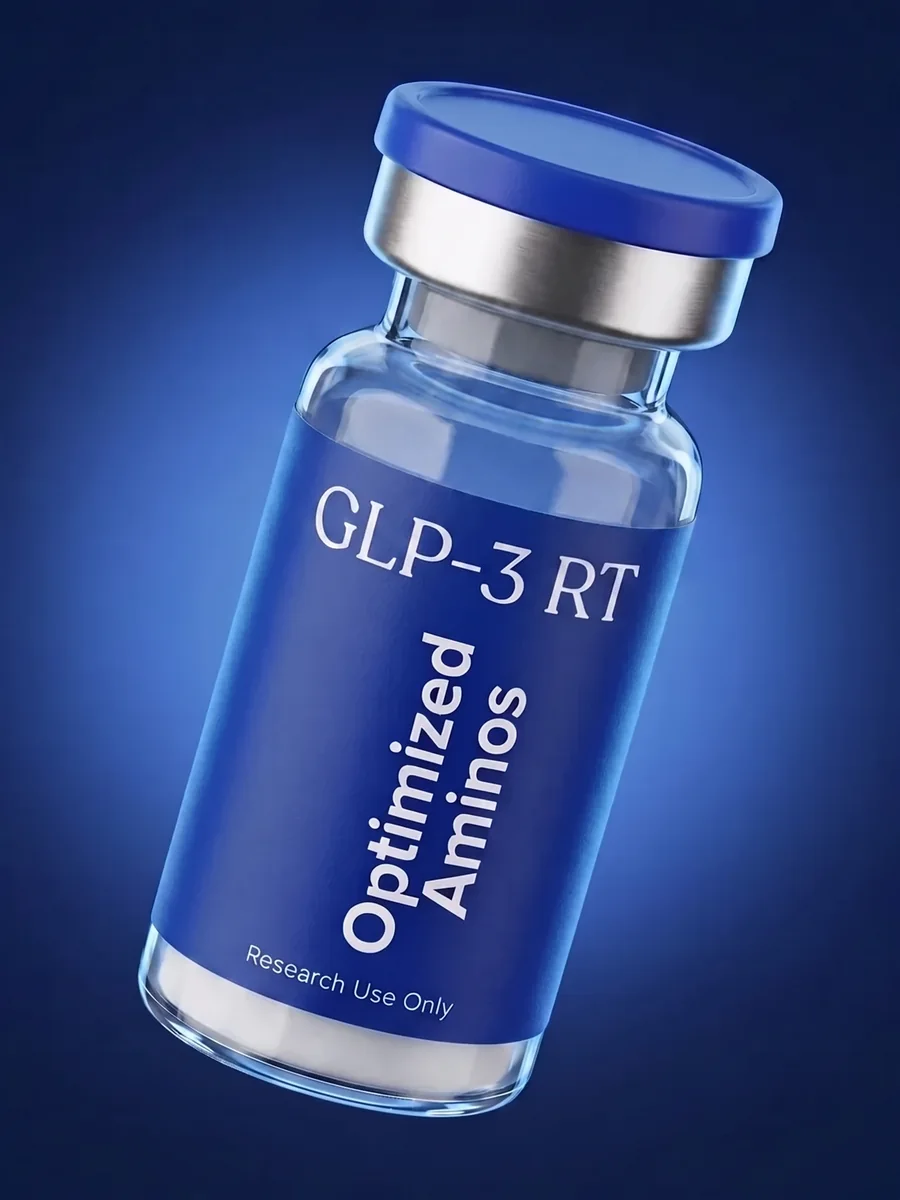
Retatrutide (LY-3437943) reference material — a synthetic peptide investigated in published academic literature as a multi-receptor agonist (MW ~4813 Da). Synthesized at >98% purity with identity confirmed by LC-MS/MS. Supplied as lyophilized powder requiring cold-chain storage at -20°C; cold-pack shipping recommended. Reconstitute with bacteriostatic water. For in-vitro laboratory and analytical research use only. Not a drug, supplement, or therapeutic product. Not for human or animal consumption, ingestion, injection, or any clinical use. Not FDA-approved or evaluated for safety or efficacy.
View product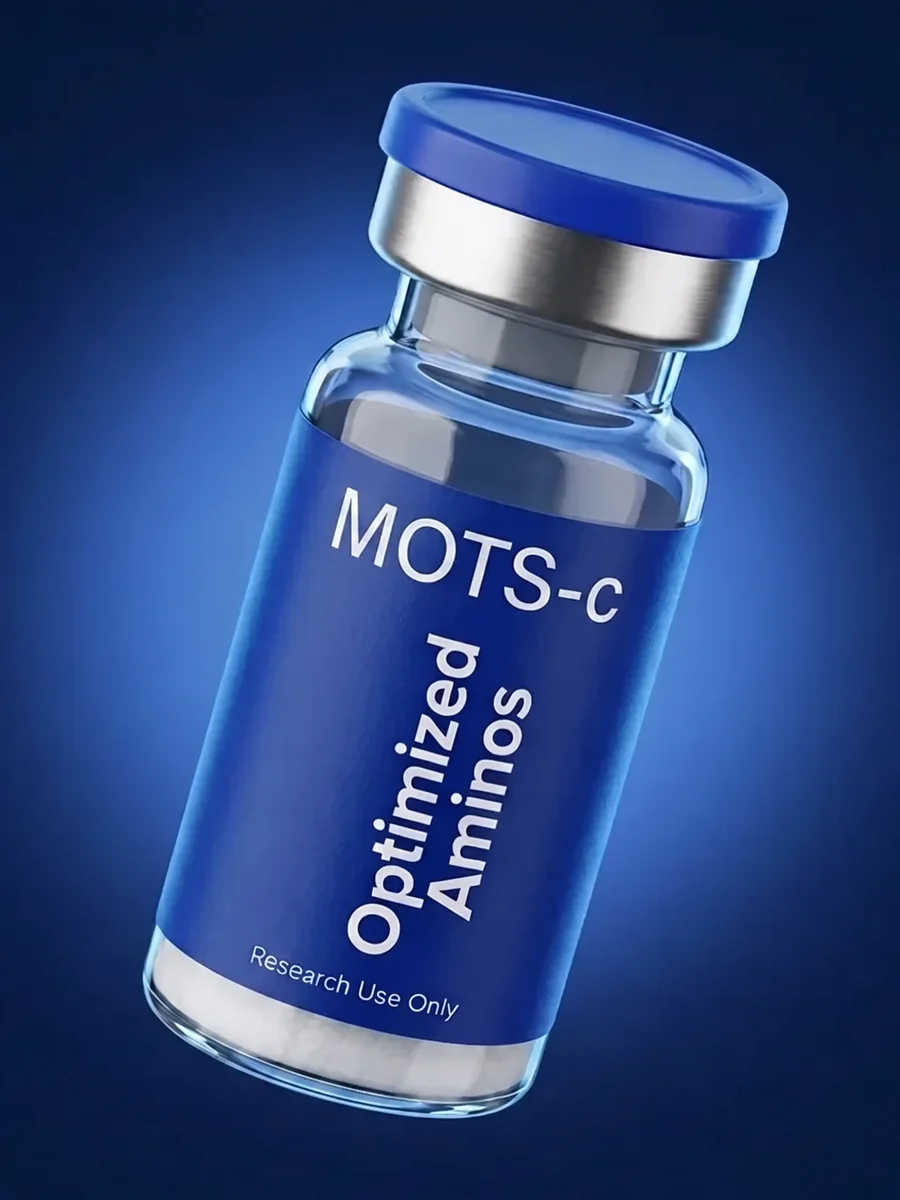
MOTS-c reference peptide, 10 mg per vial. Supplied as a white lyophilized powder, synthesized at >98% purity and verified by HPLC and mass spectrometry. Referenced in published in-vitro literature on mitochondrial peptide signaling. Store frozen (≤ -20°C) for long-term stability; protect from moisture and light. Reconstitute with bacteriostatic water. For in-vitro laboratory and analytical research use only. Not a drug, supplement, or therapeutic product. Not for human or animal consumption, ingestion, injection, or any clinical use. Not FDA-approved.
View product