Research Blog
Where to Buy the Metabolic Trifecta for Research in 2026: Sourcing & COA Checklist
Published
A supplier vetting framework for the Metabolic Trifecta kit (Retatrutide + NAD+ + MOTS-c, three separate vials): per-vial COA requirements, LC-MS identity confirmation, and salt-form/endotoxin disclosure. Research use only.
For laboratory and research use only. Not for human consumption.
The GH Stack and the Wolverine Stack each have a dedicated sourcing guide on this site. The Metabolic Trifecta — the third of the three multi-vial kits sold here — has never had one, despite carrying the same three-vial documentation burden as its siblings. This guide closes that gap: what to check before ordering a Retatrutide + NAD+ + MOTS-c kit, and why a kit's paperwork is harder to verify than a single vial's.
What's In the Metabolic Trifecta Kit
The Metabolic Trifecta ships as three separate vials rather than one co-lyophilized preparation: Retatrutide, studied as a triple GIP/GLP-1/glucagon receptor agonist; NAD+, studied for its role in cellular redox reactions and as a sirtuin cofactor; and MOTS-c, a mitochondrial-DNA-encoded peptide studied in metabolic-stress models. Because each vial is a distinct compound rather than a blended ratio, sourcing diligence for a kit is really three separate sourcing decisions bundled under one SKU and one price.
Why a Three-Vial Kit Needs More Documentation, Not Less
A common shortcut sellers take with multi-vial kits is publishing one certificate of analysis for the "flagship" component — usually Retatrutide, since it is the best-known name — and omitting equivalent documentation for the other two vials. A kit is only as trustworthy as its least-documented vial. Evaluating a Metabolic Trifecta listing means requesting a COA for each of the three vials individually, not accepting one certificate as representative of the whole kit.
The Supplier Vetting Checklist
1. Three Separate Certificates of Analysis
Ask for individual COAs covering Retatrutide, NAD+, and MOTS-c — each with its own HPLC purity trace, lot number, and test date. A single-page summary that lists three purity percentages without three underlying reports is not equivalent documentation.
2. Mass Spectrometry Identity Confirmation for Each Vial
HPLC purity measures how clean a sample is relative to itself; it does not confirm which molecule is in the vial. Mass spectrometry matches observed mass against each compound's expected mass. This matters more for a three-vial kit than a single product, since a mislabeled vial in a kit is easy to miss if only one component gets tested.
3. A Named, Accredited Testing Lab
Each COA should name the lab that ran it, ideally operating to ISO/IEC 17025 or an equivalent standard. A kit listing that cites "third-party tested" without naming a lab for any of the three vials is not verifiable.
4. Consistent Salt Form and Endotoxin Data Across All Three Vials
Salt form (acetate is generally preferred over TFA salts) and endotoxin levels should be disclosed for each vial, not just the kit as a whole. A listing that discloses this for Retatrutide but is silent on NAD+ and MOTS-c has only given you a third of the picture.
5. Per-Vial Reconstitution Guidance
Because the kit ships as three independent vials rather than one, each needs its own reconstitution math based on its own labeled mass. Our Metabolic Trifecta reconstitution guide walks through the mg-to-mL calculations for all three vials in the kit.
Understanding the Kit Before You Evaluate a Listing
Knowing what published research has actually examined for each compound makes it easier to spot a listing that overstates its subject matter. Our breakdown of what's inside the Metabolic Trifecta covers each compound's structure and studied mechanism, and our mechanism comparison of Retatrutide, NAD+, and MOTS-c explains how the three relate to distinct branches of metabolic-pathway research rather than one unified mechanism. For a broader framework on vetting any research-peptide seller, see our supplier vetting guide.
Red Flags Worth Treating as Disqualifying
Rule a Metabolic Trifecta listing out if only one of the three vials has a COA, if any certificate cannot be matched to a lot number, if the kit's price is far below what the three components would cost individually with no testing to explain the gap, or if the listing describes personal outcomes rather than findings in named model systems. A kit does not reduce sourcing diligence — it multiplies it by three.
Storage Considerations for a Multi-Vial Kit
Each vial in the Metabolic Trifecta should be stored exactly as any other lyophilized peptide preparation: refrigerated or frozen and protected from light until reconstitution. Because the kit involves three separate reconstitution events rather than one, a lab notebook should track the lot number and reconstitution date for each vial independently, so a result that doesn't reproduce can be traced back to the specific vial and COA used.
How the Kit Differs From Buying Three Vials Separately
Nothing about the compounds themselves changes when they're sold as a kit rather than three individual product listings — the documentation obligation on the seller is identical either way. What a kit format changes is convenience: one order, one shipment, and, ideally, one page where all three COAs are linked together instead of scattered across three separate product pages. That convenience is only real if the seller actually maintains it. A kit listing that is harder to find documentation for than the equivalent three individual vials would be is not saving a researcher any diligence work — it's just repackaging the same three sourcing decisions under a single price tag and hoping fewer questions get asked.
Frequently Asked Questions
What compounds are in the Metabolic Trifecta kit?
The kit ships as three separate vials: Retatrutide, NAD+, and MOTS-c. Each is studied through a distinct proposed mechanism relevant to metabolic-pathway research.
Is the Metabolic Trifecta legal to purchase for laboratory research?
Research-use-only compounds like these are generally available for purchase by qualified laboratories and researchers in many jurisdictions, but rules vary by location and can change. The kit is sold strictly for laboratory research and is not approved or labeled for human consumption.
Do I need a separate COA for each vial, or does one certificate cover the whole kit?
Each vial should have its own certificate of analysis with independent HPLC purity and mass-spectrometry identity confirmation. A single aggregate document covering only one component does not verify the other two vials.
How is each vial in the kit reconstituted?
Each vial is reconstituted independently with its own diluent volume based on its own labeled mass — the three vials do not share one reconstitution calculation. See the linked reconstitution guide above for the per-vial math.
Is the Metabolic Trifecta approved for human use?
No. None of its components are FDA-approved drugs, and none are evaluated or labeled for human or veterinary use. The kit is intended exclusively for laboratory research by qualified personnel.
Reviewed by the Optimized Aminos research team — last updated August 25, 2026.
For laboratory and research use only. Not for human consumption.
Related research compounds
Compounds referenced in this article, available as research-grade lyophilized peptides with third-party tested COA.
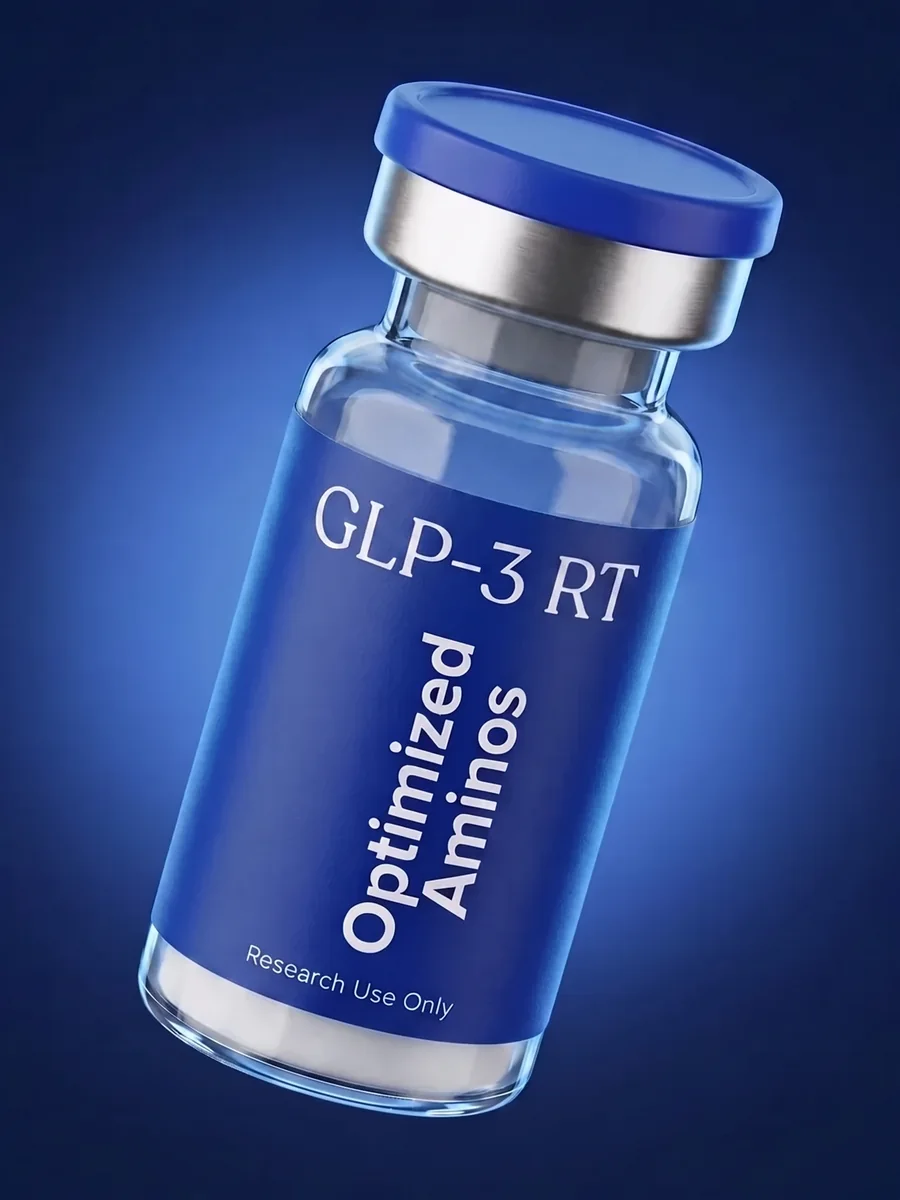
Retatrutide (LY-3437943) reference material — a synthetic peptide investigated in published academic literature as a multi-receptor agonist (MW ~4813 Da). Synthesized at >98% purity with identity confirmed by LC-MS/MS. Supplied as lyophilized powder requiring cold-chain storage at -20°C; cold-pack shipping recommended. Reconstitute with bacteriostatic water. For in-vitro laboratory and analytical research use only. Not a drug, supplement, or therapeutic product. Not for human or animal consumption, ingestion, injection, or any clinical use. Not FDA-approved or evaluated for safety or efficacy.
View product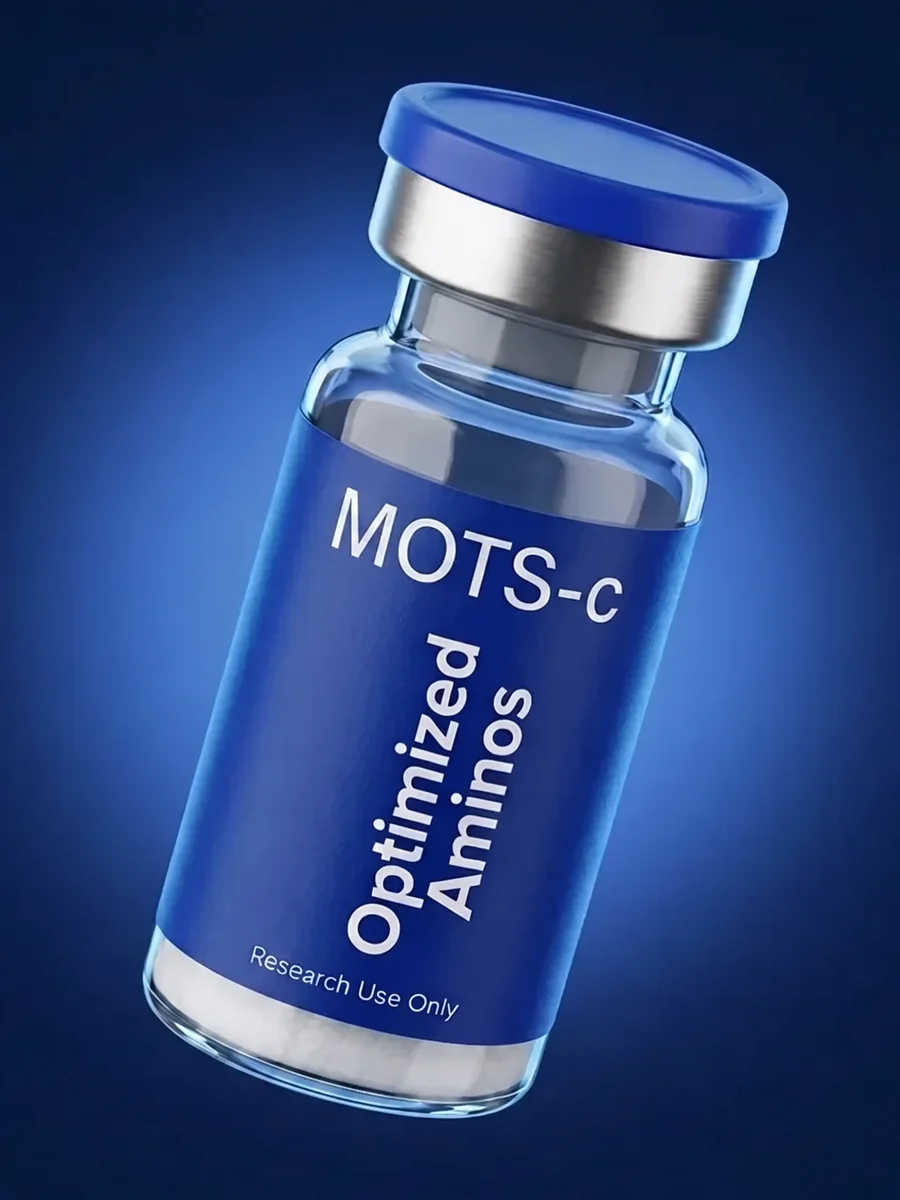
MOTS-c reference peptide, 10 mg per vial. Supplied as a white lyophilized powder, synthesized at >98% purity and verified by HPLC and mass spectrometry. Referenced in published in-vitro literature on mitochondrial peptide signaling. Store frozen (≤ -20°C) for long-term stability; protect from moisture and light. Reconstitute with bacteriostatic water. For in-vitro laboratory and analytical research use only. Not a drug, supplement, or therapeutic product. Not for human or animal consumption, ingestion, injection, or any clinical use. Not FDA-approved.
View product