Research Blog
NAD+ Reconstitution: mg-to-mL Concentration Math for Research
Published
The only stocked-SKU reconstitution guide missing from this catalog until now: the mg-to-mL formula for a 500 mg NAD+ vial, a concentration reference table, molarity conversion, and why saline (not bacteriostatic water) is the specified diluent.
For laboratory and research use only. Not for human consumption.
Every stocked reference peptide in this catalog has a dedicated reconstitution math guide except one: NAD+. That gap is worth closing on its own terms, because NAD+ reconstitution differs from the rest of the catalog in two real ways — the vial holds far more mass than a typical research peptide, and the product listing specifies a different diluent entirely. This guide works through the mg-to-mL formula for a 500 mg NAD+ vial, a concentration reference table, the molarity conversion its known molecular weight makes possible, and why saline rather than bacteriostatic water is the specified diluent here.
Why NAD+ Reconstitution Differs From Other Vials in This Catalog
Most peptide vials in this catalog carry 1 mg to 100 mg of lyophilized material. The NAD+ vial carries 500 mg — five to fifty times the mass of a typical BPC-157, GHK-Cu, or Selank vial. That changes the arithmetic in a straightforward way (the numerator is simply larger), but it also changes what a "normal" concentration looks like: ratios that would be extreme for a 10 mg peptide vial are routine for a 500 mg coenzyme vial.
The second difference is the diluent itself. The product listing for NAD+ specifies reconstitution in sterile saline for in-vitro applications, not the bacteriostatic water used across most of the rest of the catalog. That is a deliberate distinction tied to what NAD+ is — a redox-active coenzyme rather than a peptide chain — and it is covered in more depth further down this guide.
The Core Formula
The formula is the same one used throughout this catalog's reconstitution guides:
Concentration (mg/mL) = Peptide mass in the vial (mg) ÷ Diluent volume added (mL)
For a NAD+ 500 mg vial, the mass is fixed at 500 mg. The only variable a researcher controls is how much sterile saline is added. More diluent yields a lower concentration across a larger working volume; less diluent yields a higher concentration in a smaller volume — the same relationship covered generally in the step-by-step reconstitution guide, just scaled to a much larger starting mass.
Reconstitution Table for a NAD+ 500mg Vial
| Sterile Saline Added | Resulting Concentration | Volume for a 10 mg Draw | Approx. Molar Concentration |
|---|---|---|---|
| 5 mL | 100 mg/mL | 0.10 mL | ≈ 150.8 mM |
| 10 mL | 50 mg/mL | 0.20 mL | ≈ 75.4 mM |
| 25 mL | 20 mg/mL | 0.50 mL | ≈ 30.1 mM |
| 50 mL | 10 mg/mL | 1.00 mL | ≈ 15.1 mM |
Because in-vitro protocols typically dilute a concentrated stock into media at microliter volumes, many researchers reconstitute at the higher end of this range (5–10 mL) to keep a working stock concentrated, then perform serial dilutions from there — a process laid out in the general guide to preparing a serial dilution series.
Converting to Molarity
NAD+ has a molecular weight of 663.43 Da (g/mol), which converts a mass concentration to a molar concentration directly:
Molarity (mol/L) = Concentration (g/L) ÷ Molecular weight (g/mol)
A 50 mg/mL solution is 50 g/L. Dividing by 663.43 g/mol gives approximately 0.0754 mol/L, or 75.4 mM — consistent with the table above. The general method, including the unit bookkeeping that trips up first-pass calculations, is covered in the guide to converting mass concentration to molarity.
Why Sterile Saline Instead of Bacteriostatic Water
Bacteriostatic water's defining feature is 0.9% benzyl alcohol, a preservative that limits microbial growth across repeated entries into a multi-draw vial. For most lyophilized reference peptides in this catalog, that is the priority, and the trade-offs against plain sterile water are covered in the bacteriostatic versus sterile water comparison.
NAD+ is not a peptide chain — it is a redox-active dinucleotide coenzyme, and the product listing specifies sterile saline for in-vitro applications rather than bacteriostatic water. Benzyl alcohol and other preservative additives are a variable that in-vitro coenzyme and cellular-metabolism work generally wants to avoid introducing into a culture system, since the preservative itself can interact with cell-based assays in ways a receptor-binding peptide protocol may not need to account for. Saline avoids adding that variable. This is a case where the correct diluent follows from what the molecule is and what it's being used to study, not a default that gets applied to every vial regardless of contents — background on NAD+'s role as a research substrate is covered in the guide to NAD+ in cellular research.
Storage and Handling
The product listing specifies desiccated storage at −20°C for the lyophilized powder. Once reconstituted, NAD+ is subject to the same general principle covered in the catalog's reconstituted-peptide shelf-life guide: a solution is less stable than the freeze-dried cake it came from, and repeated freeze-thaw cycling on a working stock accelerates degradation more than a single freeze-thaw does. Aliquoting a reconstituted stock into single-use volumes before freezing avoids re-thawing the entire vial for every draw.
Common Reconstitution Mistakes
The recurring errors with a large-mass vial like this one are the same category of mistake seen across the catalog, just with more room to compound: adding diluent by estimate instead of a measured volume, treating bacteriostatic water as an interchangeable default instead of checking the listing's specified diluent, and skipping the molarity conversion when a protocol is documented in molar rather than mass terms. Writing the target concentration and diluent volume into the notebook before the diluent goes in, then checking the draw volume against a table like the one above, catches most of these before they propagate.
Frequently Asked Questions
How much sterile saline should I add to a NAD+ 500mg vial?
It depends on the concentration a protocol calls for. Adding 10 mL yields 50 mg/mL; 25 mL yields 20 mg/mL. The reconstitution table above lists common ratios alongside their approximate molar concentrations.
Why does NAD+ use sterile saline instead of bacteriostatic water?
The product listing specifies sterile saline for in-vitro applications. Bacteriostatic water's benzyl alcohol preservative is a variable that in-vitro cellular and coenzyme work generally avoids introducing, unlike most peptide-chain vials in this catalog where it's the specified diluent.
What is the mg-to-mL formula for reconstitution?
Concentration (mg/mL) equals peptide mass in the vial (mg) divided by diluent volume added (mL). For a 500 mg NAD+ vial the mass is fixed, so only the diluent volume varies.
How do I convert a NAD+ concentration to molarity?
Divide the concentration in g/L by NAD+'s molecular weight, 663.43 g/mol. A 50 mg/mL (50 g/L) solution works out to roughly 75.4 mM.
Does the peptide mass change if I add more diluent?
No. The mass in the vial is fixed at 500 mg. Adding more saline lowers the concentration and increases the working volume, but the total NAD+ mass is unchanged.
How should a reconstituted NAD+ stock be stored?
The lyophilized powder is specified for desiccated storage at −20°C. Once reconstituted, aliquoting the stock before freezing avoids repeated freeze-thaw cycling on the same volume, which accelerates degradation more than a single freeze-thaw does.
Reviewed by the Optimized Aminos research team — last updated 2026-08-21.
For laboratory and research use only. Not for human consumption.
Run the numbers for your own vial
The reconstitution calculator takes a labeled vial mass and a solvent volume and returns the resulting concentration in mg/mL, along with the aliquot volume in microlitres for any target mass — the same arithmetic worked through above, without the decimal-place risk of doing it from memory. Bacteriostatic water (10 mL) is the diluent used in these worked examples, and every compound referenced here is third-party tested with a published COA.
Related research compounds
Compounds referenced in this article, available as research-grade lyophilized peptides with third-party tested COA.
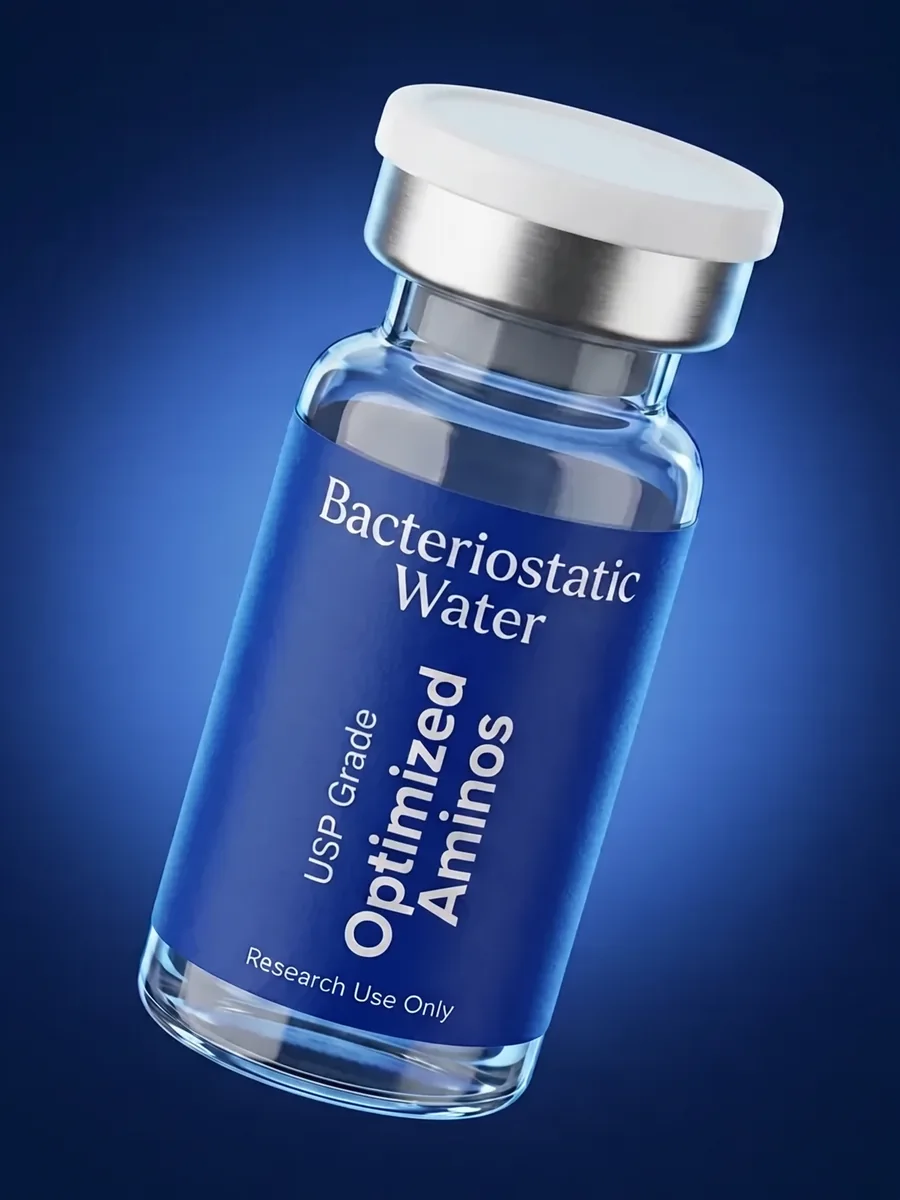
USP-grade bacteriostatic water (0.9% benzyl alcohol) in a sterile 10 mL multi-use vial. Manufactured under cGMP conditions and tested for endotoxins, sterility, and particulate matter. Commonly used in research laboratories as a reconstitution solvent for lyophilized reference peptides. Compatible with standard luer-lock syringes for precise dispensing. Store at controlled room temperature away from direct light. Sold as a laboratory reagent for research use only. Not for human or animal injection or any clinical use.
View product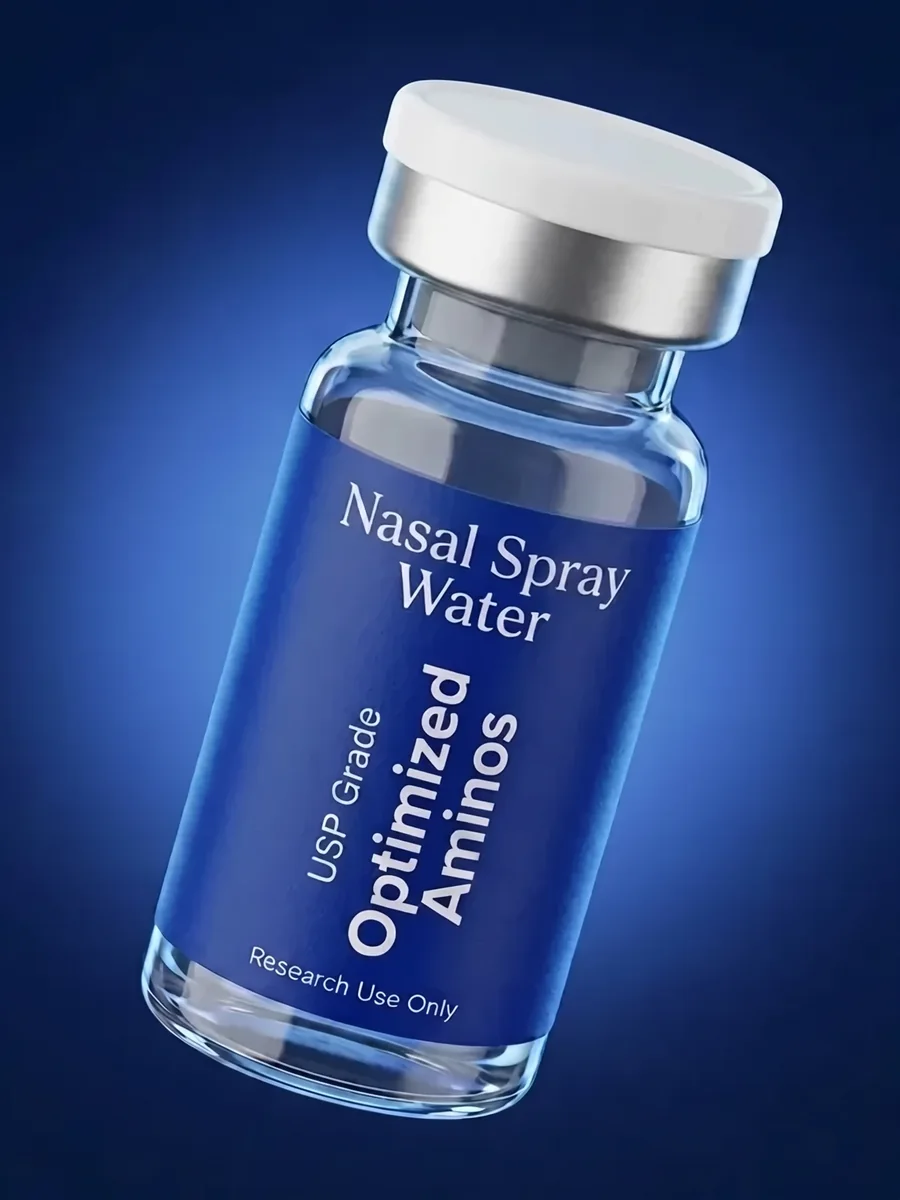
USP-grade bacteriostatic water (0.9% benzyl alcohol) in a sterile 10 mL multi-use vial. Manufactured under cGMP conditions and tested for endotoxins, sterility, and particulate matter. Commonly used in research laboratories as a reconstitution solvent for lyophilized reference peptides. Compatible with standard luer-lock syringes for precise dispensing. Store at controlled room temperature away from direct light. Sold as a laboratory reagent for research use only. Not for human or animal injection or any clinical use.
View product