Research Blog
Where to Buy MOTS-c for Research in 2026: A Buyer's Guide
Published
How researchers vet MOTS-c suppliers in 2026: COA verification, third-party testing, purity documentation, and reconstitution planning. RUO only.
For laboratory and research use only. Not for human consumption.
MOTS-c has moved from a niche mitochondrial-biology curiosity to one of the more frequently searched research peptides of 2026, and demand has brought a wider spread of suppliers — not all of them documenting their material to the same standard. Because MOTS-c is a mitochondrial-derived peptide with a short, specific sequence, small differences in synthesis quality or storage handling can matter for reproducibility. This guide lays out how a researcher can evaluate a MOTS-c listing before it goes in a cart: what documentation to demand, how to read it, and how to plan the reconstitution math before the vial even arrives.
Key Facts
- MOTS-c is a 16-amino-acid peptide encoded in the mitochondrial genome's 12S rRNA region, distinct from most nuclear-DNA-encoded signaling peptides.
- Preclinical research has measured MOTS-c's association with AMPK-pathway signaling and cellular metabolic regulation in cell-culture and rodent models.
- A trustworthy research supplier provides a batch-specific, third-party Certificate of Analysis (COA) with HPLC purity and mass-spectrometry identity confirmation.
- MOTS-c is sold strictly as a research-use-only (RUO) compound — it is not an FDA-approved drug and is not labeled for human use.
- Reconstitution for lab use requires converting lyophilized mass and diluent volume into a working stock concentration before an experiment begins.
Why Sourcing Discipline Matters for a Mitochondrial-Derived Peptide
MOTS-c belongs to a small family of mitochondrial-derived peptides (MDPs) — signaling molecules encoded within mitochondrial DNA rather than the nuclear genome. That origin is part of what makes it interesting to metabolic and aging researchers, but it also means the compound is less "off the shelf" than many nuclear-encoded research peptides, and synthesis houses vary in how carefully they verify sequence fidelity and folding. If you're new to the underlying biology, our overview of the discovery of MOTS-c as a mitochondrial-derived peptide and our summary of what published metabolic research has measured with MOTS-c are useful starting points before you evaluate a supplier — knowing what the literature actually reports helps you spot a listing that overstates what's been shown.
The Five-Point Supplier Vetting Framework
1. Batch-Specific, Third-Party COAs
The single highest-signal document a supplier can provide is a Certificate of Analysis tied to the specific lot you're purchasing, generated by an independent lab rather than produced in-house. A generic "representative" COA that isn't matched to a batch number tells you little about the vial actually shipping to your lab. Our testing and COA verification page explains what a compliant, lot-specific certificate should include and how to cross-check it against the vial you receive.
2. Identity Confirmation via Mass Spectrometry, Not Just HPLC
HPLC purity tells you how clean the sample is relative to itself — it does not confirm that the peptide is actually MOTS-c. Mass spectrometry (MS) confirms molecular identity by matching observed mass to the expected mass of the sequence. A COA that reports HPLC purity but omits MS identity confirmation is only telling half the story.
3. Named, Accredited Testing Labs
Look for a named third-party lab, ideally one with ISO/IEC 17025 accreditation or an equivalent quality standard, rather than an anonymous "independent testing partner." A lab willing to be named is a lab willing to stand behind its data.
4. Transparent Sequence and Molecular Weight Data
A supplier that publishes the sequence, molecular formula, and molecular weight for its MOTS-c listing is giving you the information needed to independently verify identity against your own reference standards or literature values — a basic transparency signal that costs the seller nothing to provide.
5. Clear RUO Labeling and No Human-Use Claims
A listing that frames MOTS-c around human outcomes or dosing directed at a person is a compliance red flag independent of purity. Legitimate research suppliers describe compounds in terms of what studies have measured in model systems, not what a customer should expect from taking the product.
Comparing MOTS-c to Adjacent Mitochondrial Research Tools
MOTS-c is often discussed alongside other compounds used in mitochondrial and metabolic research, and researchers frequently want to understand how the mechanisms differ before choosing which tool fits a given experimental question. Our comparison of MOTS-c and NAD+ in mitochondrial research walks through how each has been studied — one as a signaling peptide with measured AMPK-pathway involvement, the other as a coenzyme central to redox metabolism — which can help clarify why a lab might select one, the other, or both for a given protocol.
Planning Reconstitution Before the Vial Arrives
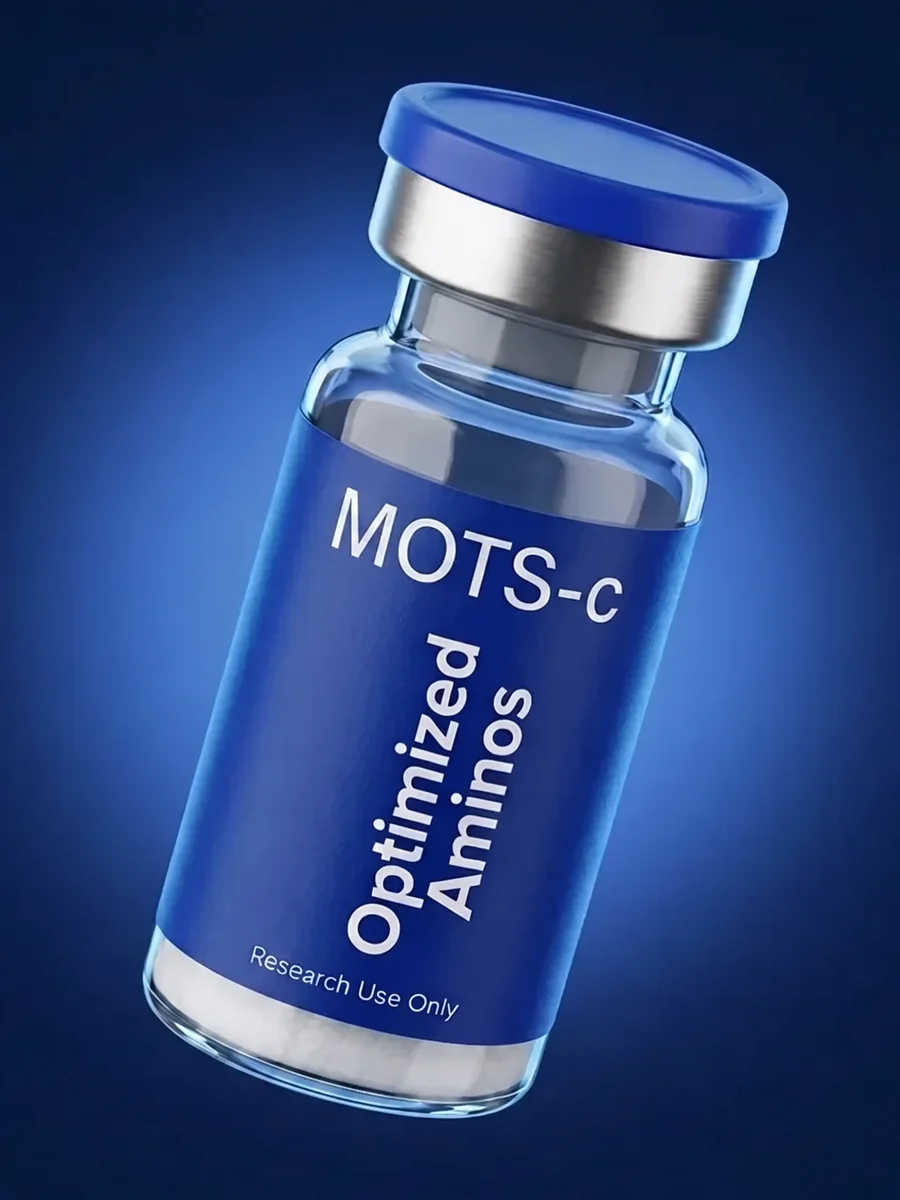
Once a vial passes the documentation check, the next planning step is concentration math, not storage-shelf guesswork. A listing such as the MOTS-c research listing should state labeled net peptide content clearly, which lets you calculate a target stock concentration before you add diluent. Our reconstitution calculator converts vial mass and diluent volume into a working concentration, which is useful for standardizing dilutions across replicate experiments and avoiding a mismatch between the labeled amount and what an assay assumes is present.
Red Flags When Evaluating a Listing
A few patterns are worth treating as disqualifying on their own: no COA available before purchase, a COA that can't be matched to a lot number, pricing dramatically below the rest of the market with no testing to explain it, marketing copy that describes human outcomes or personal dosing, and an absence of any named manufacturing or testing entity. None of these individually proves a listing is bad material, but together they describe a seller who isn't documenting what they sell — which, for a mitochondrial-derived peptide with a specific sequence, is the exact opposite of what a reproducible research protocol needs.
Frequently Asked Questions
What is MOTS-c and why do researchers study it?
MOTS-c is a 16-amino-acid mitochondrial-derived peptide encoded within the mitochondrial 12S rRNA region. Preclinical studies have measured its involvement in cellular energy metabolism and AMPK-pathway activity, which is why it is used as a research tool in mitochondrial and metabolic biology.
Is MOTS-c legal to purchase for laboratory research?
Research-use-only compounds like MOTS-c are generally available for purchase by qualified laboratories and researchers in many jurisdictions, but rules vary by location and can change. It is sold strictly for laboratory research and is not approved or labeled for human consumption.
What should a Certificate of Analysis for MOTS-c show?
A usable COA should be batch-specific, dated, and generated by a named third-party lab, and should report identity confirmation by mass spectrometry along with a purity percentage from HPLC. Vague, undated, or generic certificates that cannot be matched to a specific lot are a signal to look elsewhere.
How is MOTS-c typically reconstituted for laboratory use?
Lyophilized MOTS-c is reconstituted with an appropriate diluent to reach a target stock concentration for the experiment, then handled and stored according to the peptide's documented stability profile. A reconstitution calculator can help a lab convert vial mass and diluent volume into a working concentration.
Is MOTS-c approved for human use?
No. MOTS-c sold as a research chemical is not an FDA-approved drug and is not evaluated or labeled for human or veterinary use. It is intended exclusively for in vitro or in vivo laboratory research by qualified personnel.
For laboratory and research use only. Not for human consumption.
Related research compounds
Compounds referenced in this article, available as research-grade lyophilized peptides with third-party tested COA.