Research Blog
Where to Buy Semax for Research in 2026: Sourcing & COA Checklist
Published
A lab-focused checklist for vetting Semax research suppliers: COA literacy, HPLC purity, mass spec identity, and third-party testing.
For laboratory and research use only. Not for human consumption.
Sourcing Semax for a research program is fundamentally a document-verification exercise before it is a purchasing decision. Because Semax is not an FDA-approved drug and carries no standardized retail supply chain, the burden of confirming identity, purity, and integrity falls entirely on the research team receiving the material. This guide walks through how a lab actually evaluates a supplier — starting with the Certificate of Analysis (COA) and working outward to testing methodology, batch traceability, and documentation practices.
Key Facts
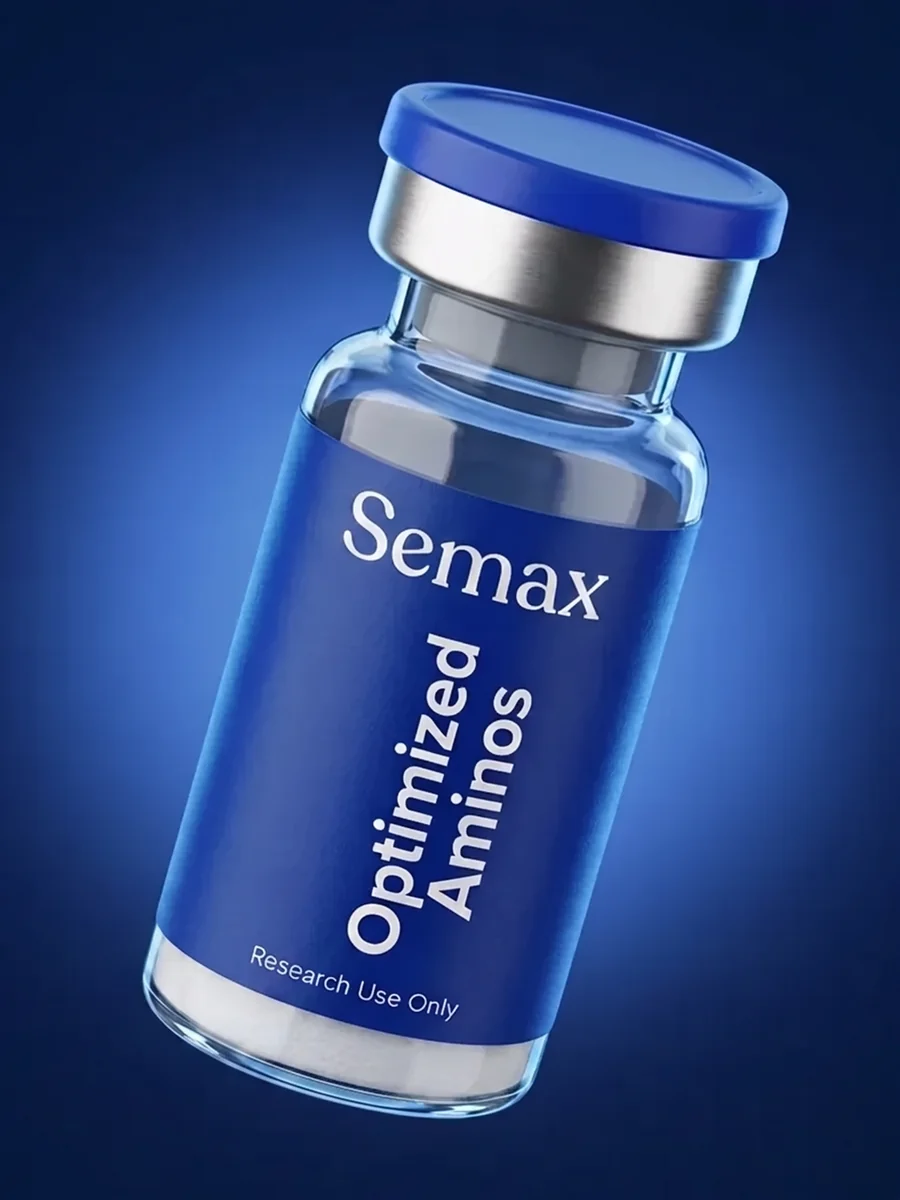
- Semax is typically supplied as a lyophilized (freeze-dried) powder intended for laboratory reconstitution, not as a ready-to-use solution.
- A Certificate of Analysis should report HPLC purity as a percentage of total peak area, specific to a lot number.
- Mass spectrometry confirms peptide identity by matching observed molecular weight to the theoretical sequence mass — purity data alone cannot do this.
- Third-party testing, performed by a laboratory independent of the manufacturer, adds a verification layer beyond in-house COAs.
- Batch-specific COAs matched to the vial's lot number are materially more reliable than generic or reused COA templates.
- Suppliers that disclose manufacturing methodology and testing protocols on request are easier to audit than those that treat this information as proprietary.
Reading a COA Like a Lab, Not a Shopper
A COA is a data document, and it should be read the way a lab reads any analytical report: for completeness, traceability, and internal consistency. At minimum, a usable COA should include the peptide name and sequence reference, a lot or batch number, the test date, the testing method (typically HPLC and mass spectrometry), and the resulting purity percentage. If any of these fields is missing — especially the lot number — the document cannot be tied to the specific material in hand, and its value as evidence drops sharply.
HPLC Purity: What the Percentage Represents
HPLC purity figures reported on most COAs (commonly in the 98%+ range for research-grade material) represent the proportion of the detected peak area attributable to the target compound relative to all detected peaks in that run. This is a relative measurement, not an absolute one, and it says nothing about identity — a chromatogram can show a single, clean, high-purity peak that is nonetheless the wrong molecule. That is why purity data should always be paired with identity confirmation.
Mass Spectrometry: Confirming Identity
Mass spectrometry addresses the identity question directly by measuring the molecular weight of the sample and comparing it against the calculated mass of the intended amino acid sequence. A match within expected tolerance supports the claim that the vial contains the labeled peptide rather than a structurally similar or degraded substitute. Labs building internal quality standards typically treat an HPLC purity figure without an accompanying mass spec identity check as an incomplete data set.
Third-Party Testing: Why Independence Matters
In-house testing is useful but inherently self-reported. Third-party testing — analysis performed by a laboratory with no financial relationship to the manufacturer — reduces the incentive conflict built into a manufacturer grading its own product. When comparing suppliers, it is worth asking directly whether COAs are generated internally, by a contracted third-party lab, or both, and whether raw chromatogram and mass spec data (not just a summary percentage) can be provided on request. Transparent suppliers generally do not treat this as a difficult question. For a broader framework on evaluating supplier practices beyond a single COA, see this guide to choosing a research peptide supplier.
Batch Traceability and Documentation Practices
Lot-level traceability is what separates a credible research supplier from one that treats compliance as an afterthought. A batch-specific COA should be reproducible on request — meaning if a lab reaches out and references the lot number on a vial, the supplier should be able to produce (or reconfirm) the matching document without delay. Suppliers who cannot connect a COA to a specific manufacturing run, or who provide a single "representative" COA across all batches, are not offering batch-level assurance, only product-line assurance, which is a materially weaker standard for reproducible research.
Manufacturing standards are a related but distinct question from testing. Facilities that operate under GMP-adjacent or GLP-informed practices tend to produce more consistent batch-to-batch results, which is one reason a lab evaluating a new supplier should ask about manufacturing conditions in addition to final-product testing. A deeper explanation of how these standards differ and what they cover is available in this overview of GMP and GLP standards for peptide manufacturing.
Context: Why Semax Specifically Requires Careful Sourcing
Semax has been studied in the research literature for several decades, originating from Russian pharmacological research programs, and its relatively long research history means there is a well-documented reference sequence and molecular weight against which any COA can be checked. Labs unfamiliar with that background may find it useful to review the compound's research origins before evaluating supplier claims, since understanding the reference structure makes it easier to spot COA data that does not add up. See this history of Semax's research origins for that context.
Once material is received and confirmed against its COA, proper handling still matters for maintaining that documented purity through the life of the vial. Independent testing verification resources and accurate reconstitution practice both play a role in preserving the integrity of a batch after it leaves the supplier's hands.
A Practical Vetting Checklist
Before placing a research order, a lab can reasonably expect to answer each of the following: Does the COA include a lot number matching the vial? Does it report both HPLC purity and mass spectrometry identity? Is the testing internal, third-party, or both, and is that disclosed? Can raw testing data be requested and produced? Does the supplier disclose anything about manufacturing conditions? A supplier that clears all five is providing a materially stronger evidentiary basis for research use than one relying on marketing copy alone.
Frequently Asked Questions
What is a Certificate of Analysis (COA) and why does it matter for research sourcing?
A Certificate of Analysis is a lab document that reports the measured purity, identity, and other analytical characteristics of a specific peptide batch. It matters because it is the primary evidence a research buyer has that a vial's contents match its label before the material is used in any study.
What does HPLC purity actually measure?
High-performance liquid chromatography (HPLC) separates the components of a sample and measures the relative area of the target peptide peak against the total peak area, expressed as a percentage. It indicates how much of the sample is the intended peptide versus related impurities, truncated sequences, or degradation products, but it does not by itself confirm sequence identity.
Why is mass spectrometry used alongside HPLC?
Mass spectrometry measures the molecular weight of the material and compares it to the theoretical mass calculated from the peptide's amino acid sequence. HPLC alone can show a clean, high-purity peak without confirming that the peak is actually the correct peptide, so mass spec is used to verify identity, not just purity.
How can a lab distinguish a batch-specific COA from a generic one?
A batch-specific COA lists a lot or batch number that matches the number printed on the vial or packaging, along with a test date close to manufacture. A generic COA reuses the same document across multiple batches or omits a lot number entirely, which makes it impossible to verify that the specific vial in hand was actually tested.
For laboratory and research use only. Not for human consumption.
Related research compounds
Compounds referenced in this article, available as research-grade lyophilized peptides with third-party tested COA.