Research Blog
GHK-Cu vs Copper Peptides in Dermal Research: What's the Difference?
Published
GHK-Cu vs generic copper peptides — why GHK-Cu is a specific, verifiable molecule that dominates the dermal-research literature, and how to evaluate either with a batch COA. Research use only.
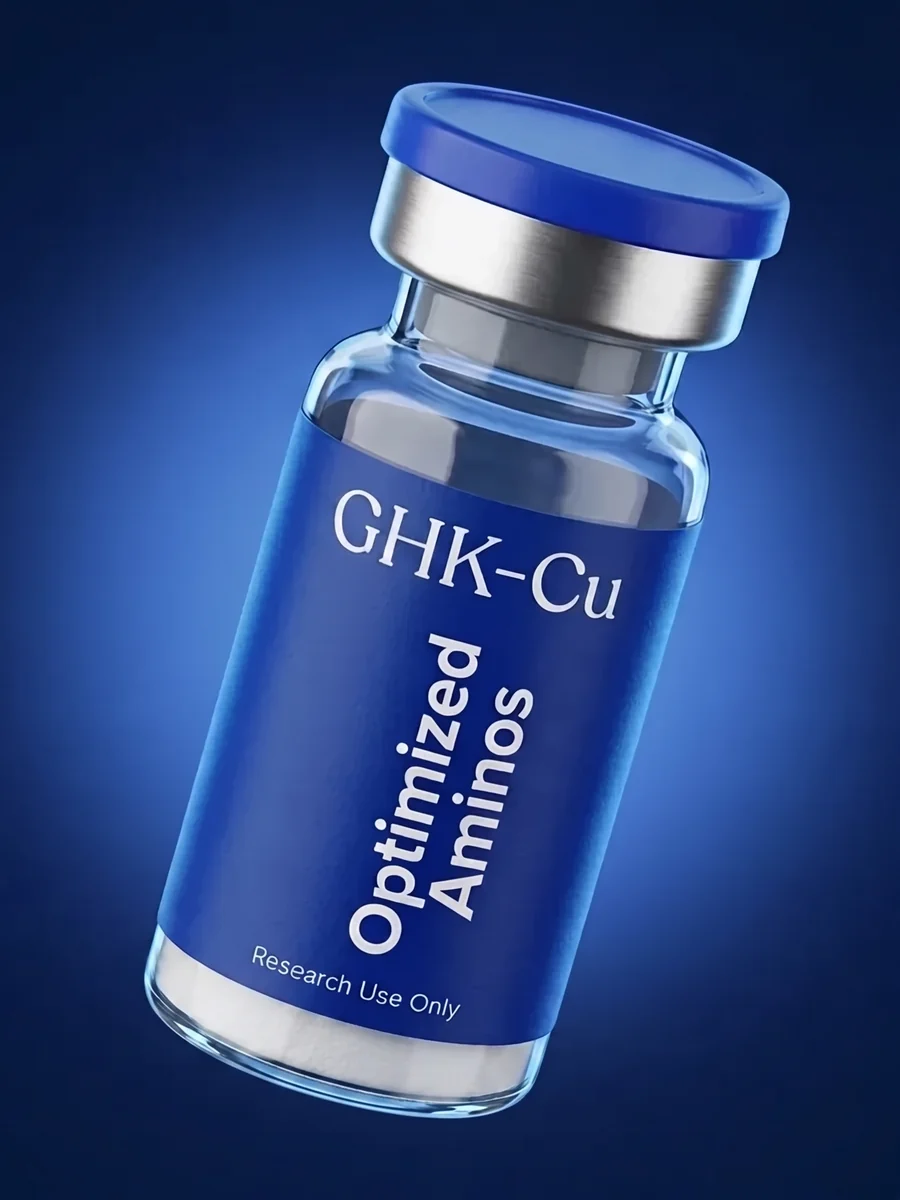
For laboratory research use only. This article compares research materials as they appear in the published preclinical literature. It describes laboratory research only and contains no dosing, human-use, veterinary, cosmetic, or clinical guidance.
"Copper peptide" is a category — GHK-Cu is a specific molecule
Researchers new to dermal-pathway work often use "copper peptides" and "GHK-Cu" interchangeably. They aren't the same thing. "Copper peptide" is a broad category: any short peptide complexed with a copper ion. GHK-Cu is one specific, extensively studied member of that category — the tripeptide glycyl-L-histidyl-L-lysine bound to copper(II). This article clarifies the distinction and explains why GHK-Cu is the copper peptide that dominates the research literature.
What GHK-Cu is, precisely
GHK is a naturally occurring tripeptide — three amino acids: glycine, histidine, lysine. On its own it has a high affinity for copper ions, and in the body it's found bound to copper as the complex GHK-Cu. The copper isn't incidental; much of the molecule's studied activity in cell models is tied to the peptide's role as a copper-delivery vehicle. When a supplier sells "GHK-Cu," they're selling this defined, copper-complexed tripeptide — a single, characterizable compound with a known molecular weight that a COA can verify.
Other copper peptides in the category
The wider "copper peptide" umbrella includes other synthetic sequences complexed with copper, formulated for various dermal-research and cosmetic-research contexts. They differ from GHK-Cu in sequence, size, and studied mechanism. The practical point for a researcher: "copper peptide" on a label tells you almost nothing specific, while "GHK-Cu" names an exact molecule you can look up, characterize, and verify against a batch report. When precision matters — and in research it always does — the specific name beats the category.
Why GHK-Cu dominates the literature
GHK-Cu appears far more often in peer-reviewed preclinical work than generic copper peptides, for a few reasons:
- It's naturally occurring and well-characterized — its structure, copper-binding, and behavior in cell models are documented across decades of study.
- Its research spans multiple pathways — dermal and connective-tissue models, remodeling and repair signaling, and antioxidant-related mechanisms in cultured cells.
- It's reproducible — being one defined molecule, results are comparable batch to batch and lab to lab, which is exactly what a research program needs.
Generic "copper peptides," by contrast, vary by formulation, which makes cross-study comparison harder.
How researchers pair it in practice
In connective-tissue and dermal research, GHK-Cu is frequently studied alongside other repair-associated compounds. Combination-focused research kits such as KLOW place GHK-Cu next to peptides studied in overlapping tissue-repair pathways, so a protocol can examine them in parallel. As always, studying compounds together in a research context implies nothing about additive effects in a living organism — that would be a claim outside the scope of research-use material.
Evaluating any copper peptide: the COA is decisive
Because "copper peptide" is a loose label, documentation matters even more than usual. Whether you're sourcing GHK-Cu specifically or evaluating another copper complex, judge it on the same evidence:
- Identity by mass spectrometry — confirming the exact molecule and its molecular weight, so "GHK-Cu" on the label is actually GHK-Cu in the vial.
- Purity by HPLC — a sharp main peak and an integration table, not a bare percentage. (Our guide on reading an HPLC chromatogram walks through this.)
- Independent third-party testing — HPLC purity and mass-spec identity confirmed by an outside lab, not the seller.
The certificate published for the GHK-Cu sold here is in the COA archive.
The bottom line
"Copper peptide" is a family; GHK-Cu is a specific, well-studied member of it. For research that needs reproducibility and a verifiable identity, naming the exact molecule — and confirming it with a batch-specific COA — beats buying an unspecified "copper peptide." When your protocol calls for the copper tripeptide the literature actually studies, it's GHK-Cu.
Further reading
- GHK-Cu 100mg — third-party tested research material with a published COA.
- How to read an HPLC chromatogram — verify purity before you rely on it.
- How to reconstitute research peptides — correct handling for GHK-Cu and other lyophilized compounds.
All information on this page is provided for laboratory research and educational use only. Optimized Aminos products are not intended for human, veterinary, or cosmetic use, and nothing here should be read as describing effects in humans or as dosing or administration guidance.
For laboratory and research use only. Not for human consumption.