Research Blog
Melanotan 1 vs Melanotan 2: A Melanocortin-Receptor Research Comparison
Published
A research-framed comparison of Melanotan 1 and Melanotan 2 as melanocortin-receptor study compounds — structure, receptor selectivity, and what studies measured.
For laboratory and research use only. Not for human consumption.
Melanotan 1 and Melanotan 2 are both synthetic analogs of alpha-melanocyte-stimulating hormone (alpha-MSH) studied in relation to the melanocortin receptor family. Despite the similar naming, they are structurally distinct compounds with different published receptor-binding profiles. This article compares the two strictly as research subjects: their structures, the receptors studies have examined, and how their profiles differ in the literature.
Key Facts
- Melanotan 1 (afamelanotide) is a linear, 13-amino-acid analog of alpha-MSH.
- Melanotan 2 is a shorter, cyclic (lactam-bridged) analog of alpha-MSH.
- Both have been studied in relation to MC1R, a melanocortin receptor subtype linked to pigmentation pathways in model systems.
- Melanotan 2's structure has led to research interest in its activity at additional melanocortin receptor subtypes, including MC3R and MC4R.
- Published structure-activity research generally describes Melanotan 1 as the more receptor-selective of the two compounds.
The Melanocortin Receptor Family, Briefly
The melanocortin receptor family consists of five G-protein-coupled receptor subtypes, MC1R through MC5R, each associated with different physiological pathways studied in the literature — MC1R with pigmentation-related pathways, MC3R and MC4R with pathways studied in metabolic and energy-related research, and MC2R and MC5R with distinct roles outside the scope of this comparison. Both Melanotan 1 and Melanotan 2 were originally developed as non-selective or partially selective agonists of these receptors, and much of the published research on each compound centers on characterizing exactly which receptors they activate and how strongly.
Structural Differences
Melanotan 1 (Afamelanotide)
Melanotan 1 is a linear tridecapeptide — a 13-amino-acid sequence — that closely mirrors the structure of naturally occurring alpha-MSH, with modifications intended to extend its stability relative to the native hormone in model systems. Its linear structure and closer resemblance to native alpha-MSH are cited in the literature as contributing to a more selective binding profile.
Melanotan 2
Melanotan 2 is a shorter, cyclic analog, stabilized through a lactam bridge that constrains its structure into a ring shape. This cyclization changes how the molecule interacts with melanocortin receptors relative to the linear Melanotan 1 structure, and is part of why published research describes Melanotan 2 as engaging a broader set of receptor subtypes rather than acting narrowly at MC1R.
Receptor Selectivity in Published Research
Melanotan 1 and MC1R
Research on Melanotan 1 has generally focused on its activity at MC1R, consistent with its closer structural similarity to native alpha-MSH. Studies examining receptor-binding assays have reported a comparatively selective profile for Melanotan 1 relative to other melanocortin receptor subtypes, which is part of what distinguishes it from Melanotan 2 in the structure-activity literature.
Melanotan 2 and Multiple Receptor Subtypes
Melanotan 2 has been studied more broadly across the melanocortin receptor family. In addition to MC1R, published binding studies have examined its activity at MC3R and MC4R in various model systems, reflecting its role in the literature as a less selective, broader-spectrum melanocortin agonist compared to Melanotan 1. This broader receptor profile is a key reason the two compounds are studied for different research questions despite their shared origin as alpha-MSH analogs.
A Related Compound Worth Noting: PT-141
PT-141 (bremelanotide) is a separate, structurally related melanocortin-receptor research compound that is frequently discussed alongside Melanotan 2 because of overlapping receptor targets. It is not identical to either Melanotan 1 or Melanotan 2 and has its own distinct body of published research. Our dedicated comparison, PT-141 vs. Melanotan 2: a research comparison, examines that relationship in more detail, and our overview of PT-141 and Melanotan II melanocortin receptor research covers the receptor pharmacology in greater depth.
What This Means for Research Design
Because Melanotan 1 and Melanotan 2 differ meaningfully in receptor selectivity, researchers designing melanocortin-pathway studies typically select between them based on which receptor subtype the study protocol is intended to isolate. A study focused narrowly on MC1R-associated pathways may reference the more selective profile documented for Melanotan 1, while a study examining broader melanocortin receptor activity across MC1R, MC3R, and MC4R may reference the profile documented for Melanotan 2. In either case, researchers should consult the primary structure-activity literature directly for the specific assay conditions and reported binding affinities relevant to their protocol, rather than relying on generalized summaries.
Handling and Documentation in a Laboratory Setting
As with any lyophilized research peptide, accurate reconstitution and concentration math matter for consistent experimental results. The reconstitution calculator can help verify the concentration math for a given vial size and diluent volume, and every batch used in a laboratory setting should be checked against its own Certificate of Analysis for identity and purity confirmation specific to that lot.
Sourcing Melanotan 2 for Receptor Research
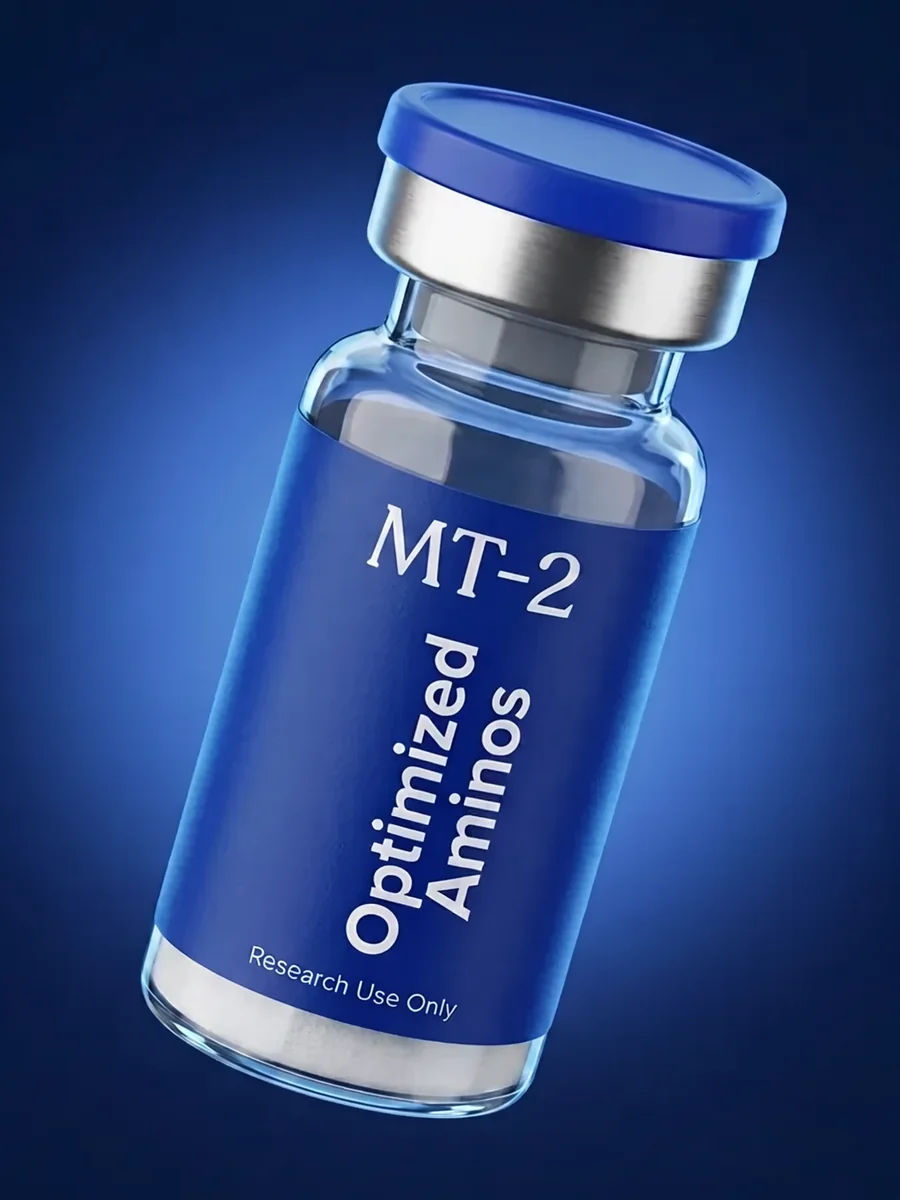
Only Melanotan 2 is currently in our research catalog. Our Melanotan 2 (MT-2) 10mg listing includes batch-specific Certificate of Analysis documentation for researchers designing MC1R, MC3R, or MC4R receptor-binding studies.
FAQ
What is the main structural difference between Melanotan 1 and Melanotan 2?
Melanotan 1 (afamelanotide) is a linear tridecapeptide analog of alpha-melanocyte-stimulating hormone, while Melanotan 2 is a shorter, cyclic lactam-bridged analog. The cyclization of Melanotan 2 is part of why its receptor-binding profile differs from Melanotan 1 in published research.
Which melanocortin receptors have these compounds been studied against?
Published research has examined both compounds primarily in relation to MC1R, associated with pigmentation pathways in model systems. Melanotan 2, due to its structure, has also been studied for activity at additional melanocortin receptor subtypes, including MC3R and MC4R, in various experimental models.
Is one of these compounds more receptor-selective than the other in research findings?
Published structure-activity research generally describes Melanotan 1 as more selective toward MC1R, while Melanotan 2 has been studied as a broader, less selective agonist across multiple melanocortin receptor subtypes in model systems.
Are Melanotan 1 and Melanotan 2 the same as PT-141?
No. PT-141 (bremelanotide) is a distinct, structurally related melanocortin-receptor research compound. It is often discussed alongside Melanotan 2 in the literature because of overlapping receptor targets, but it is a separate sequence studied in its own body of research.
For laboratory and research use only. Not for human consumption.
Related research compounds
Compounds referenced in this article, available as research-grade lyophilized peptides with third-party tested COA.