Research Blog
Melanotan 2 Research Overview: Melanocortin-Receptor Mechanism and What Published Studies Describe
Published
What the published preclinical literature on Melanotan 2 (MT-2) actually examines: melanocortin-receptor mechanism, pigmentation and energy-homeostasis model systems, and how it relates to PT-141 and Melanotan 1. Research use only.
For laboratory and research use only. Not for human consumption.
What Melanotan 2 Is
Melanotan 2 (MT-2) is a synthetic cyclic analog of alpha-melanocyte-stimulating hormone (α-MSH), engineered for greater metabolic stability than the naturally occurring peptide. It is one of the more frequently requested research compounds in melanocortin-pathway literature, and this article summarizes what published preclinical studies have actually examined at the receptor and model-system level — distinct from the comparison and reconstitution guides already covering this compound.
Mechanism: The Melanocortin Receptor Family
MT-2 is a non-selective agonist across multiple melanocortin receptors (MCRs), most notably MC1R and MC4R, which is what separates its research profile from more selective analogs. MC1R is studied primarily in pigmentation pathways, while MC4R sits in a different research domain entirely — energy-homeostasis and appetite-signaling circuits in the central nervous system. Because MT-2 engages both receptor families rather than one, published research treats it as a tool for probing melanocortin-pathway biology broadly, not a single-mechanism compound.
What the Research Literature Examines
Pigmentation-Pathway Models
A substantial share of MT-2 literature examines melanogenesis — the biochemical pathway by which melanocytes produce pigment — in cell-culture and animal-model systems following MC1R activation. This is the research context that gave the compound its "melanotan" name.
Energy-Homeostasis and Appetite-Circuit Models
A separate body of published work uses MT-2 to probe MC4R signaling in the hypothalamic circuits that regulate energy balance in rodent studies. This research is mechanistic — characterizing receptor signaling and downstream pathway activity in model systems — and does not describe outcomes in humans.
Overlap With PT-141
MT-2 shares receptor targets with PT-141 (bremelanotide), a related melanocortin-pathway compound, which is why the two are frequently studied and discussed together in the literature. Our PT-141 vs Melanotan 2 comparison breaks down how their receptor-selectivity profiles differ.
MT-2 vs Melanotan 1
Melanotan 1 (afamelanotide) is a linear, MC1R-selective analog, while MT-2 is cyclic and non-selective across the MCR family. That structural and receptor-binding difference is the core distinction the literature draws between the two compounds — see the full Melanotan 1 vs Melanotan 2 research comparison for a detailed breakdown.
Handling at the Bench
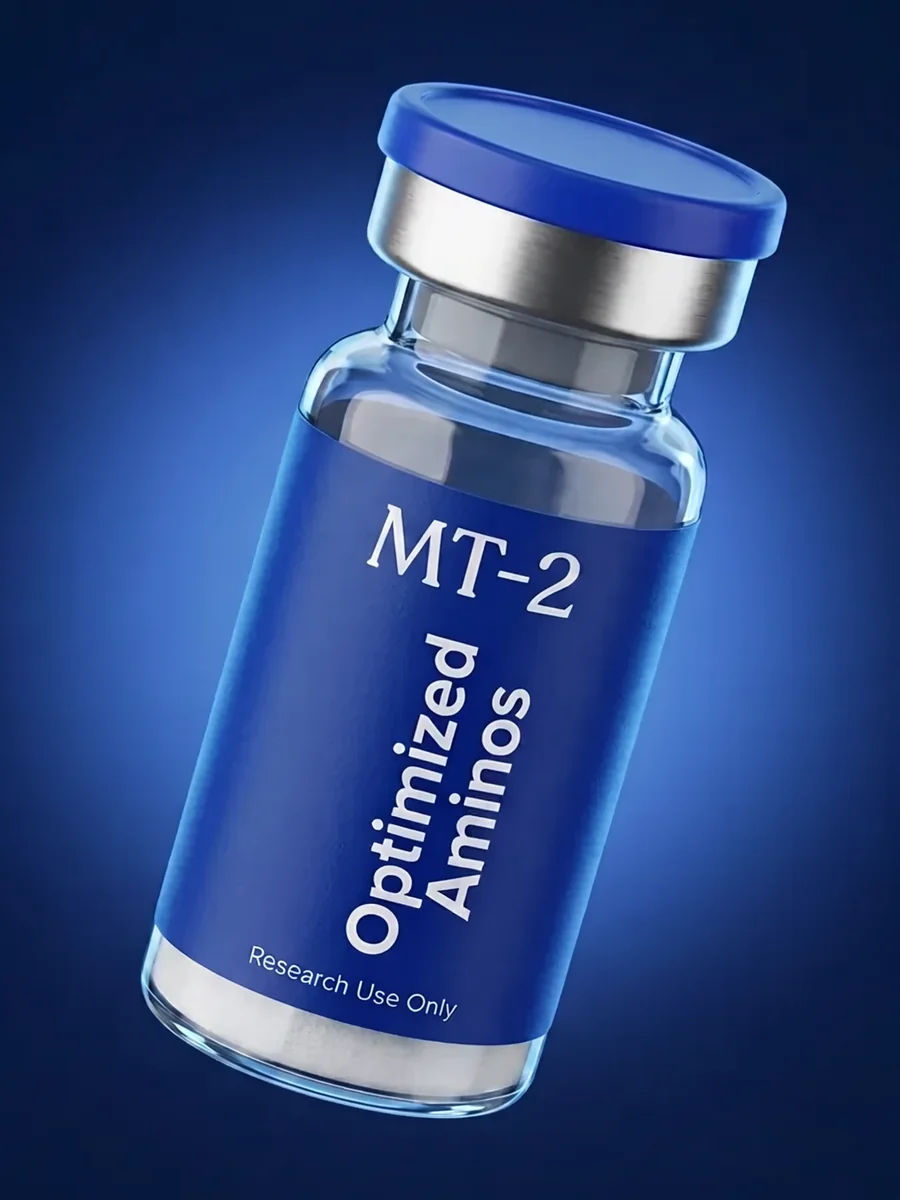
MT-2 is supplied as a lyophilized powder and reconstituted like other research peptides: add bacteriostatic water gently down the vial wall, swirl rather than shake, and refrigerate the reconstituted solution away from light. Our Melanotan 2 reconstitution guide walks through the mg-to-mL concentration math for a 10mg vial in detail.
Sourcing: Verify Identity, Not Just the Label
Because MT-2 is a synthetic analog rather than a naturally occurring peptide, confirming the exact molecule matters even more than usual. Judge any MT-2 material on documentation:
- Identity by mass spectrometry — confirming the molecule and its molecular weight match the cyclic MT-2 structure, not a related analog.
- Purity by HPLC — a sharp main peak with an integration table.
- Independent third-party testing — HPLC purity and mass-spec identity confirmed by an outside lab.
Every batch of MT-2 sold here is third-party tested, with its report published in the COA archive. A full sourcing checklist is in our Melanotan 2 buyer's guide.
Frequently Asked Questions
What receptors does Melanotan 2 target in research models?
Published research describes MT-2 as a non-selective melanocortin-receptor agonist, engaging MC1R and MC4R among others, which is why it appears in both pigmentation-pathway and energy-homeostasis literature.
How does Melanotan 2 differ from Melanotan 1 in the literature?
MT-2 is a cyclic, non-selective MCR agonist; Melanotan 1 is a linear, MC1R-selective analog. The receptor-binding profile is the key distinction studies draw between them.
Is Melanotan 2 the same compound as PT-141?
No, though they are related and share overlapping melanocortin-receptor targets, which is why comparison literature frequently discusses them together.
What model systems appear most often in MT-2 research?
Cell-culture melanogenesis models for MC1R-pathway research, and rodent hypothalamic-circuit studies for MC4R-pathway research.
How should MT-2 identity be verified before use in a research protocol?
Through a Certificate of Analysis with mass-spectrometry identity confirmation and independent third-party HPLC purity data — not from vial labeling alone.
Is Melanotan 2 approved for human or veterinary use?
No. MT-2 is sold strictly for laboratory research use, and the mechanistic findings summarized here describe model-system research, not effects in humans.
Further Reading
- Melanotan 2 (MT-2) 10mg — third-party tested research material with a published COA.
- Melanotan 1 vs Melanotan 2 — the full receptor-selectivity comparison.
- Melanotan 2 Reconstitution — mg-to-mL concentration math.
Reviewed by the Optimized Aminos research team — last updated August 27, 2026.
For laboratory and research use only. Not for human consumption.
Related research compounds
Compounds referenced in this article, available as research-grade lyophilized peptides with third-party tested COA.