Research Blog
Why Peptides Aggregate During Reconstitution (and How to Avoid It): A Lab Technique Guide
Published
The physicochemistry behind peptide aggregation during reconstitution and bench techniques labs use to minimize shear stress and hydrophobic clustering.
For laboratory and research use only. Not for human consumption.
Aggregation is one of the most common quality problems observed after peptide reconstitution, and it is largely preventable with correct bench technique. Rather than a single cause, aggregation typically results from a combination of physical and chemical stressors introduced during the reconstitution and handling process. This guide covers the physicochemistry behind why it happens and the specific lab techniques used to reduce the risk in a reconstituted solution.
Key Facts
- Aggregation commonly results from shear stress during mixing, hydrophobic clustering of exposed peptide regions, and localized concentration spikes during solvent addition.
- Adding solvent slowly down the interior vial wall, rather than directly onto lyophilized powder, reduces localized concentration stress that can trigger aggregation.
- Vigorous vortexing or shaking introduces mechanical shear and air-water interfaces that can disrupt peptide conformation; gentle swirling is the standard alternative technique.
- Repeated freeze-thaw cycling is a documented aggregation stressor; minimizing the number of freeze-thaw cycles preserves solution quality.
- Solvent selection (pH, ionic strength, presence of bacteriostatic preservatives) affects a given peptide's solubility and folding stability once reconstituted.
- Accurate concentration calculation before reconstitution reduces the likelihood of accidentally exceeding a peptide's solubility limit in the chosen solvent volume.
The Physicochemistry of Aggregation
Peptides in solution exist in a dynamic balance between staying dissolved (solvated) and associating with each other (aggregating). Several physical mechanisms can tip that balance toward aggregation during and after reconstitution.
Shear Stress from Mixing
Mechanical agitation — particularly vortexing at high speed or vigorous shaking — introduces shear forces into the solution. These forces can disrupt the secondary and tertiary structure a peptide adopts once dissolved, exposing regions of the molecule that would otherwise remain folded inward. Vigorous mixing can also whip air into the solution, creating air-water interfaces where peptides can partially unfold and then re-associate with neighboring molecules in an aggregated, misfolded state rather than returning to their native solvated form.
Hydrophobic Clustering
Many peptide sequences contain hydrophobic (water-repelling) amino acid residues alongside hydrophilic ones. In a properly folded, dissolved state, these hydrophobic regions are often oriented away from the surrounding water. When a peptide is stressed — by shear, by an unsuitable solvent, or by concentration spikes — hydrophobic regions can become exposed and preferentially associate with the hydrophobic regions of neighboring peptide molecules rather than with the solvent, forming visible or sub-visible clusters. This clustering behavior is well documented across peptide and protein chemistry literature as a primary aggregation pathway.
Freeze-Thaw Stress
Ice crystal formation during freezing is not uniform; as ice forms, solutes including the peptide become concentrated in the shrinking unfrozen liquid fraction near the advancing ice front. This localized concentration increase, repeated across multiple freeze-thaw cycles, has been documented as a stressor that promotes aggregate formation over time. Minimizing freeze-thaw cycling — for example, by aliquoting a stock solution into single-use portions before freezing — is a standard technique to limit this exposure.
Bench Technique to Minimize Aggregation
Solvent Addition Technique
Adding reconstitution solvent by directing the stream at the lyophilized powder, or dropping it in forcefully, creates a localized zone of very high peptide concentration exactly where aggregation is most likely to nucleate. The standard technique is to angle the vial and let the solvent run gently down the interior wall, allowing it to diffuse across the powder rather than striking it directly, then letting the vial sit briefly before any mixing.
Mixing Technique
Once solvent has been added, gentle swirling or rolling the vial between the palms is generally sufficient to fully dissolve lyophilized peptide powder without introducing the shear stress associated with vortexing. If a stubborn residue remains, a brief, low-speed swirl repeated a few times is preferable to sustained high-speed agitation. For a broader list of common reconstitution errors beyond mixing technique, see this guide to common peptide reconstitution mistakes.
Concentration Math and Solubility Limits
Every peptide sequence has a practical solubility ceiling in a given solvent, and attempting to reconstitute a batch at a concentration near or above that ceiling increases aggregation risk simply because more peptide molecules are in close proximity within the same solvent volume. Calculating the target concentration accurately before adding solvent — rather than adjusting on the fly — helps keep the solution within a range where the peptide is more likely to remain fully dissolved. A reconstitution calculator can be used to work out solvent volume against target concentration before any solvent is added to the vial.
Solvent Choice and Storage After Reconstitution
The solvent itself — commonly bacteriostatic water in laboratory settings — has its own handling considerations that affect both aggregation risk and downstream solution stability. Proper technique for adding bacteriostatic water is covered in this step-by-step reconstitution guide. Once reconstituted, storage conditions and elapsed time also affect solution integrity; a timeline of expected stability after reconstitution is available in this peptide shelf-life reference.
Frequently Asked Questions
What causes peptide aggregation during reconstitution?
Aggregation is typically driven by a combination of factors: shear stress from vigorous mixing that disrupts peptide folding, hydrophobic clustering where exposed nonpolar regions of the peptide associate with each other rather than the solvent, and localized concentration spikes when solvent is added too quickly to a small volume of lyophilized powder.
Why does vigorous shaking or vortexing increase aggregation risk?
Vigorous mechanical agitation introduces shear stress and can generate air-water interfaces through foaming, both of which can disrupt a peptide's native conformation and promote intermolecular association into aggregates. Gentle swirling or rolling the vial between the palms achieves mixing with substantially less mechanical stress on the peptide.
How does freeze-thaw cycling contribute to aggregation?
Repeated freezing and thawing exposes a reconstituted peptide solution to fluctuating ice-crystal formation and localized concentration changes near the ice front, both of which are documented stressors that can promote aggregate formation over successive cycles. Minimizing the number of freeze-thaw cycles a solution undergoes is a standard technique to preserve solution quality.
Does the choice of reconstitution solvent affect aggregation risk?
Yes. Solvent pH, ionic strength, and the presence of preservatives can all influence a peptide's solubility and folding stability once in solution. Selecting an appropriate solvent for a given peptide sequence, and adding it slowly along the vial wall rather than directly onto the powder, is a standard technique for reducing localized stress during reconstitution.
For laboratory and research use only. Not for human consumption.
Related research compounds
Compounds referenced in this article, available as research-grade lyophilized peptides with third-party tested COA.

USP-grade bacteriostatic water (0.9% benzyl alcohol) in a sterile 10 mL multi-use vial. Manufactured under cGMP conditions and tested for endotoxins, sterility, and particulate matter. Commonly used in research laboratories as a reconstitution solvent for lyophilized reference peptides. Compatible with standard luer-lock syringes for precise dispensing. Store at controlled room temperature away from direct light. Sold as a laboratory reagent for research use only. Not for human or animal injection or any clinical use.
View product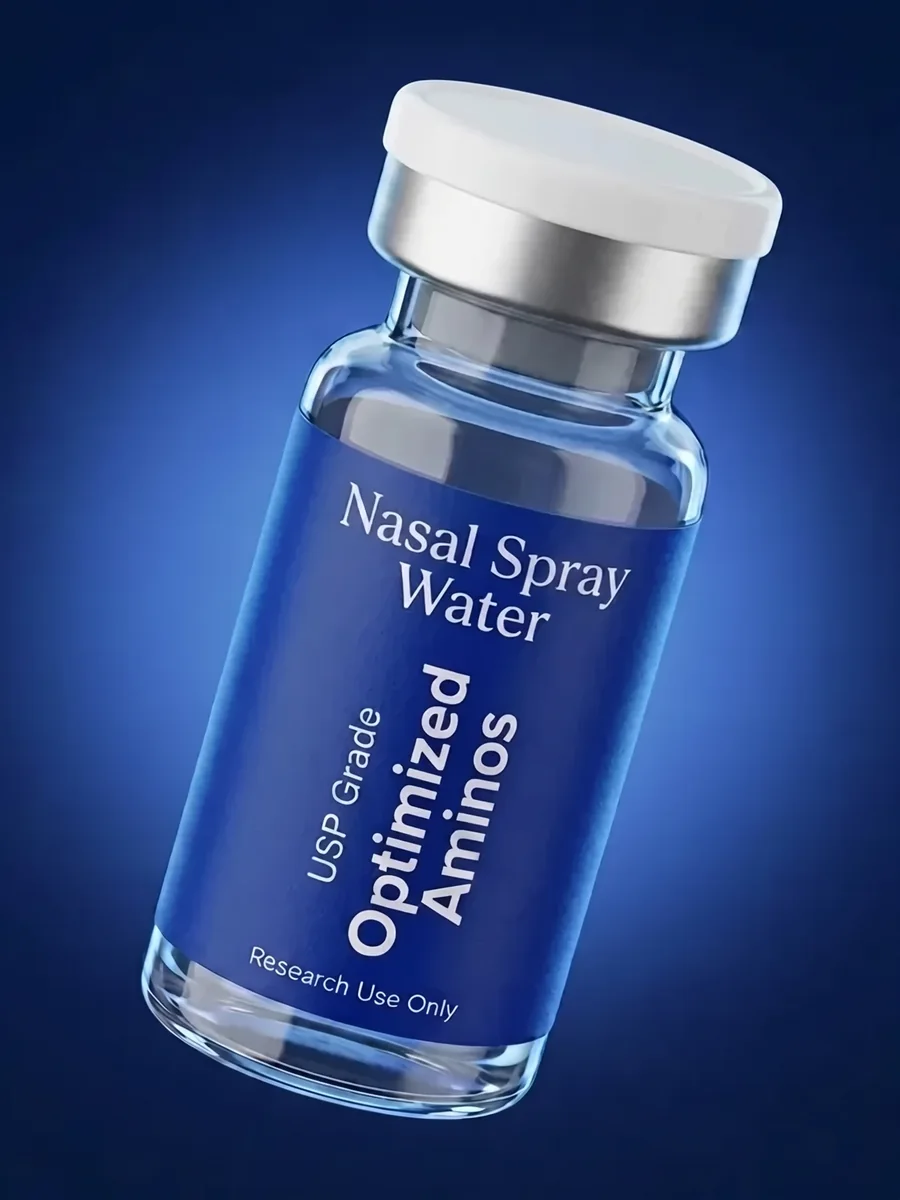
USP-grade bacteriostatic water (0.9% benzyl alcohol) in a sterile 10 mL multi-use vial. Manufactured under cGMP conditions and tested for endotoxins, sterility, and particulate matter. Commonly used in research laboratories as a reconstitution solvent for lyophilized reference peptides. Compatible with standard luer-lock syringes for precise dispensing. Store at controlled room temperature away from direct light. Sold as a laboratory reagent for research use only. Not for human or animal injection or any clinical use.
View product