Research Blog
Retatrutide Half-Life: What Pharmacokinetic Research Describes
Published
An overview of what published pharmacokinetic research reports about retatrutide's elimination half-life, washout periods, and study measurement methods.
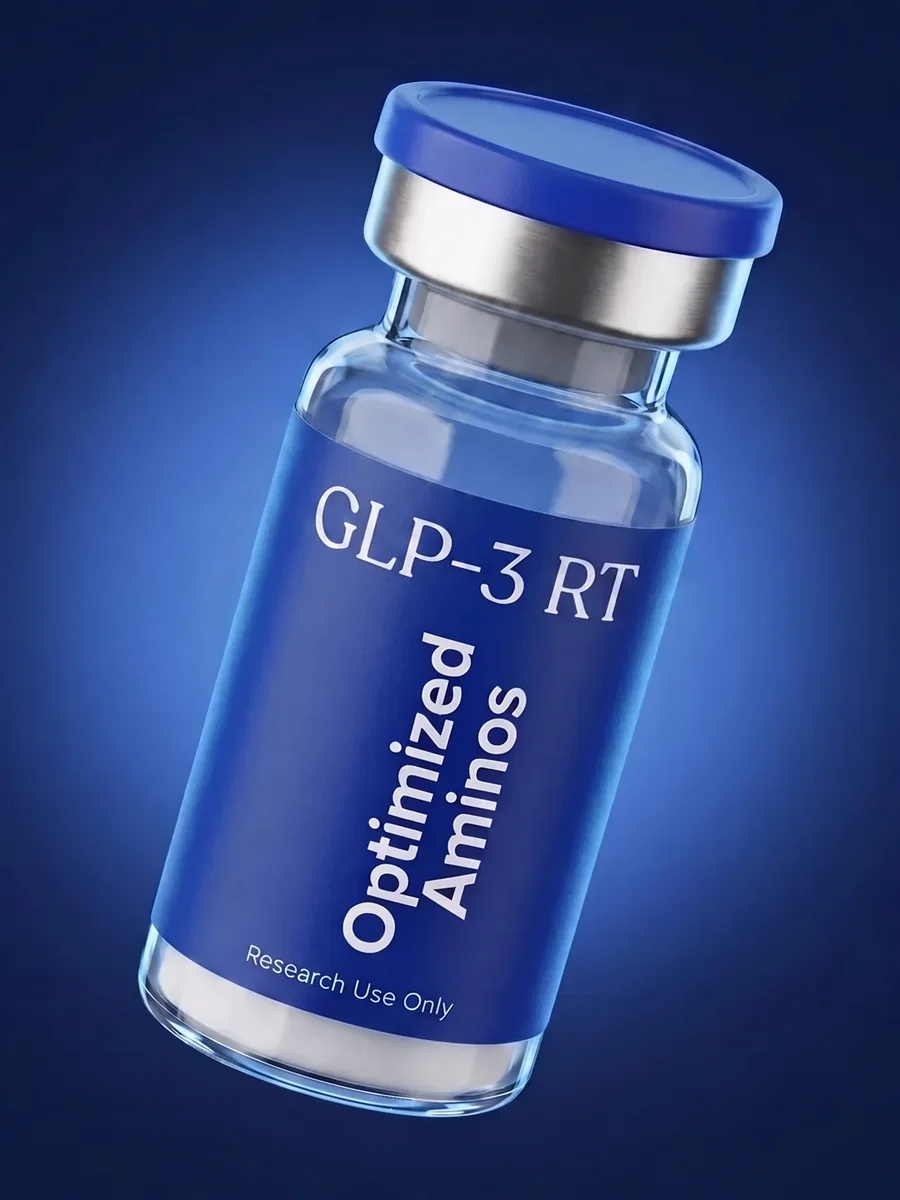
For laboratory and research use only. Not for human consumption.
Retatrutide is a triple agonist peptide studied for its action across GLP-1, GIP, and glucagon receptor pathways, and its pharmacokinetic profile — including elimination half-life — is a recurring subject in published research. This article summarizes what pharmacokinetic (PK) literature has described about retatrutide's half-life and washout behavior, framed strictly around what studies measured, not as guidance for human dosing.
Key Facts
- Elimination half-life is a pharmacokinetic parameter, not an efficacy measure — it describes clearance rate, not effect.
- Published clinical PK studies have reported retatrutide's half-life in the range of approximately five to six days.
- Half-life data are derived from concentration-time curves built from serial blood or plasma sampling and quantified with analytical methods like LC-MS/MS.
- Washout periods used in study design are commonly estimated as multiples of a compound's elimination half-life.
- This article summarizes published research methodology and findings; it is not a dosing or administration guide.
What "Half-Life" Means in Pharmacokinetic Research
In pharmacokinetics, half-life (often written t½) refers to the amount of time required for a compound's concentration in a biological matrix — typically plasma — to fall by 50% during the elimination phase. It's a derived parameter, calculated from a concentration-time curve rather than measured directly at a single point. Researchers build this curve by collecting samples at scheduled intervals following administration in a controlled study, then modeling how concentration declines over time.
Why Half-Life Matters in Study Design
Half-life informs several aspects of how a study is structured: how frequently samples need to be collected to capture the elimination curve accurately, how long a washout period should be between study phases in crossover designs, and how researchers interpret steady-state concentration if a compound is administered repeatedly within a protocol. None of these design considerations translate to instructions for personal use — they are methodological details relevant to how the research itself is conducted.
What Published Research Reports About Retatrutide's Half-Life
Clinical pharmacokinetic research on retatrutide, including data from phase 1 and phase 2 trial publications, has described an elimination half-life in the range of roughly five to six days. This extended half-life is consistent with the molecule's design intent as a long-acting triple receptor agonist, and it is one of the reasons retatrutide has been studied with infrequent dosing intervals in clinical protocols. It's worth noting that half-life estimates can shift somewhat depending on the specific study population, sample size, dosing regimen under investigation, and the analytical assay used to quantify plasma concentration — so any single figure should be understood as an estimate drawn from a particular study rather than a fixed constant.
How Half-Life Data Is Generated
Generating a half-life estimate involves several methodological steps common across PK research:
- Serial sampling — collecting blood or plasma at multiple defined time points after a study intervention.
- Analytical quantification — typically using liquid chromatography coupled with tandem mass spectrometry (LC-MS/MS) to measure compound concentration in each sample with high specificity.
- Curve fitting — applying a pharmacokinetic model (often a one- or two-compartment model) to the concentration-time data to derive parameters including half-life, clearance, and volume of distribution.
- Statistical summary — reporting the derived half-life as a mean or median with a confidence interval or range across study participants or subjects.
This process is the same general framework used across peptide PK research broadly. For a conceptual explainer of how half-life is discussed across research peptides more generally, see Peptide Half-Life Explained: What Research Measures.
Washout Periods in Retatrutide-Related Study Design
A washout period is the interval researchers build into a study to allow a previously administered compound to clear before a new phase begins — important in crossover trial designs where the same subjects may be exposed to different interventions at different times. Because retatrutide's reported half-life sits in the multi-day range, washout periods referenced in related study designs tend to be measured in weeks rather than days, reflecting the general rule that roughly four to five half-lives are needed for a compound to be considered substantially cleared from a system in pharmacokinetic terms.
Retatrutide in Context: Related Research Peptides
Retatrutide is often discussed alongside other GLP-1/GIP pathway compounds studied in metabolic research, including tirzepatide and semaglutide, both of which are referenced here strictly for informational and comparative context. For a broader comparison of how these three molecules are studied — including differences in receptor targets and reported pharmacokinetic profiles — see Retatrutide vs. Tirzepatide vs. Semaglutide: A Research Comparison. For general background on retatrutide as a research compound, see Retatrutide Research Overview.
Concentration Math for Reconstituted Research Material
Separate from pharmacokinetic half-life data collected in clinical studies, labs working with lyophilized retatrutide for in vitro or bench research need to track a different kind of math entirely: reconstitution concentration. Knowing how much diluent was added to a given quantity of lyophilized peptide determines the resulting mg/mL concentration of a prepared research solution — a calculation independent of, and not to be confused with, elimination half-life. For a full walkthrough of this concentration math, see Retatrutide Reconstitution: mg to mL Concentration Math.
Verifying Material Before PK-Relevant Research
Because pharmacokinetic outcomes in any study are only meaningful if the material under investigation is accurately identified and quantified, researchers working with retatrutide should confirm purity and identity before beginning any protocol. The retatrutide sold here is third-party tested by Janoshik Analytical; its report does not include an identity test.
Frequently Asked Questions
What is elimination half-life in pharmacokinetic research?
Elimination half-life is a pharmacokinetic parameter describing the time required for the concentration of a compound in a biological system to decrease by half during the elimination phase. It is calculated from concentration-time data collected in a study, typically using blood or plasma sampling at defined intervals.
What half-life range has been reported for retatrutide in published research?
Clinical pharmacokinetic studies of retatrutide have reported an elimination half-life in the range of roughly five to six days, consistent with a molecule engineered for extended systemic persistence. Exact figures vary between study populations, dosing regimens, and analytical methods, so researchers should refer to the specific study in question rather than a single universal number.
What is a washout period and how does it relate to half-life?
A washout period is the span of time researchers allow for a compound to clear from a biological system, often used in study design to separate treatment phases or to ensure a baseline before a new intervention. Washout periods are commonly estimated as a multiple of the elimination half-life, since concentration decreases by half with each half-life interval.
How do researchers measure half-life in a pharmacokinetic study?
Researchers typically collect serial blood or plasma samples at predetermined time points after administration in a study protocol, then use analytical chemistry methods such as LC-MS/MS to quantify compound concentration at each point. These concentration-time data are fit to a pharmacokinetic model to derive parameters including half-life, clearance, and volume of distribution.
Does a longer half-life mean a compound is more effective?
No. Half-life describes how long a compound persists in a system, not its potency or efficacy. Persistence and effect are measured through separate methods in pharmacological research, and a longer half-life simply means slower elimination, not a stronger or better outcome.
For laboratory and research use only. Not for human consumption.