Research Blog
Sermorelin Research Overview: What the GHRH(1-29) Fragment Literature Describes
Published
Sermorelin (GRF 1-29) research overview: GHRH receptor mechanism, pulsatile GH-release physiology, and its history as a GH-stimulation test compound.
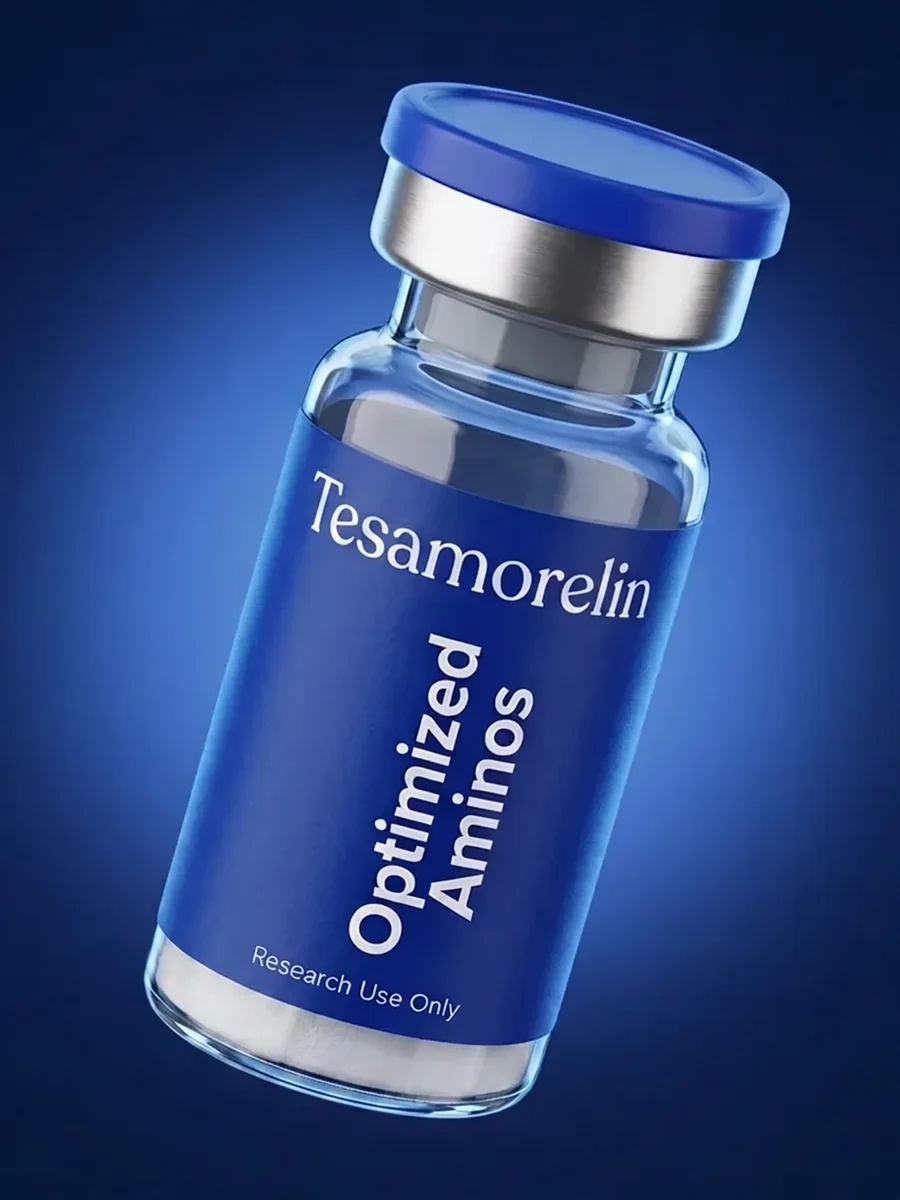
For laboratory and research use only. Not for human consumption.
Sermorelin has appeared on this site so far only inside compound-comparison posts — set against Ipamorelin, discussed alongside CJC-1295 and Ipamorelin together, and contrasted structurally with Tesamorelin. It has never had a standalone overview of its own. This article fills that gap: what Sermorelin is, how the literature describes its mechanism at the GHRH receptor, and why it carries a specific historical role as a GH-stimulation test compound.
What Sermorelin Is
Sermorelin — also referred to in the literature as GRF(1-29) or GHRH(1-29) — is the truncated 1-29 amino acid fragment of native human growth-hormone-releasing hormone (GHRH), which in its full-length form is a 44-amino-acid peptide. Research characterizing this fragment has described it as retaining the full receptor-binding and bioactivity profile of the intact hormone, which is the basis for its use as a research and diagnostic stand-in for GHRH rather than a structurally distinct compound class of its own (Prakash & Goa, 1999).
This distinguishes Sermorelin, mechanistically, from the ghrelin-mimetic class of GH secretagogues — compounds like Ipamorelin — that are studied elsewhere on this site. Sermorelin is a GHRH-receptor agonist; Ipamorelin and related secretagogues are studied as agonists of a separate receptor, the growth-hormone secretagogue receptor (GHS-R1a). The two pathways converge on the same downstream outcome — pituitary GH release — but they are activated by different upstream signals, which is why the site's comparison articles treat them as complementary research subjects rather than interchangeable ones.
Mechanism: GHRH Receptor Activation on Pituitary Somatotrophs
The mechanism described in the literature centers on the anterior pituitary's somatotroph cells, which express the GHRH receptor. In model systems, Sermorelin (as the bioactive 1-29 fragment) is reported to bind this receptor and stimulate the synthesis and pulsatile release of growth hormone from somatotrophs, mirroring the physiological action of endogenous GHRH.
A structural distinction discussed in the site's Tesamorelin literature is relevant here: Tesamorelin is a modified GHRH analog carrying an N-terminal trans-3-hexenoic acid addition that is reported to confer resistance to DPP-4 enzymatic degradation, extending its functional half-life relative to unmodified GHRH fragments. Sermorelin, by contrast, is the unmodified 1-29 fragment — a distinction covered in more depth in Tesamorelin's structure and stability versus native GHRH. This structural difference is one reason the two compounds are studied as related but non-identical members of the GHRH-analog research category.
A point of mechanistic interest raised in the literature is that GHRH-receptor agonism operates upstream within the hypothalamic-pituitary-somatotroph feedback loop, rather than supplying growth hormone directly. Because this loop remains intact — including its negative-feedback regulation via somatostatin and IGF-1 — models describe GHRH-receptor stimulation as preserving the pulsatile pattern of GH secretion that characterizes normal physiology, in contrast to direct exogenous GH administration, which bypasses this feedback architecture entirely. This is a framing point in the literature about the pathway being studied, not a claim about outcomes in people.
Historical Role as a GH-Stimulation Diagnostic Compound
Before it became a subject of broader research-peptide interest, Sermorelin's most-documented role in the literature was as a diagnostic test agent. Prakash and Goa's 1999 review in BioDrugs summarizes literature in which GRF(1-29)/Sermorelin was administered in controlled research and clinical settings specifically to test pituitary somatotroph responsiveness — that is, whether the pituitary could still release GH when given a GHRH-receptor stimulus. This use case, evaluated primarily in pediatric growth hormone deficiency research, positioned Sermorelin as a functional probe of the GHRH-receptor pathway rather than as a standalone therapeutic candidate.
The same review also summarizes literature on sustained-administration protocols, in which the diagnostic stimulation model was extended to longer observation windows to characterize the durability of the GH-release response over time. It is worth noting this is a review paper — it synthesizes findings from the diagnostic and stimulation-testing literature of that era rather than reporting a single new dataset. Additional literature on GRF(1-29) stimulation testing exists from this general period, though this article limits its citation to the verified review referenced above.
Where Sermorelin Sits in the Broader GH-Secretagogue Research Landscape
Because GHRH-receptor agonists and GHS-R1a agonists engage separate inputs to the same physiological axis, they are frequently studied in combination or in direct comparison. This site covers three such comparisons in depth: Sermorelin against Ipamorelin's selective ghrelin-receptor mechanism, Sermorelin positioned alongside CJC-1295 and Ipamorelin as a three-way GHRH-analog-versus-secretagogue picture, and Sermorelin set against Tesamorelin's DPP-4-resistant modification. Readers working across this compound category may find the GH secretagogues research hub useful as a single index into the full set of related literature summaries.
Sermorelin does not currently have a product listing on this site — this article exists purely as a literature overview to fill a gap in the site's compound coverage, not as a point of sale.
Key Facts
- Also known as: GRF(1-29), GHRH(1-29)
- Structural class: Truncated 29-amino-acid fragment of native human GHRH (44 amino acids full-length)
- Receptor studied: GHRH receptor on pituitary somatotrophs
- Mechanistic contrast: Distinct from GHS-R1a ghrelin-mimetics (e.g., Ipamorelin), which act on a separate receptor
- Structural contrast: Unmodified fragment, unlike Tesamorelin's DPP-4-resistant modification
- Documented historical use: GH-stimulation diagnostic test compound in pediatric GH-deficiency research (Prakash & Goa, 1999)
- Product availability: Not currently listed for sale on this site
Frequently Asked Questions
Is Sermorelin the same molecule as GHRH?
Not exactly. Sermorelin is the truncated 1-29 amino acid fragment of the 44-amino-acid native human GHRH sequence. The literature describes this fragment as retaining the full bioactivity of the intact hormone at the GHRH receptor, which is why it is studied as a stand-in for GHRH rather than as a separate compound class.
How does Sermorelin differ from Ipamorelin in research models?
They act on different receptors. Sermorelin is studied as a GHRH-receptor agonist on pituitary somatotrophs, while Ipamorelin is studied as a selective agonist of the ghrelin/GH-secretagogue receptor (GHS-R1a). Because these are two separate inputs to the GH axis, the two peptide classes are frequently discussed together rather than as substitutes for one another. See the full Ipamorelin vs Sermorelin comparison for detail.
Was Sermorelin studied as a diagnostic tool?
Yes. Prakash and Goa (1999) reviewed literature in which Sermorelin was used as a GH-stimulation test compound to assess pituitary somatotroph responsiveness, particularly in pediatric growth hormone deficiency research, in addition to literature examining sustained administration protocols.
Does Sermorelin preserve pulsatile GH release the way GHRH does?
That is how the mechanism is described in the literature. Because Sermorelin acts upstream at the pituitary rather than supplying GH directly, research models describe it as working within the hypothalamic-pituitary feedback loop, which is reported to preserve the pulsatile, feedback-regulated pattern of GH secretion rather than producing a fixed, unregulated GH concentration.
Is Sermorelin available as a product on this site?
No. This article is a research overview only. Sermorelin does not currently have a product listing on Optimized Aminos; it is discussed here strictly in the context of the published research literature. For the third-party reports published for the peptides this site does carry, see our testing and COA page.
References
- Prakash A, Goa KL. Sermorelin: A Review of its Use in the Diagnosis and Treatment of Children with Idiopathic Growth Hormone Deficiency. BioDrugs. 1999;12(2):139-157. PMID: 18031173.
For laboratory and research use only. Not for human consumption.