Research Blog
Choosing the Right Syringe and Needle Gauge for Peptide Reconstitution in the Lab
Published
A lab-bench guide to selecting syringe volume and needle gauge for accurately drawing diluent and measuring reconstituted research peptide solutions.
For laboratory and research use only. Not for human consumption.
Reconstituting a lyophilized research peptide accurately depends on more than just knowing how much bacteriostatic water to add — it also depends on the equipment used to measure that water and handle the resulting solution at the bench. Syringe volume and needle gauge both affect how precisely a researcher can draw diluent, transfer solution, and pull aliquots for downstream use. This guide covers how to select the right syringe and needle for these lab handling tasks — not for administration, but for accurate volume measurement at the bench.
Key Facts
- Syringe selection affects measurement resolution: smaller syringes provide finer graduation increments for small volumes than larger ones.
- U-100 insulin syringes (1 mL, marked in 100 unit increments) are commonly used at the bench for small-volume measurement of reconstituted solutions.
- Standard 1 mL and 3 mL syringes are used for larger diluent volumes or when transferring bacteriostatic water into a vial.
- Needle gauge affects draw smoothness and septum-piercing behavior, not the volume markings on the syringe itself.
- Needle coring — where a needle cuts rubber from a septum — is a contamination risk minimized through correct needle handling technique.
Why Equipment Selection Matters for Accurate Measurement
Reconstitution is fundamentally a measurement task: a known mass of lyophilized peptide is dissolved in a known volume of diluent to produce a solution of known concentration. Every step of that process depends on volume accuracy — from measuring bacteriostatic water into the vial to later drawing precise aliquots of the reconstituted solution for use in an assay or further dilution. The syringe and needle used at each step directly affect how accurate that volume measurement is.
Choosing Syringe Volume
The general principle for syringe selection at the bench is to choose the smallest syringe that can still hold the full volume being measured. This is because graduation marks on a syringe barrel are spaced across its total capacity — a 1 mL syringe divides that capacity into finer increments than a 3 mL or 5 mL syringe does, even though both may technically be able to hold a 0.5 mL volume. Measuring a small volume with an oversized syringe means reading a fill line between widely spaced gradations, which increases the relative measurement error.
U-100 Insulin Syringes
U-100 insulin syringes are a common bench tool for small-volume work because they hold up to 1 mL and are marked in 100 unit increments, where 100 units corresponds to 1 mL (so each unit equals 0.01 mL). This fine graduation makes them useful for measuring small aliquots of reconstituted research solution or for adding small, precise volumes of bacteriostatic water to a vial. Many bench protocols reference volumes in "units" specifically because of this syringe's common availability and graduation scale — it's a measurement convention, not an indication of intended use.
Standard 1 mL and 3 mL Syringes
For larger diluent volumes — such as reconstituting a vial with more than 1 mL of bacteriostatic water — a 3 mL syringe is often more practical, since it avoids the need to refill a smaller syringe multiple times. A standard 1 mL syringe (without insulin unit markings) is sometimes used interchangeably with a U-100 syringe depending on lab preference and the graduation clarity of the specific syringe brand. The choice between these ultimately comes down to matching syringe capacity to the total volume being measured in a given step, minimizing the number of partial fills needed.
Choosing Needle Gauge
Needle gauge refers to the diameter of the needle bore — the higher the gauge number, the finer (narrower) the needle. Needle gauge does not change how a syringe barrel is marked or how volume is read, but it does affect two practical aspects of bench handling: how easily liquid is drawn or dispensed, and how the needle interacts with a vial's rubber septum.
Drawing Bacteriostatic Water
A finer-gauge needle is typically used for drawing bacteriostatic water into a syringe, since the low viscosity of the diluent moves easily even through a narrow bore. Finer needles also create a smaller puncture point in the septum of both the diluent vial and the peptide vial, which can help preserve the septum's ability to reseal cleanly between uses.
Handling More Viscous Solutions
If a reconstituted solution is more viscous, a slightly larger-bore (lower-gauge) needle may draw more smoothly and with less resistance. This is purely a function of fluid dynamics — thicker solutions move more easily through a wider channel — and the choice should be based on how the solution behaves when drawn, not on any other consideration.
Avoiding Needle Coring During Vial Access
Needle coring happens when the tip of a needle shears off a small fragment of the vial's rubber septum as it's inserted, and that fragment can fall into the vial and contaminate the solution inside. This is purely a bench-handling risk relevant to drawing diluent or solution from a septum-capped vial. A few practices reduce coring risk:
- Insert the needle at a slight angle initially, then straighten as it enters the septum, rather than pushing straight down with full force.
- Use a sharp, undamaged needle — a bent or previously used needle tip is more likely to core the septum.
- Avoid repeatedly puncturing the exact same spot on a septum, which can weaken the rubber and increase fragmentation risk over multiple draws.
Aliquoting Reconstituted Solution for Storage
Once a peptide has been reconstituted at a known concentration, many bench workflows call for dividing that solution into smaller aliquots for storage — reducing freeze-thaw cycles on the full working stock. The same syringe-selection principle applies here: choosing a syringe sized close to the aliquot volume being measured (often a U-100 syringe for small aliquots) improves the precision of each transfer, which matters for keeping concentration consistent across stored aliquots.
Related Bench Reconstitution Resources
Syringe and needle selection is one piece of a broader reconstitution workflow. For the full process of preparing a lyophilized peptide vial with bacteriostatic water, see How to Reconstitute Peptides with Bacteriostatic Water. For a breakdown of how measurement units like milligrams and IU relate to each other in this context, see Peptide mg vs. IU: Measurement Explained. To calculate exact concentration figures based on diluent volume and peptide mass, see How to Use the Peptide Reconstitution Calculator and the reconstitution calculator itself.
Verifying Material Before Bench Work
Accurate measurement only matters if the peptide being reconstituted has verified identity and purity to begin with. See the testing page for an overview of the analytical documentation provided with research peptides sourced from this site.
Frequently Asked Questions
Why does syringe volume matter when measuring reconstituted research solutions?
Syringe volume determines measurement resolution. A syringe barrel with graduation marks close to the total volume it holds allows for finer, more accurate volume measurement, while using an oversized syringe to measure a small volume increases the relative margin of error in reading the fill line.
What syringe sizes are commonly used for measuring small research peptide volumes?
U-100 insulin syringes, which hold up to 1 mL and are marked in increments of 100 units (equivalent to 1 mL), are commonly used at the bench for measuring small aliquots. Standard 1 mL and 3 mL syringes are also used depending on the total volume of diluent or solution being measured.
Does needle gauge affect the volume measurement itself?
Needle gauge does not change the volume markings on the syringe barrel, but it does affect how smoothly liquid is drawn into or dispensed from the syringe, and how easily a needle can pierce a vial's rubber septum without coring it. A finer (higher-gauge) needle is generally used for drawing bacteriostatic water, while a slightly larger-bore needle may be used when a solution is more viscous.
What is needle coring and why does it matter for reconstitution work?
Needle coring occurs when a needle cuts a small piece of rubber from a vial's septum as it's inserted, which can then fall into the vial and contaminate the solution. Using a sharp needle at a slight angle, and avoiding excessive bending or reinsertion at the same puncture point, helps reduce coring risk during bench work.
Does this guide cover injecting reconstituted peptides into a human or animal?
No. This guide addresses syringe and needle selection strictly for lab bench tasks — drawing diluent and measuring or aliquoting reconstituted research solution. It does not address administration, injection sites, or dosing in humans or animals.
For laboratory and research use only. Not for human consumption.
Related research compounds
Compounds referenced in this article, available as research-grade lyophilized peptides with third-party tested COA.
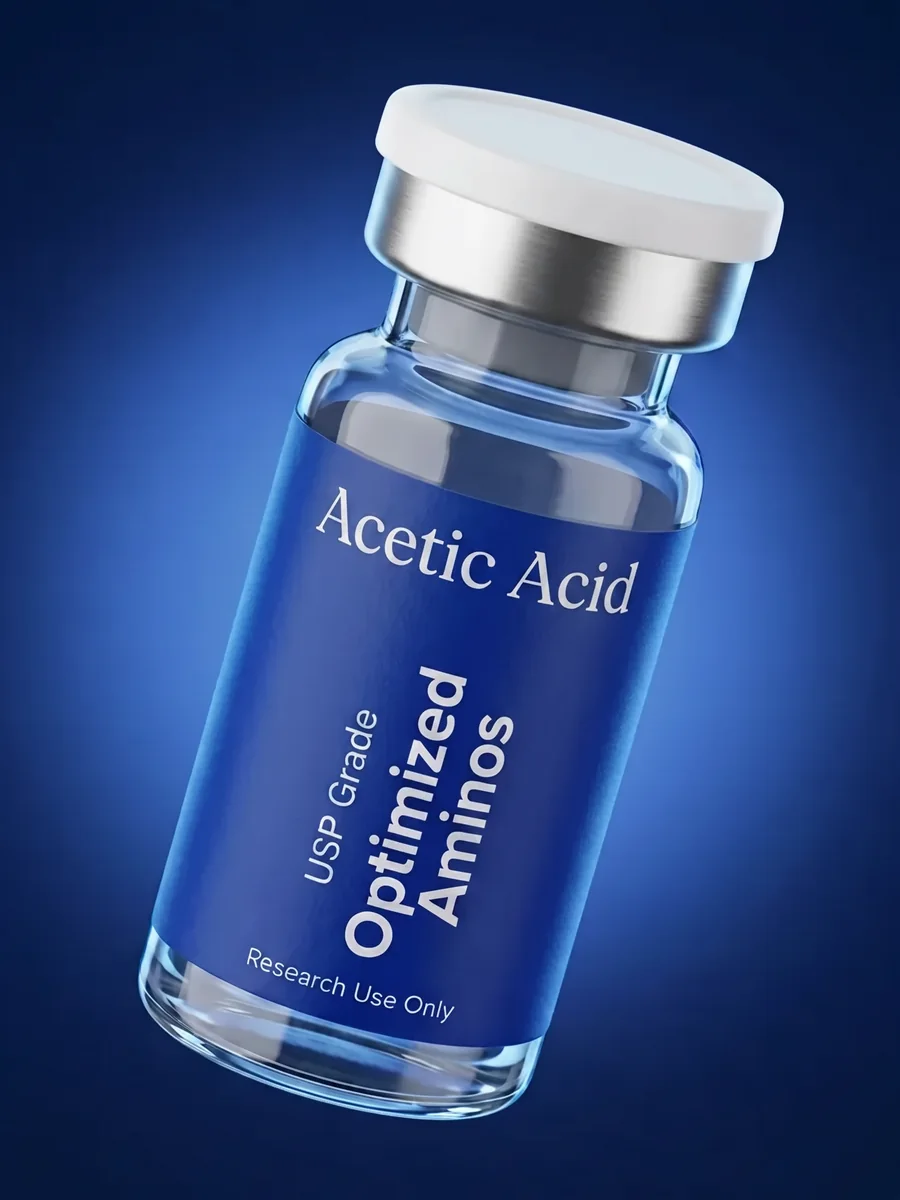
Dilute acetic acid solution for laboratory reconstitution of peptides with poor solubility in bacteriostatic water. For laboratory research use only. Not for human or animal consumption.
View product
USP-grade bacteriostatic water (0.9% benzyl alcohol) in a sterile 10 mL multi-use vial. Manufactured under cGMP conditions and tested for endotoxins, sterility, and particulate matter. Commonly used in research laboratories as a reconstitution solvent for lyophilized reference peptides. Compatible with standard luer-lock syringes for precise dispensing. Store at controlled room temperature away from direct light. Sold as a laboratory reagent for research use only. Not for human or animal injection or any clinical use.
View product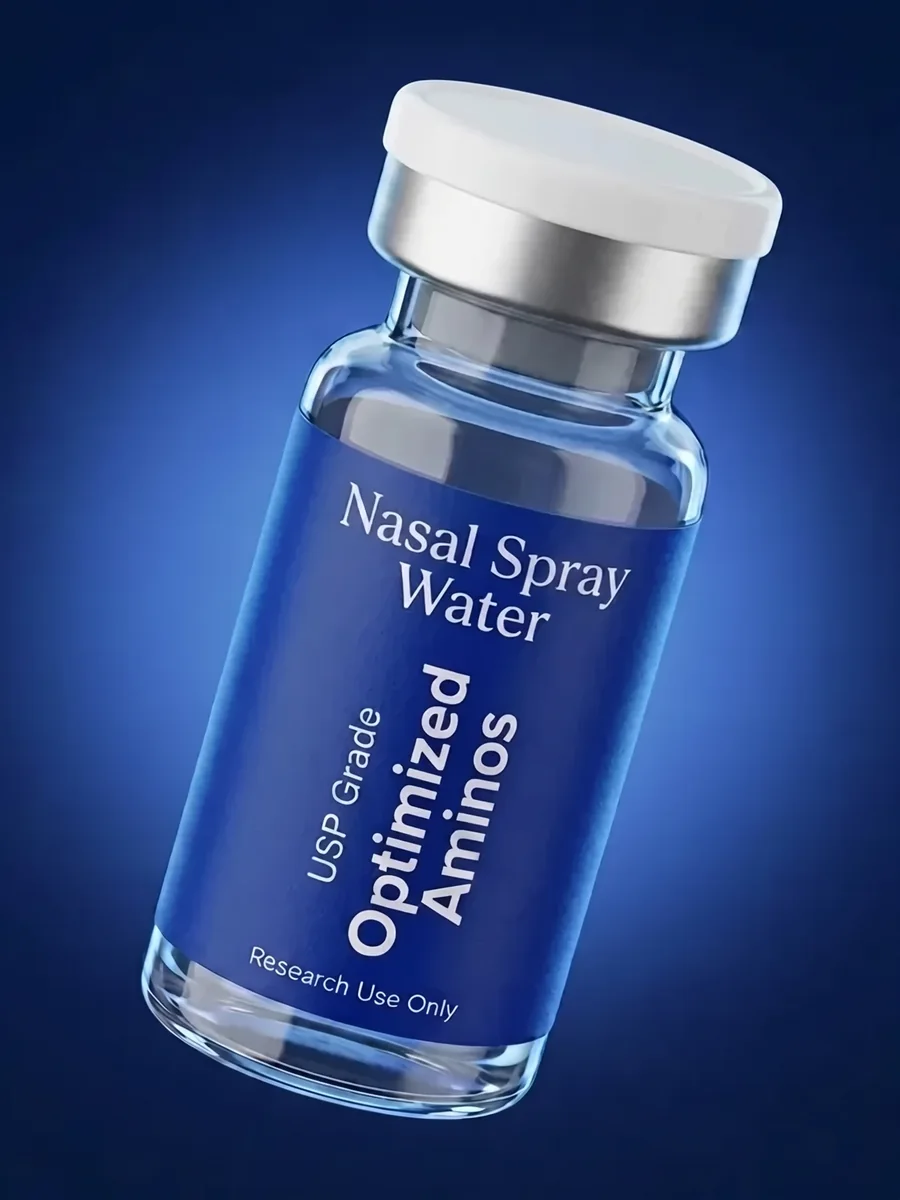
USP-grade bacteriostatic water (0.9% benzyl alcohol) in a sterile 10 mL multi-use vial. Manufactured under cGMP conditions and tested for endotoxins, sterility, and particulate matter. Commonly used in research laboratories as a reconstitution solvent for lyophilized reference peptides. Compatible with standard luer-lock syringes for precise dispensing. Store at controlled room temperature away from direct light. Sold as a laboratory reagent for research use only. Not for human or animal injection or any clinical use.
View product