Research Blog
Tesamorelin Reconstitution: mg-to-mL Concentration Chart for Research
Published
Tesamorelin reconstitution math for researchers: mg-to-mL concentration formulas, bacteriostatic water ratios, and a printable dilution reference chart.
For laboratory and research use only. Not for human consumption.
Reviewed by the Optimized Aminos research team — last updated August 10, 2026
Tesamorelin is typically supplied as a lyophilized (freeze-dried) powder that must be reconstituted into a liquid solution before it can be used in solution-based laboratory work. This article is a math and lab-technique reference for that reconstitution step — covering mg-to-mL concentration formulas, bacteriostatic water dilution ratios, and a reference chart — and nothing here should be read as guidance for human use, self-administration, or dosing.
Key Facts
- Concentration (mg/mL) = total peptide mass in the vial (mg) ÷ volume of diluent added (mL).
- Adding 1 mL of diluent to a 10 mg vial yields a 10 mg/mL (10,000 mcg/mL) stock solution.
- Bacteriostatic water contains 0.9% benzyl alcohol, a preservative that supports repeated withdrawals from a multi-use vial.
- A U-100 syringe is marked so that 100 units = 1 mL, a common cross-reference for volume math in the lab.
- Reconstituted peptide solutions are generally stored refrigerated and used within a limited stability window.
- Our reconstitution calculator automates this math for any vial size and target concentration.
The Core Formula
Every reconstitution calculation for tesamorelin, or any lyophilized peptide, reduces to one equation:
Concentration (mg/mL) = Total peptide mass in vial (mg) ÷ Volume of diluent added (mL)
If you know two of the three variables — total mass, diluent volume, or target concentration — you can solve for the third. Tesamorelin research vials are commonly supplied at 10 mg per vial, so the examples below use that as the base case, but the same formula scales to any labeled mass.
mg-to-mL Concentration Chart: 10 mg Tesamorelin Vial
The table below shows the resulting concentration for a range of common bacteriostatic water volumes added to a single 10 mg vial.
| Diluent Added (mL) | Resulting Concentration (mg/mL) | Resulting Concentration (mcg/mL) |
|---|---|---|
| 1 mL | 10 mg/mL | 10,000 mcg/mL |
| 2 mL | 5 mg/mL | 5,000 mcg/mL |
| 2.5 mL | 4 mg/mL | 4,000 mcg/mL |
| 3 mL | 3.33 mg/mL | 3,333 mcg/mL |
| 4 mL | 2.5 mg/mL | 2,500 mcg/mL |
| 5 mL | 2 mg/mL | 2,000 mcg/mL |
| 10 mL | 1 mg/mL | 1,000 mcg/mL |
Note that concentration and diluent volume are inversely related: doubling the diluent halves the concentration. This chart is built for a 10 mg vial specifically — see our tesamorelin 10mg product listing for the exact labeled mass used in these examples.
Working Backward: Solving for a Target Concentration
Sometimes a research protocol specifies a target working concentration rather than a diluent volume. To find the volume needed, rearrange the formula:
Volume of diluent (mL) = Total peptide mass (mg) ÷ Target concentration (mg/mL)
Example: to prepare a 2 mg/mL stock from a 10 mg vial, divide 10 by 2, which gives 5 mL of diluent. To prepare a 500 mcg/mL (0.5 mg/mL) stock from the same vial, divide 10 by 0.5, which gives 20 mL. Our reconstitution calculator performs this calculation automatically if you'd rather not do it by hand.
Choosing and Using Bacteriostatic Water
Bacteriostatic water is water for injection preserved with 0.9% benzyl alcohol. In a lab context, the preservative's role is to inhibit bacterial growth across multiple needle withdrawals from the same vial over time, which is why it's the standard diluent choice for multi-use reconstituted vials rather than plain sterile water, which lacks a preservative and is typically treated as single-draw only once opened. See our companion piece on how much bacteriostatic water to add and reconstitution ratios for a broader discussion across different peptide vial sizes, and our bacteriostatic water 10mL listing for the diluent itself.
Cross-Checking the Measured Volume
Many labs use standard U-100 insulin-type syringes as a convenient, finely graduated volume-measurement tool, independent of what solution is being measured. On a U-100 syringe, the barrel is marked in "units," where 100 units = 1 mL, 50 units = 0.5 mL, and 10 units = 0.1 mL. This is purely a volume-measurement convention — it has nothing to do with a dose amount — and researchers commonly use it to visually confirm that a calculated volume (say, 0.5 mL from the chart above) has been drawn accurately, since a syringe barrel is easier to read precisely than a small vial or beaker graduation.
Solution Stability Considerations
Once reconstituted, tesamorelin exists in an aqueous solution where peptide bonds are more susceptible to degradation over time than in the lyophilized (powder) form. Published pharmacology literature on tesamorelin's parent compound describes it as a growth-hormone-releasing factor analog studied extensively in controlled clinical settings, which underscores that handling and storage conditions materially affect the compound's integrity in solution. General lab practice is to store reconstituted vials refrigerated and to log preparation dates so that solutions are not used indefinitely past a defined stability window.
FAQ
What's the formula for calculating peptide concentration after reconstitution?
Concentration (mg/mL) equals the total peptide mass in the vial (mg) divided by the volume of diluent added (mL). For example, a 10 mg vial reconstituted with 2 mL of bacteriostatic water yields a concentration of 10 ÷ 2 = 5 mg/mL. This same formula applies regardless of vial size or diluent volume chosen.
How much bacteriostatic water should be added to a 10 mg tesamorelin vial?
There is no single fixed volume — the correct amount depends entirely on the target concentration a given research protocol requires. Adding 1 mL yields a 10 mg/mL stock, 2 mL yields 5 mg/mL, and 5 mL yields 2 mg/mL. Our reconstitution calculator lets you enter a target concentration and back-calculate the diluent volume needed.
Why use bacteriostatic water instead of plain sterile water?
Bacteriostatic water contains 0.9% benzyl alcohol as a preservative, which inhibits bacterial growth across multiple withdrawals from the same vial over time. Plain sterile water has no such preservative, so a vial reconstituted with it is generally treated as single-use only from a contamination-control standpoint in lab settings.
How do research syringe unit markings relate to milliliters?
Bench volumes are recorded in microlitres, where 1 mL equals 1,000 µL and 0.1 mL equals 100 µL. Researchers sometimes use these markings as a convenient volume reference for cross-checking mL-based calculations, since the syringe barrel provides finer visual gradation than a typical vial or beaker.
How long is a reconstituted tesamorelin solution considered stable?
Stability of a reconstituted peptide solution is time- and temperature-dependent, and general practice is to store reconstituted vials refrigerated and use them within a defined, limited window rather than indefinitely, since peptide bonds can degrade in aqueous solution over time. Always follow the specific handling guidance provided with the product.
Sources
- Falutz J, et al. "Metabolic Effects of a Growth Hormone–Releasing Factor in Patients with HIV." N Engl J Med. 2007. DOI: 10.1056/NEJMoa072375
- Falutz J, et al. Pooled analysis of two multicenter phase 3 trials with safety extension data, tesamorelin analog. PubMed: PMID 20554713
- U.S. FDA — Original NDA labeling, Application Number 22-505 (tesamorelin): accessdata.fda.gov
For laboratory and research use only. Not for human consumption.
Related research compounds
Compounds referenced in this article, available as research-grade lyophilized peptides with third-party tested COA.
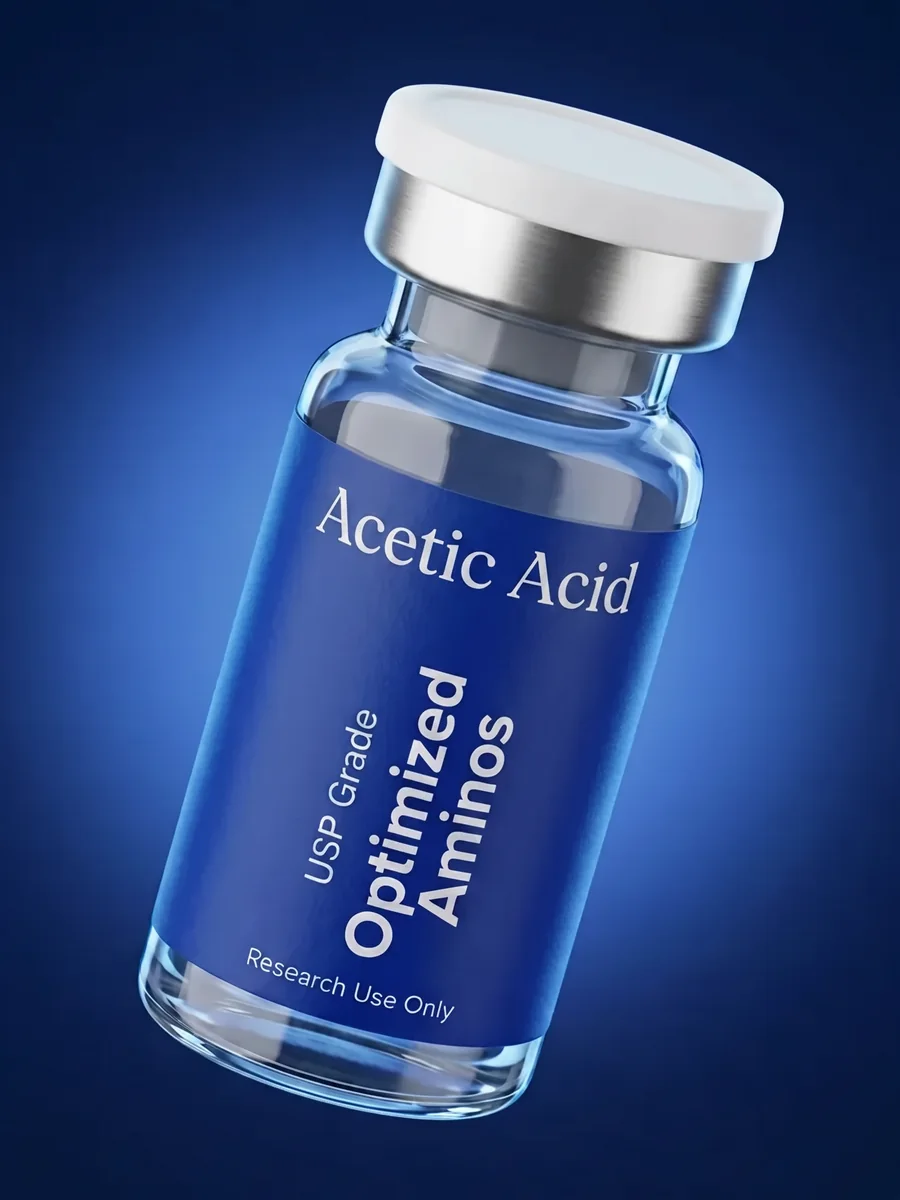
Dilute acetic acid solution for laboratory reconstitution of peptides with poor solubility in bacteriostatic water. For laboratory research use only. Not for human or animal consumption.
View product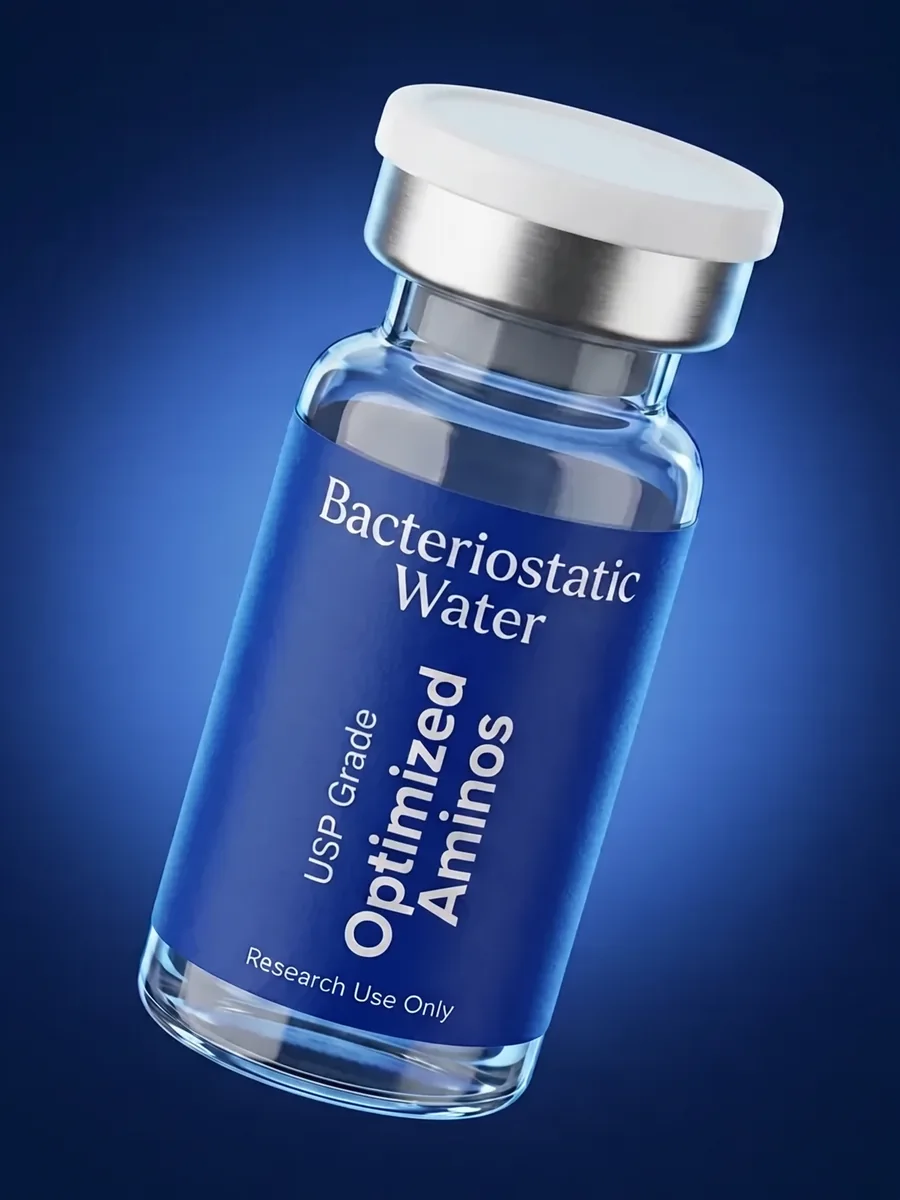
USP-grade bacteriostatic water (0.9% benzyl alcohol) in a sterile 10 mL multi-use vial. Manufactured under cGMP conditions and tested for endotoxins, sterility, and particulate matter. Commonly used in research laboratories as a reconstitution solvent for lyophilized reference peptides. Compatible with standard luer-lock syringes for precise dispensing. Store at controlled room temperature away from direct light. Sold as a laboratory reagent for research use only. Not for human or animal injection or any clinical use.
View product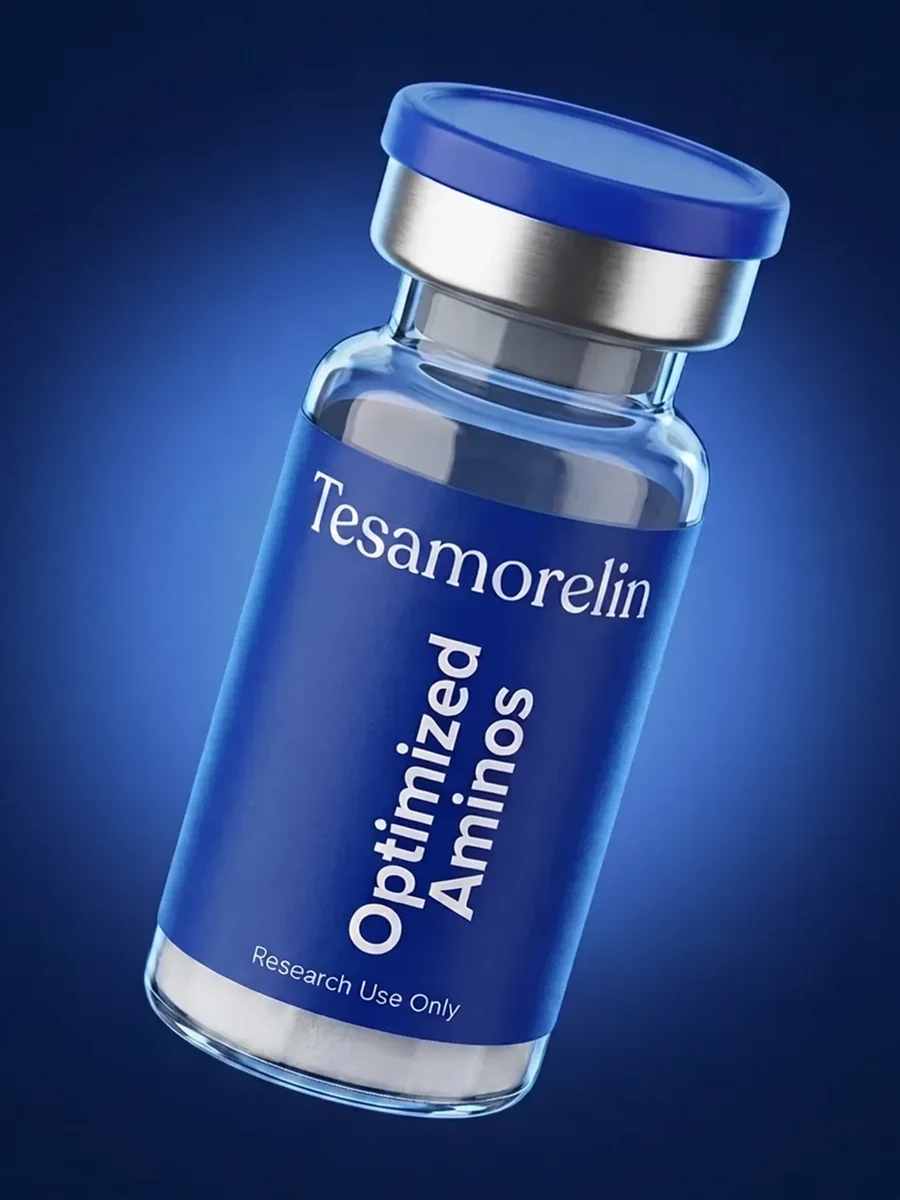
Tesamorelin reference peptide — synthetic GRF analog of 44 amino acids with a trans-3-hexenoic acid modification (MW ~5135.8 Da). Produced at >98% purity with structural confirmation via peptide mapping and MALDI-TOF. Referenced in published preclinical endocrinology literature. Temperature-sensitive — requires cold-chain storage at -20°C; cold-pack shipping recommended. Reconstitute with bacteriostatic water. For in-vitro laboratory and analytical research use only. Not a drug, supplement, or therapeutic product. Not for human or animal consumption, ingestion, injection, or any clinical use. Not FDA-approved.
View product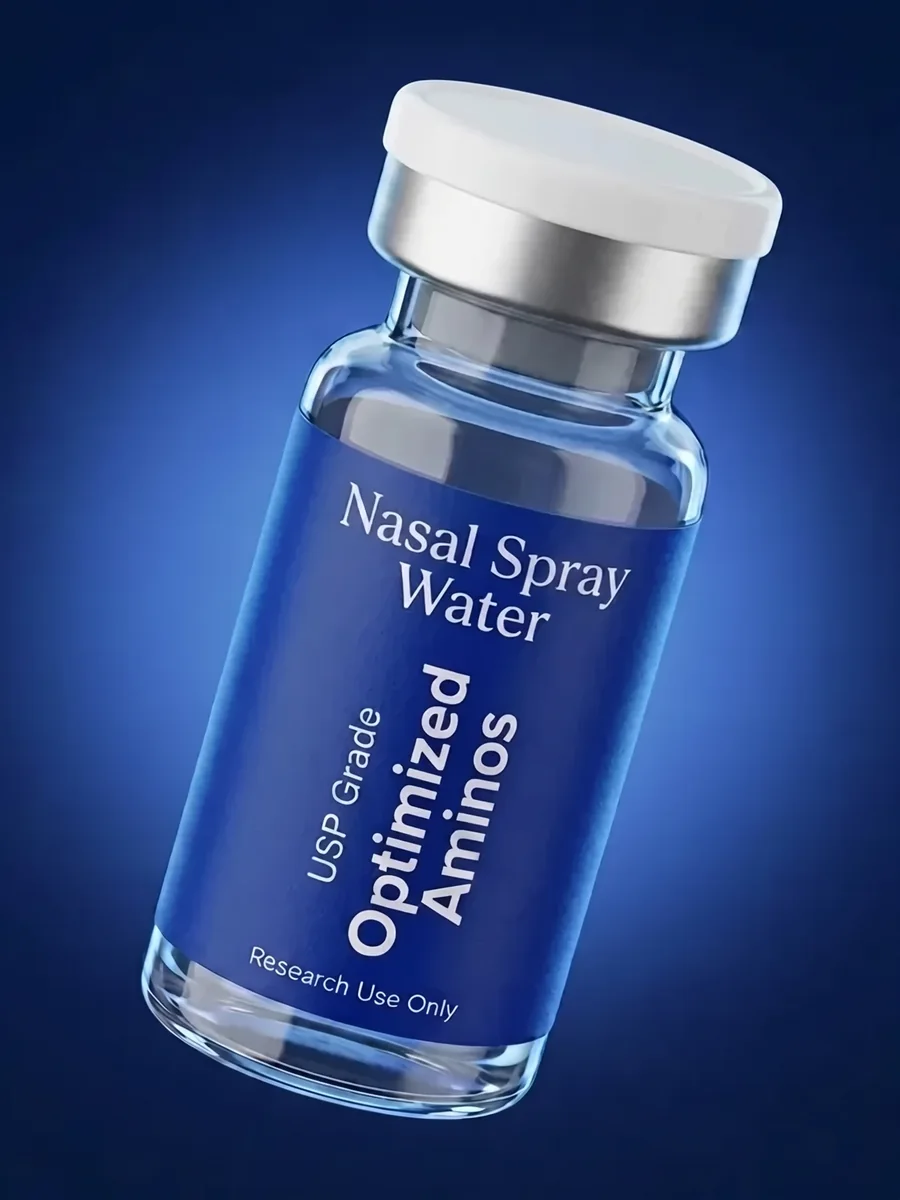
USP-grade bacteriostatic water (0.9% benzyl alcohol) in a sterile 10 mL multi-use vial. Manufactured under cGMP conditions and tested for endotoxins, sterility, and particulate matter. Commonly used in research laboratories as a reconstitution solvent for lyophilized reference peptides. Compatible with standard luer-lock syringes for precise dispensing. Store at controlled room temperature away from direct light. Sold as a laboratory reagent for research use only. Not for human or animal injection or any clinical use.
View product