Research Blog
GH Stack Reconstitution: mg-to-mL Concentration Math for a Two-Vial Kit
Published
A vial-by-vial reconstitution math guide for the GH Stack's two-vial CJC-1295/Ipamorelin blend and Tesamorelin research kit.
For laboratory and research use only. Not for human consumption.
The GH Stack pairs two vials — a combined CJC-1295 (No DAC) + Ipamorelin blend and a standalone Tesamorelin vial — into a single research kit. Unlike a kit built from entirely separate single-compound vials, one of the two vials here is itself a blend, which changes how its concentration math works. This guide walks through the arithmetic for each vial and where the blend vial's math differs from a standard single-compound calculation.
Two Vials, Not Three Peptides in Isolation
Our explainer on the GH Stack covers the research rationale for pairing these three peptides. From a reconstitution standpoint, the kit actually ships as two vials: one vial containing a CJC-1295 (No DAC) + Ipamorelin blend, and a second, separate Tesamorelin vial. The blend vial needs to be read differently from the single-compound vial, because its labeled mass covers two peptides at once.
Vial 1: CJC-1295 (No DAC) + Ipamorelin Blend
The CJC-1295 + Ipamorelin vial is supplied as 5 mg of CJC-1295 (No DAC) combined with 5 mg of Ipamorelin in one lyophilized vial — 10 mg of total peptide mass. The total-solution formula is the same as any single-compound vial:
Total concentration (mg/mL) = 10 mg ÷ diluent volume (mL)
At 2 mL of bacteriostatic water, that's 5 mg/mL of total peptide mass — but because the vial is an even 5 mg/5 mg split, each individual peptide's concentration is exactly half that figure: 2.5 mg/mL CJC-1295 and 2.5 mg/mL Ipamorelin. A full worked example, including syringe-unit conversion, is in our CJC-1295 + Ipamorelin reconstitution guide.
Vial 2: Tesamorelin
The Tesamorelin 10mg vial in the kit is a standard single-compound calculation, entirely independent of the blend vial:
Concentration (mg/mL) = 10 mg ÷ diluent volume (mL)
Reconstituting with 2 mL yields 5 mg/mL; 1 mL yields 10 mg/mL. Tesamorelin's molecular weight (~5135.8 Da) is substantially larger than either CJC-1295 (No DAC, ~3368 Da) or Ipamorelin (~712 Da), so a molar-concentration conversion for the Tesamorelin vial will not match the molar concentration of either peptide in the blend vial reconstituted to the same mg/mL. See our full Tesamorelin reconstitution walkthrough for a syringe-unit table.
Where This Kit's Math Differs From a Three-Separate-Vial Kit
Because one vial in the GH Stack is a blend, a researcher only has to track two diluent volumes and two preparation dates instead of three — but the blend vial requires an extra step the Tesamorelin vial doesn't: dividing its total concentration by the labeled split (5 mg/5 mg here) to get each peptide's individual mg/mL. Skipping that step and treating the blend vial's total concentration as if it were a single-compound figure is the most common calculation error researchers make with this kit.
Keeping the Two Calculations Separate
Labeling each reconstituted vial immediately with its mass (or mass split, for the blend), diluent volume, resulting concentration, and preparation date avoids cross-referencing errors. A simple per-vial table in a lab notebook, filled in at the moment of reconstitution rather than from memory afterward, is the most reliable safeguard — particularly for the blend vial, where "concentration" can mean either the combined total or either individual peptide's share, and a notebook entry should specify which.
| Vial | Labeled mass | Example diluent | Resulting concentration |
|---|---|---|---|
| CJC-1295 (No DAC) + Ipamorelin blend | 5 mg + 5 mg (10 mg total) | 2 mL | 5 mg/mL total; 2.5 mg/mL each |
| Tesamorelin | 10 mg | 2 mL | 5 mg/mL |
Storage Across Both Vials
Both vials in the kit are supplied lyophilized and specified for frozen storage (-20°C) prior to reconstitution, with Tesamorelin additionally noted as temperature-sensitive with cold-pack shipping recommended. Once reconstituted, both should be refrigerated, protected from light, and labeled individually. Researchers can cross-check the math for either vial with our peptide reconstitution calculator walkthrough, and can review the broader secretagogue research landscape in our GH secretagogues research hub.
Why the Kit Groups These Two Vials Together
The research rationale for combining a GHRH-analog blend with a separate GHRH-analog vial comes up often enough in the secretagogue literature that it's worth restating in reconstitution terms: CJC-1295 (No DAC) and Tesamorelin are both modified GHRH analogs, while Ipamorelin acts through a distinct ghrelin-receptor pathway. Splitting Ipamorelin into the same vial as CJC-1295 (No DAC) rather than pairing it with Tesamorelin is a formulation choice made upstream of reconstitution — by the time a researcher receives the kit, the vial contents are fixed, and the only decision left is how much diluent to add to each of the two vials.
A practical consequence of the two-vial design is inventory tracking. A three-separate-vial kit needs three reorder dates once vials start running low; a two-vial kit like this one needs to track when the blend vial and the Tesamorelin vial were each opened and how much of each remains, since the two won't necessarily deplete at the same rate if a research protocol calls for different volumes of each per use. Recording remaining volume alongside concentration in the same log entry — not just the concentration at time of reconstitution — makes it easier to see when either vial is approaching empty.
Frequently Asked Questions
Is the CJC-1295 + Ipamorelin vial reconstituted differently from a single-compound vial?
The reconstitution step itself is the same — add diluent, gently swirl, avoid shaking — but the concentration math has an extra step: dividing the total mg/mL by the labeled mass split to get each peptide's individual concentration.
Do the two vials in the GH Stack need the same diluent volume?
No — each vial's diluent volume is chosen independently based on the target concentration for that vial. There's no requirement to match them.
How do I know how much CJC-1295 versus Ipamorelin is in each mL of the blend vial once reconstituted?
Divide the vial's total concentration by the labeled split. At the standard 5 mg/5 mg split, that means each peptide's concentration is exactly half the vial's total mg/mL figure.
Does reconstituting the Tesamorelin vial affect the blend vial's concentration?
No. The two vials are physically separate, so reconstituting one has no effect on the mass or concentration of the other.
Can the blend vial's total mg/mL be compared directly to the Tesamorelin vial's mg/mL?
As mass-per-volume figures, yes, but because CJC-1295, Ipamorelin, and Tesamorelin all have different molecular weights, matching mg/mL figures do not represent matching molar concentrations across the vials.
What's the best way to avoid confusing the two vials' concentrations?
Label each vial immediately after reconstitution with its mass (or mass split), diluent volume, resulting concentration, and date, rather than relying on memory or vial position.
Reviewed by the Optimized Aminos research team — last updated August 19, 2026.
The full kit is available as the GH Stack research bundle, priced as a set rather than two separate purchases.
For laboratory and research use only. Not for human consumption.
Run the numbers for your own vial
The reconstitution calculator takes a labeled vial mass and a solvent volume and returns the resulting concentration in mg/mL, along with the aliquot volume in microlitres for any target mass — the same arithmetic worked through above, without the decimal-place risk of doing it from memory. Bacteriostatic water (10 mL) is the diluent used in these worked examples, and every compound referenced here is third-party tested with a published COA.
Related research compounds
Compounds referenced in this article, available as research-grade lyophilized peptides with third-party tested COA.
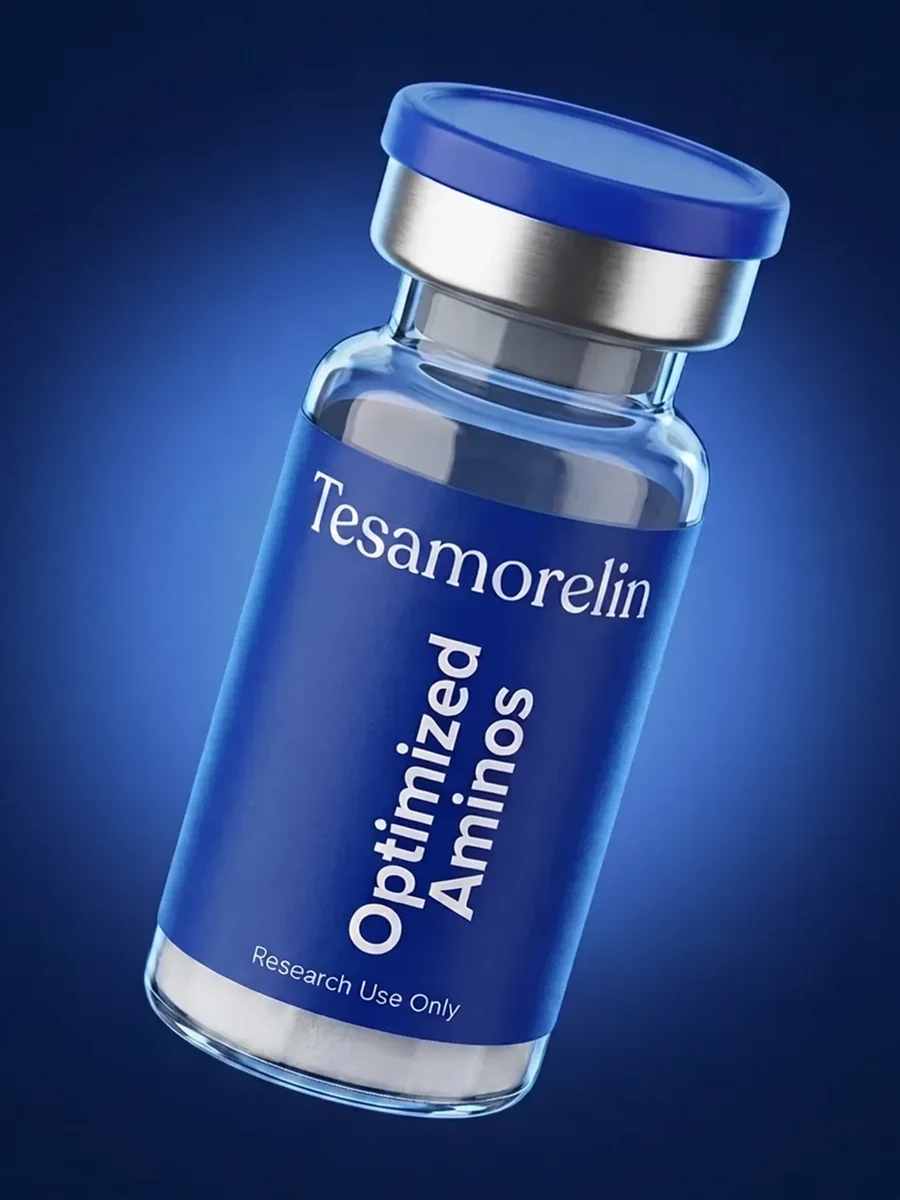
Tesamorelin reference peptide — synthetic GRF analog of 44 amino acids with a trans-3-hexenoic acid modification (MW ~5135.8 Da). Produced at >98% purity with structural confirmation via peptide mapping and MALDI-TOF. Referenced in published preclinical endocrinology literature. Temperature-sensitive — requires cold-chain storage at -20°C; cold-pack shipping recommended. Reconstitute with bacteriostatic water. For in-vitro laboratory and analytical research use only. Not a drug, supplement, or therapeutic product. Not for human or animal consumption, ingestion, injection, or any clinical use. Not FDA-approved.
View product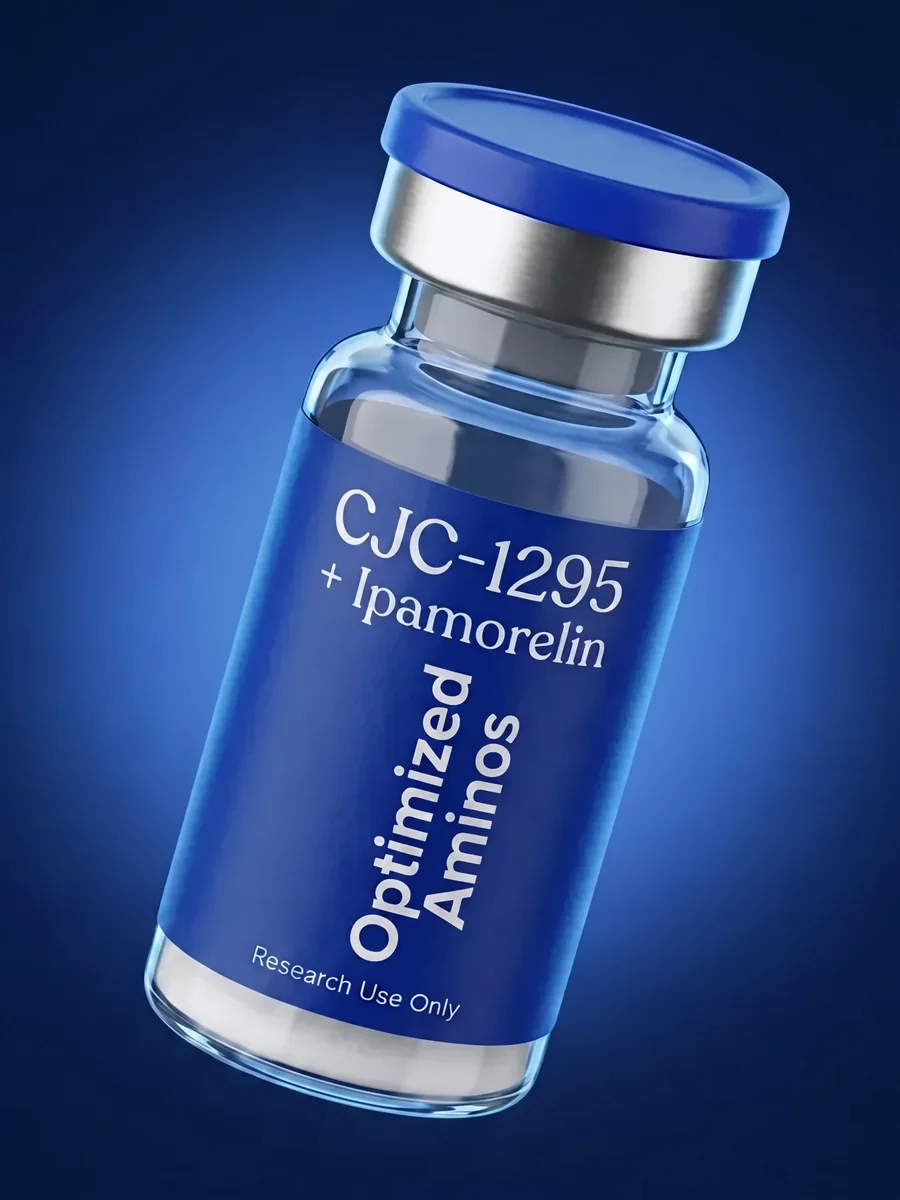
Research-grade lyophilized blend of CJC-1295 without DAC (mod GRF 1-29, MW 3367.97 Da) and Ipamorelin (MW 711.85 Da). Both peptides are synthesized at >98% purity and verified by third-party HPLC analysis. Studied in published in-vitro and preclinical literature on growth hormone secretagogue signaling. Supplied as lyophilized powder in a sealed sterile vial; store frozen at -20°C. Reconstitute with bacteriostatic water for laboratory use. For laboratory and analytical research use only. Not for human or animal consumption, ingestion, injection, therapeutic, cosmetic, or diagnostic use. Not an FDA-approved product.
View product