Research Blog
Ipamorelin Research Overview: Pulsatile Growth-Hormone Release and Receptor-Biology Literature
Published
An overview of how Ipamorelin is studied for preserving pulsatile growth-hormone release patterns, plus its receptor-biology background.
For laboratory and research use only. Not for human consumption.
Ipamorelin shows up constantly in growth-hormone-axis research discussions, but a lot of secondary summaries skip past the detail that actually makes it interesting to the literature: it is studied specifically for how it affects the pattern of growth hormone release, not just the total amount released. This overview focuses on that pulsatile-versus-tonic distinction first, then covers the discovery and receptor-biology background that explains where the compound came from.
Key Facts
- Ipamorelin is a pentapeptide studied as a growth hormone secretagogue acting through the GHS-R1a receptor pathway.
- Research models track pulsatile release using pulse amplitude and pulse frequency as separate, measurable variables.
- The literature distinguishes pulsatile (peak-and-trough) release patterns from tonic (continuous, flat) elevation.
- Ipamorelin was developed as a later-generation refinement within the growth hormone releasing peptide (GHRP) class.
- This overview describes laboratory and animal-model research only, with no human dosing or outcome claims.
Pulsatile vs. Tonic Release: The Core Research Variable
Endogenous growth hormone is not secreted at a steady, unchanging rate. Physiology research has long described its release as pulsatile: distinct bursts, or pulses, interspersed with quiet periods where circulating levels fall back toward baseline. This pattern is not incidental. Researchers studying the GH axis have found that the pulsatile pattern itself, defined by pulse amplitude (how large each burst is) and pulse frequency (how often bursts occur), is a variable that can be measured and manipulated independently of total cumulative hormone output over a given period.
This distinction matters because a hypothetical compound could, in a model system, raise total GH output while flattening the release pattern into something closer to continuous, tonic elevation, or it could raise output while preserving (or even sharpening) the natural peak-and-trough structure. These are mechanistically different outcomes, and the literature treats them as such. Ipamorelin is frequently discussed in secretagogue research specifically because study designs have measured its effect on this pulsatile pattern, tracking pulse amplitude and frequency as distinct endpoints rather than collapsing everything into a single output number. That framing, pulsatility as its own object of study, is the throughline of most rigorous Ipamorelin research summaries, and it is worth understanding before getting into receptor-level detail.
Why Researchers Track Pulse Shape Separately From Total Output
In GH-axis models, downstream signaling and receptor behavior at target tissues have been described in the literature as sensitive to the temporal pattern of hormone exposure, not only the integrated dose over time. This is part of why study designs in this space often report time-course data (a pulse profile across a sampling window) rather than a single aggregate number. When a compound is being evaluated as a growth hormone secretagogue, researchers are typically asking two separate questions: how much GH is released, and does the release pattern still resemble the natural pulsatile architecture, or does it look more like a flattened, tonic curve. Ipamorelin's research profile is built around study designs that address that second question directly.
Discovery and Structural Background
Ipamorelin is a synthetic pentapeptide, meaning it is built from a chain of five amino acid residues. It emerged from a research lineage that had already produced earlier growth hormone releasing peptides (GHRPs), and it is described in the literature as a refinement of that class, developed with the goal of a more targeted interaction at the relevant receptor pathway compared to some of its predecessors. Structurally, it is a small, engineered molecule rather than a naturally occurring hormone, which is a distinction worth keeping in mind when comparing it to growth hormone itself.
GHS-R1a as the Relevant Receptor Pathway
Mechanistically, Ipamorelin is studied as an agonist at the growth hormone secretagogue receptor (GHS-R1a), the same general receptor pathway implicated in ghrelin-mediated GH release. This receptor detail is a useful structural anchor for understanding why Ipamorelin is grouped with other secretagogues in the literature, but it is only one piece of the picture. Extended comparisons of receptor selectivity, including how Ipamorelin's GHS-R1a interaction profile compares to effects on other hormone axes such as cortisol or prolactin, are covered in more depth in our dedicated comparison piece rather than repeated here; this overview keeps the receptor-biology summary brief so the focus can stay on the pulsatile-release research question that defines most of the compound's study history.
How Ipamorelin Fits Alongside Related Secretagogues in the Literature
Ipamorelin rarely appears in isolation in the research literature. It is frequently discussed alongside earlier secretagogues and alongside GHRH-analog compounds, since study designs often combine a GHRH-pathway compound with a GHS-R1a-pathway compound to examine combined effects on the GH axis. For a direct look at how Ipamorelin's research profile compares to an earlier-generation secretagogue, see our GHRP-6 vs Ipamorelin research comparison. For a broader three-way comparison that includes a GHRH-analog compound, see our Sermorelin vs CJC-1295 vs Ipamorelin comparison. And for background on why GHRH-pathway and GHS-R1a-pathway compounds are frequently studied together, see our CJC-1295 and Ipamorelin research rationale overview.
Research-Use Status
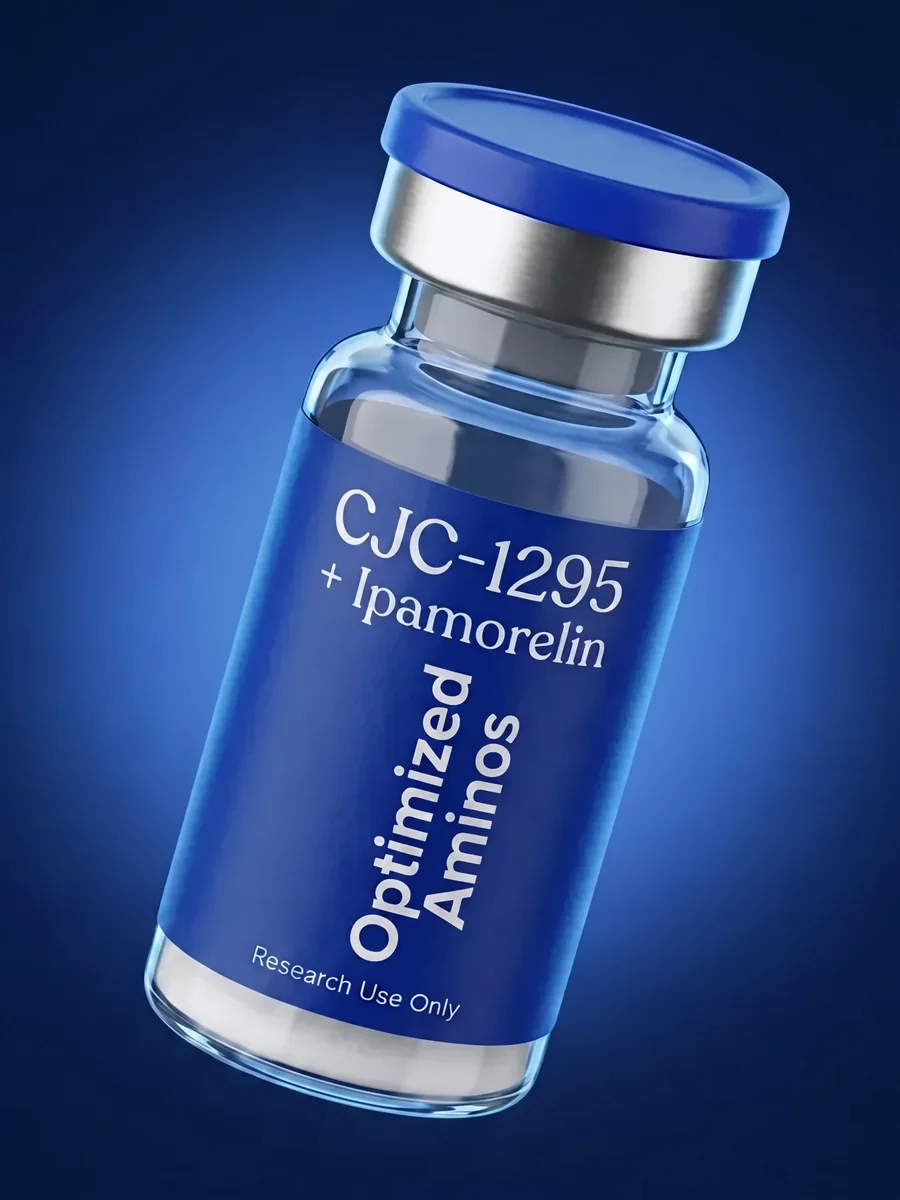
Ipamorelin, like the other compounds discussed here, is available through our catalog strictly for laboratory and research applications, including as part of a combination research kit such as our CJC-1295 (no DAC) and Ipamorelin research combination. Nothing in this overview should be read as guidance for human use, and no dosing, benefit, or outcome claims are intended or implied.
FAQ
What does pulsatile growth hormone release mean in the research literature
Pulsatile release describes the natural pattern in which growth hormone is secreted in discrete peaks followed by troughs, rather than at a constant continuous level. Research models often measure pulse amplitude and pulse frequency as distinct variables, not just total growth hormone output over time.
Why is pulsatility itself a variable of interest rather than just total GH output
Because the pattern of secretion, not only the cumulative amount, is understood in the physiology literature to relate to downstream signaling. A model that produces high total output through a flat, continuous elevation is mechanistically distinct from one that reproduces the peak-and-trough pattern seen in endogenous secretion, so researchers track both amplitude and frequency of pulses as separate endpoints.
Is Ipamorelin a growth hormone itself
No. Ipamorelin is a pentapeptide studied as a growth hormone secretagogue, meaning it is investigated for its interaction with the GHS-R1a receptor pathway that is involved in stimulating GH release, rather than being a form of growth hormone itself.
How does Ipamorelin relate to earlier GHRP compounds in the literature
Ipamorelin was developed later than earlier growth hormone releasing peptides and is described in the literature as a pentapeptide refinement of that class, studied for a more selective interaction profile at the GHS-R1a receptor compared to some earlier-generation secretagogues.
Is this information intended for dosing or human use decisions
No. This overview describes laboratory and preclinical research literature only. It is not dosing guidance and does not describe use in humans.
For laboratory and research use only. Not for human consumption.
Related research compounds
Compounds referenced in this article, available as research-grade lyophilized peptides with third-party tested COA.