Research Blog
What Is a Peptide Blend? KLOW, BPC-157 + TB-500 and CJC-1295 + Ipamorelin Explained
Published
What a peptide blend is, what the KLOW, BPC-157 + TB-500 and CJC-1295 + Ipamorelin vials contain, and how to reconstitute and read a blend certificate.
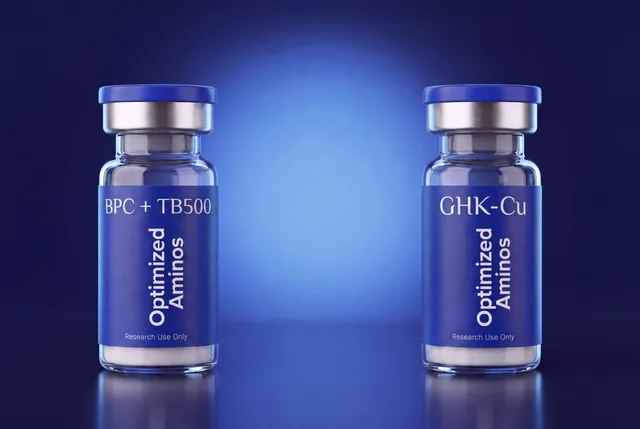
For laboratory research use only. This article explains what peptide blends are and how they are handled in laboratory research. It contains no dosing, human-use, veterinary, or clinical guidance and makes no health or benefit claims.
A peptide blend is a single vial holding two or more lyophilized peptides in defined amounts. Researchers use one when a model studies those compounds together, because one vial means fewer handling steps than several. The trade-off is a fixed ratio: you cannot vary one component without the others. A blend is reconstituted like any other vial, but each component has its own concentration, and a blend's certificate should report every component separately. Studying peptides together in one vial says nothing about combined or synergistic effects in an organism.
Why blends exist
When a protocol examines several compounds that are often studied in overlapping pathways, a pre-combined vial cuts reconstitution steps and the small volume errors that come with each one. It suits a design that wants that specific combination at that specific ratio. A design that needs independent control of each compound, or a ratio the blend does not offer, is better served by separate vials.
The three blends on this site
KLOW
KLOW 80mg combines four peptides studied in tissue and dermal research. Its published Janoshik Analytical certificate measured, in the tested vial:
- GHK-Cu (as GHK content): 50.65 mg. A copper-binding tripeptide, Gly-His-Lys, studied in in-vitro collagen and dermal-fibroblast research. It is also sold on its own as GHK-Cu 100mg.
- BPC-157: 12.61 mg. A 15-residue peptide derived from a gastric protein, studied in animal models of tendon, ligament and gut tissue repair.
- TB-500: 11.90 mg. A synthetic fragment of thymosin beta-4, studied for its role in actin binding and cell migration.
- KPV: 11.21 mg. The tripeptide Lys-Pro-Val, a fragment of alpha-melanocyte-stimulating hormone studied in inflammation-pathway research.
The name KLOW is used by several suppliers for blends of different compositions, so check the certificate for the vial you are working with rather than assuming a formula.
BPC-157 + TB-500
BPC + TB500 pairs the two peptides that appear together most often in tissue-repair research. Its published certificate is for a vial labelled 5 mg + 5 mg and measured 6.34 mg of BPC-157 and 6.33 mg of TB-500. Our BPC-157 vs TB-500 comparison explains why the two are studied side by side.
CJC-1295 no DAC + Ipamorelin
CJC-1295 no DAC 5 mg + Ipamorelin 5 mg combines a GHRH analog with a ghrelin-receptor secretagogue: two independent inputs to the same growth-hormone axis. The rationale is covered in sermorelin vs CJC-1295 vs tesamorelin vs ipamorelin.
Reconstituting a blend
A blend is reconstituted like a single vial: gently, with bacteriostatic water, swirled rather than shaken. The difference is the arithmetic. Each component has its own concentration, calculated from that component's mass, not the vial's combined total:
Component concentration (mg/mL) = that component's mass (mg) ÷ volume added (mL)
2 mL in the CJC-1295 + Ipamorelin vial gives 2.5 mg/mL of each. Record every component's concentration on the label. The ratio chart and the calculator cover the math, and the reconstitution guide the bench procedure.
Reading a blend certificate
A blend's certificate should document each component, not one combined figure. Check for:
- Every component named, with its measured amount in the vial.
- Measured amounts close to the label. Slightly above is common, since manufacturers tend to overfill; well below is a warning sign.
- What else was measured. Purity per component, identity by mass spectrometry and endotoxin may or may not be reported. Know which ones you have.
- A batch identifier and a verification key you can check with the laboratory.
The blend certificates published in the COA archive report the measured amount of each component; they do not report a per-component purity figure or a mass-spectrometry identity panel. Our guide to reading a peptide COA and spotting a fake one covers verification.
Frequently Asked Questions
What is in a KLOW blend?
It depends on the supplier, because the name is not standardised. The certificate published for the KLOW 80mg vial on this site measured GHK-Cu (50.65 mg as GHK), BPC-157 (12.61 mg), TB-500 (11.90 mg) and KPV (11.21 mg).
How do I calculate concentration for a blend?
Separately for each component: divide that component's mass by the volume you added. The vial's combined total is not a useful concentration for any one of them.
Is a blend better than separate vials?
Neither is better in general. A blend saves handling steps and fixes a ratio; separate vials let you set each concentration independently. Choose the format that matches your design.
Further reading
- BPC-157 vs TB-500: the two peptides behind the most common repair blend.
- How much bacteriostatic water to add: blend concentration math in the chart.
- The COA archive: the published certificates, including the blends.
For laboratory and research use only. Not for human or animal consumption.
Related research compounds
Compounds referenced in this article, available as research-grade lyophilized peptides with third-party tested COA.
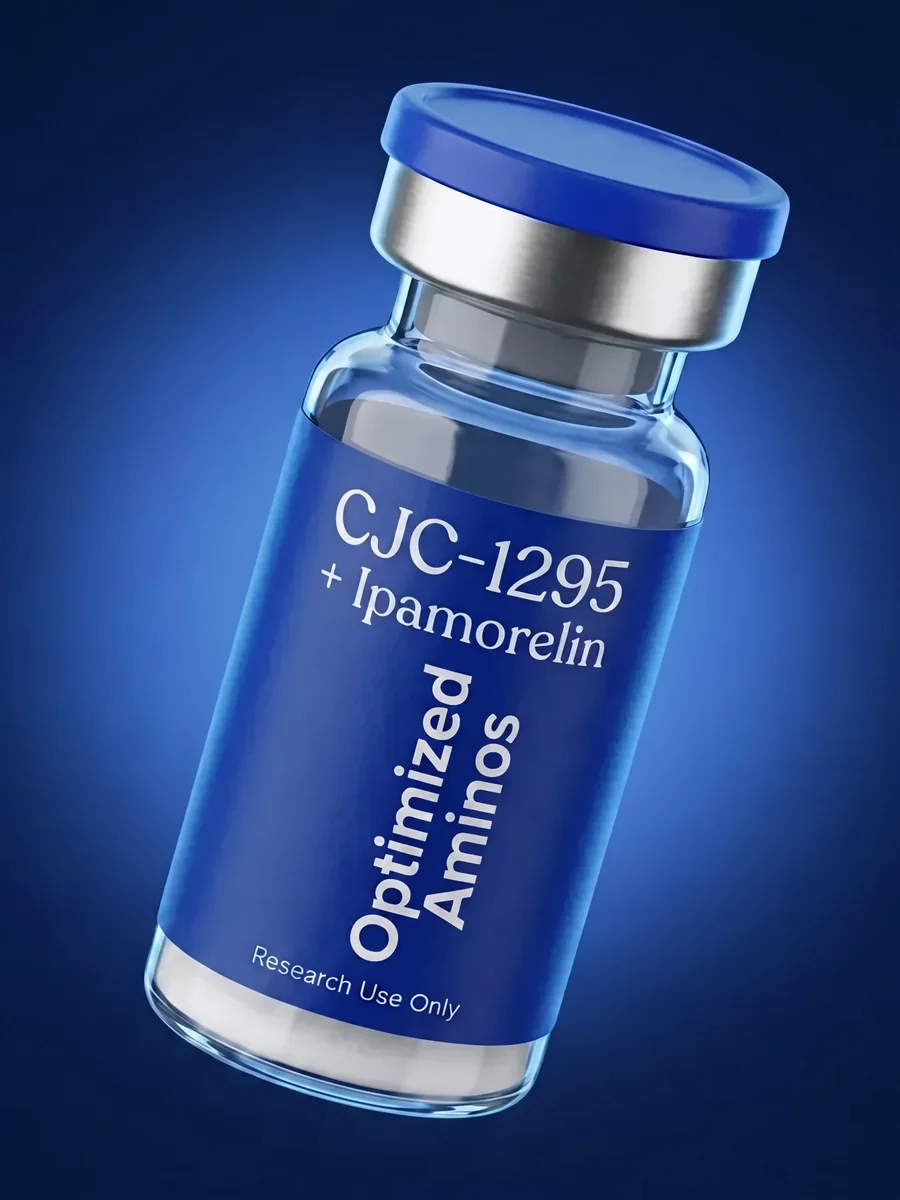
Research-grade lyophilized blend of CJC-1295 without DAC (mod GRF 1-29, MW 3367.97 Da) and Ipamorelin (MW 711.85 Da). Both peptides are synthesized at >98% purity and verified by third-party HPLC analysis. Studied in published in-vitro and preclinical literature on growth hormone secretagogue signaling. Supplied as lyophilized powder in a sealed sterile vial; store frozen at -20°C. Reconstitute with bacteriostatic water for laboratory use. For laboratory and analytical research use only. Not for human or animal consumption, ingestion, injection, therapeutic, cosmetic, or diagnostic use. Not an FDA-approved product.
View product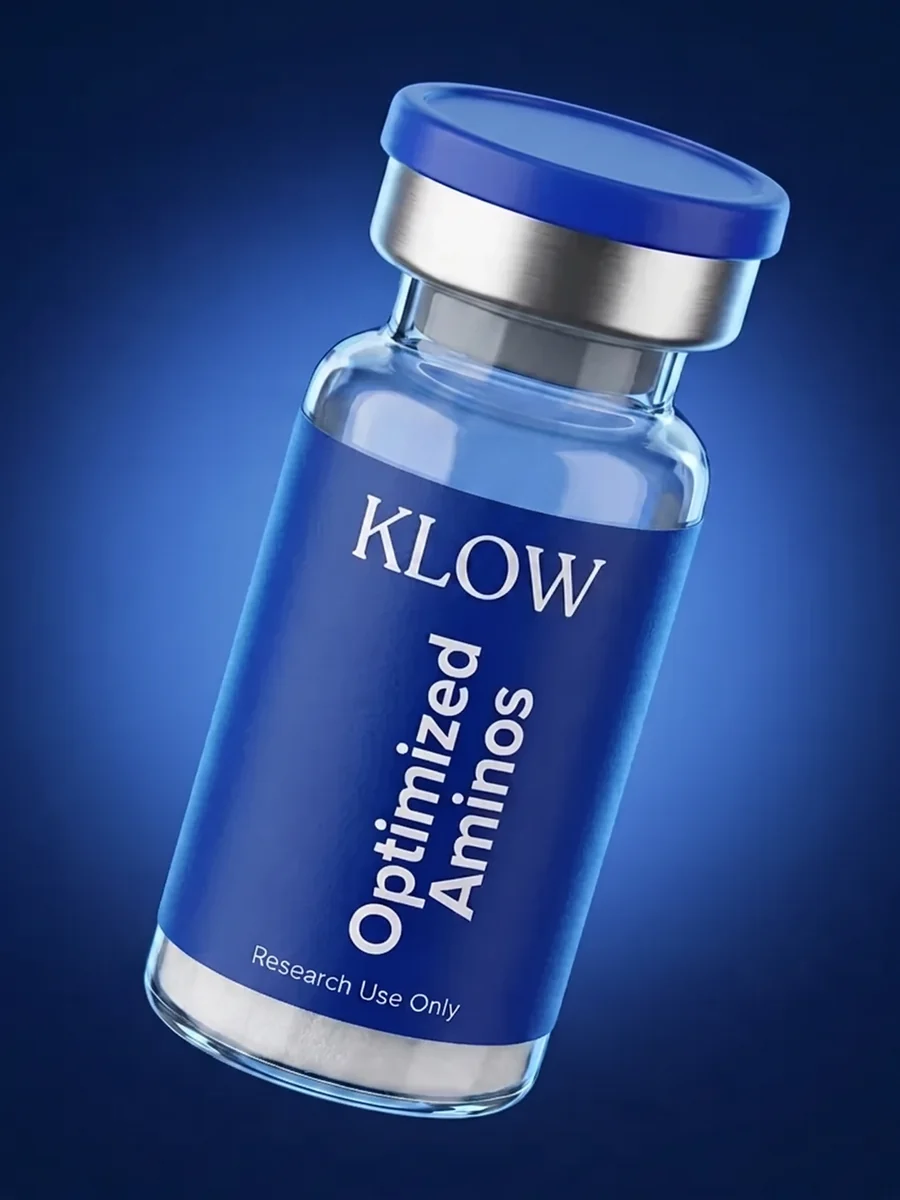
K-1 — research-grade two-peptide lyophilized blend combining GHK-Cu (copper tripeptide-1, 50mg) and TB-500 (synthetic thymosin β4 fragment, 10mg). Each peptide synthesized at >98% purity, verified by HPLC and mass spectrometry via third-party testing. Referenced together in published preclinical literature on peptide signaling. Supplied as a stable lyophilized powder in a sealed sterile vial; store at 2-8°C and protect from moisture. For in-vitro laboratory and analytical research use only. Not a drug, supplement, cosmetic, or therapeutic product. Not for human or animal consumption, ingestion, injection, topical, or any clinical use. Not FDA-approved.
View product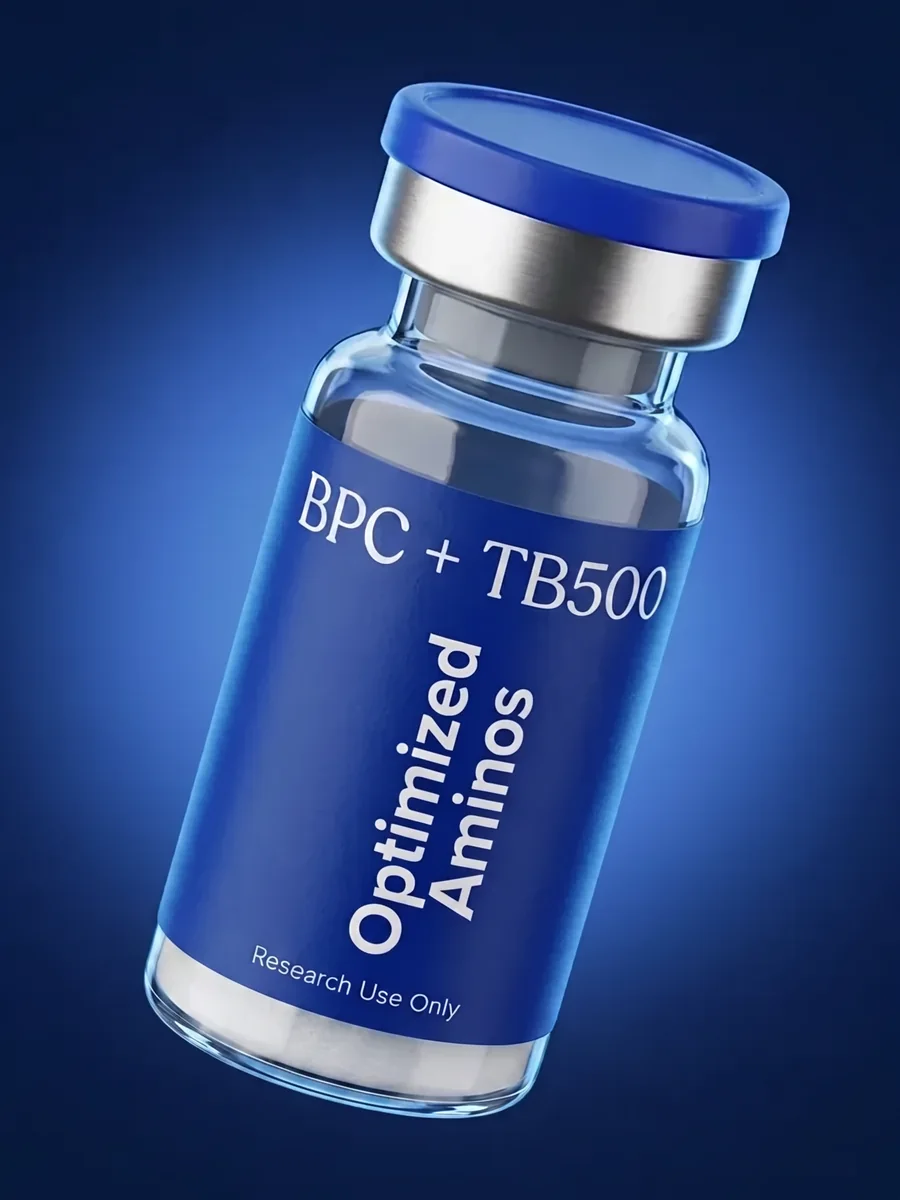
Research-grade dual-peptide lyophilized blend of BPC-157 (15-amino acid synthetic peptide, MW 1419.53 Da) and TB-500 (synthetic fragment of thymosin β4). Both peptides synthesized at >98% purity, verified by HPLC and mass spectrometry. Referenced together in published preclinical literature on peptide signaling pathways. Supplied as lyophilized powder in a sealed sterile vial. Store at 2-8°C. For in-vitro laboratory and analytical research use only. Not a drug, supplement, or therapeutic product. Not for human or animal consumption, ingestion, injection, or any clinical use. Not FDA-approved.
View product