Research Blog
Where to Buy HGH 191aa for Research in 2026: Sourcing & COA Checklist
Published
A sourcing checklist for researchers evaluating HGH 191aa (full-length recombinant somatropin) suppliers in 2026: COA review, IU-vs-mg labeling, identity confirmation, and reconstitution math.
For laboratory and research use only. Not for human consumption.
Reviewed by the Optimized Aminos research team — last updated August 23, 2026
HGH 191aa — full-length recombinant human growth hormone (somatropin) — is a different sourcing problem than most of the shorter synthetic peptides in a typical research catalog. It's produced in a biological expression system rather than assembled chemically, it's conventionally labeled in International Units (IU) rather than milligrams, and it's frequently confused in listings with the much shorter 176-191 fragment. This guide walks through a sourcing and Certificate of Analysis (COA) checklist specific to evaluating HGH 191aa suppliers in 2026, plus the concentration math involved in preparing a research stock solution from an IU-labeled vial.
Key Facts
- HGH 191aa is the full-length, 191-amino-acid recombinant growth hormone sequence, distinct from the shorter 176-191 fragment.
- A trustworthy research vial should ship with a lot-specific COA showing purity, an identity-confirmation method, and the labeled IU potency.
- IU is a potency unit, not a mass unit — a listing should state IU per vial clearly, since mg-only claims for this product type are a red flag on their own.
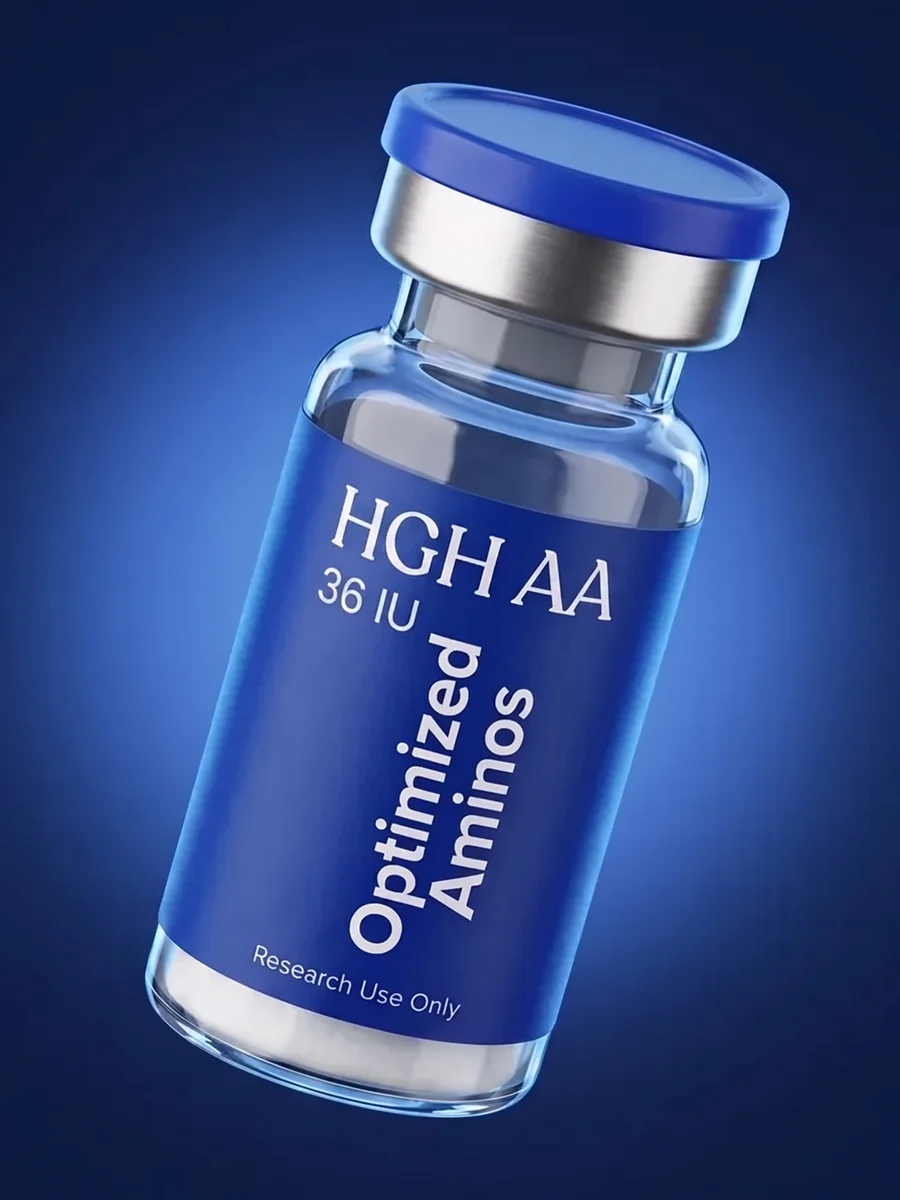
- The HGH 191aa research listing in this catalog is documented at 36 IU per vial, 97.6% purity, as a reference example of the disclosure level to look for.
- Reconstitution math requires converting the IU figure to an estimated mg mass before applying the standard mg ÷ mL concentration formula.
Full-Length 191aa vs. the 176-191 Fragment: Don't Confuse the Listings
The single most common sourcing mix-up in this category is conflating HGH 191aa with HGH Fragment 176-191. They share a name lineage but are structurally and functionally distinct: 191aa is the complete growth hormone sequence, while the fragment is a short 16-amino-acid segment from the C-terminal end, studied separately in a narrower research context. Our HGH 191aa research overview covers this distinction directly, including how the full-length sequence differs from both the fragment and a related 192-amino-acid variant referenced in some literature. Before ordering, confirm a listing's product description explicitly states "full-length" or "191aa" rather than relying on an ambiguous product name alone.
The COA Checklist for a Recombinant Protein
Because HGH 191aa is a larger recombinant protein rather than a short synthesized peptide, its Certificate of Analysis needs to answer a slightly different set of questions than a standard synthetic-peptide COA:
- Lot-specific match: the COA's lot number matches the vial or box, not a generic reused document.
- Stated IU potency: the vial and its COA should clearly state IU per vial — a listing with no IU figure at all, only a vague mg claim, is a red flag for this product category specifically.
- Purity percentage: typically reported via HPLC, alongside the testing method used.
- Identity confirmation: some method beyond purity alone — mass spectrometry or an equivalent bioidentity method — confirming the sample is the correct 191-amino-acid sequence and not a shorter or degraded fragment.
- Testing laboratory identification and test date: the name of the lab that performed the analysis and when.
See our general COA verification guide for the underlying principles of reading purity and identity data on any research peptide COA, which apply here alongside the growth-hormone-specific checks above.
Why Third-Party Testing Matters More for a Recombinant Protein
Recombinant protein production involves more process steps than solid-phase peptide synthesis — an expression system, purification, and lyophilization — each of which introduces its own potential source of impurity or degradation. That makes independent, third-party verification of both purity and identity arguably more important for HGH 191aa than for a simple short peptide, since there are more places in the production chain where something could go wrong undetected by an in-house-only claim. Our broader guide to choosing a research peptide supplier in 2026 walks through this vetting framework across the full catalog, including how to weigh in-house versus independent-lab testing claims generally.
Reconstitution Math for an IU-Labeled Vial
Once a vial's identity and purity are verified, preparing a research stock solution starts with converting the labeled IU figure into an estimated mg mass, since IU reflects biological potency rather than a direct weight measurement. Using the commonly cited reference of roughly 3 IU per mg for recombinant somatropin, a 36 IU vial converts to an estimated 12 mg. From there, the standard formula applies: estimated mg ÷ diluent volume (mL) = concentration (mg/mL). Our dedicated HGH 191aa reconstitution math walkthrough covers this conversion and a full dilution chart in detail, and our reconstitution calculator can run the arithmetic directly.
Sourcing Red Flags Specific to This Category
Beyond the general red flags that apply to any research peptide supplier — missing lot-specific COAs, unverifiable testing labs, prices far below category norms — a few additional flags are specific to recombinant growth hormone listings:
- No stated IU potency anywhere in the listing or COA.
- No disclosure of production or expression-system method, which is a reasonable data point for a recombinant protein in a way it typically isn't for a simple synthetic peptide.
- A listing that uses "HGH" generically without clarifying whether the product is the 191aa full-length sequence or the 176-191 fragment.
- Pricing far below the category average, since recombinant protein production is generally more resource-intensive than short-peptide synthesis.
Frequently Asked Questions
What should an HGH 191aa Certificate of Analysis (COA) include?
A complete COA should list the lot number, HPLC purity percentage, mass spectrometry or bioidentity confirmation, the labeled IU potency, and the testing laboratory's name and test date.
Why is HGH 191aa harder to source-verify than a synthetic peptide labeled in mg?
HGH 191aa is a larger recombinant protein produced in an expression system rather than synthesized chemically, and it is labeled in IU (a potency unit) rather than mg. That combination means both identity confirmation and mass-equivalence require more specific documentation than a straightforward HPLC purity percentage alone provides.
What is the difference between HGH 191aa and the 176-191 fragment?
HGH 191aa is the full-length, 191-amino-acid recombinant growth hormone sequence. The 176-191 fragment is a short 16-amino-acid C-terminal segment of that same sequence, studied separately in lipolysis-focused research and sold as its own distinct product. They are related but structurally distinct research materials.
How is an HGH 191aa research stock solution's concentration calculated?
Because the vial is labeled in IU, the IU figure is first converted to an estimated mg mass using a standard potency reference (commonly ~3 IU per mg for recombinant somatropin), and then concentration is calculated as estimated mg ÷ diluent volume (mL).
What sourcing red flags apply specifically to recombinant growth hormone products?
Beyond the general red flags of a missing lot-specific COA or unverifiable testing lab, growth-hormone-specific red flags include a vial with no stated IU potency, no expression-system or production disclosure, and pricing far below the category average for a recombinant protein, which is more resource-intensive to produce than a short synthetic peptide.
For laboratory and research use only. Not for human consumption.
Related research compounds
Compounds referenced in this article, available as research-grade lyophilized peptides with third-party tested COA.